|

Rejsens Muligheder

Note: This one is made by niece, Tyra. Unfortunately it is in Danish only but trust me when I say it’s really good!


Som når en tyk tåge lægger sig foran en i øjenhøjde, sådan føltes det, momentet efter jeg havde købt min envejsbillet til Vietnam. Penge og planer var der ikke så mange af, og erfaring som solorejsende var der intet af. Det var første gang i mit liv, at jeg havde handlet så aktivt efter noget, hvor jeg ikke anede hvad udfaldet blev. Tidligere skift eller omvæltninger i mit liv kunne godt have fået min fremtid til at se tåget ud, men en eller anden forestilling eller fordom havde altid lyst igennem. Denne gang var tågen så tyk og uigennemtrængelig, at den nægtede mig nogen form for ide om, hvad min fremtid i Vietnam ville bringe. Men som følge af tågen kommer solen. Og jeg fik ikke kun solen at se, men havet – eller oceanet som min onkel kaldte det – oceanet af rejsens muligheder.

En måneds-tids søgen efter min ankomst i Ho Chi Minh og jeg havde en ny Vietnamesisk familie, der passede på mig som deres egen, i forbindelse med at jeg ydede frivilligt arbejde, gratis, for en nyligt-opstartet Vietnamesisk nonprofitorganisation. Hvor var jeg dog heldig! Jo, det var jeg, og det måtte jeg erkende overfor dem derhjemme (særligt mange gange overfor dem der havde grint af min spontane ide og klappet mig på skulderen med en afskedende kommentar: “Vi ses om et par uger”). Jeg havde nogle gode kontakter, og det var ekstremt heldigt, for det var jo kontakterne, der havde skabt muligheden, ikke mig selv. Men hvad er held, når det kommer til at skabe muligheder for sig selv? Er det noget særligt, der kun opstår hos nogle enkelte ‘heldige’, eller kommer det altid til alle dem, der søger det? Thomas Jefferson er kendt for sit citat: “I am a great believer of luck. I find, the harder I work, the more I have of it”, og han må om nogen vide hvordan man skaber muligheder for sig selv og andre. Men det var jo min onkels kontakt, der havde skabt lige præcis den mulighed med det frivillige arbejde. Og i øvrigt havde jeg aldrig fået mod og inspiration til selv at rejse herned på de få betingelser, havde det ikke været for ham, og de eksemplariske oplevelser han havde fået ud af rejsens muligheder.

Men da jeg fortalte folk derhjemme, hvad jeg havde gjort, var de flestes reaktion noget i stil med, at det var “typisk mig” at bare tage af sted uden penge eller planer. Jeg undrede mig lidt over, hvorfor de synes, det var typisk mig, da jeg ikke selv synes, jeg nogensinde havde gjort noget lignende før, og til det svarede de, at det var fordi, at kun jeg kunne gøre sådan noget og rent faktisk ende med at få noget godt ud af det. Også andre rejsende som jeg mødte på min vej, virkede over-imponerede over min historie, som om det ikke var noget, de havde set som en mulighed. Er oceanet af muligheder, som min onkel lærte mig om, så kun noget nogle bestemte mennesker får adgang til? De andre rejsende var jo i Vietnam ligesom mig, men kunne ikke se de samme muligheder, som jeg havde set. På den anden side søgte de måske heller ikke efter dem. Der er vel forskel på, at rejse ind i muligheder og så at vente derhjemme på muligheden for at rejse.

Og når man først er i oceanet af muligheder, er det et stort ocean. Når man står og sopper ved vandkanten, ser oceanet måske ikke så stort ud. Det rækker kun lige ud til horisonten. Men som man svømmer længere og længere ud, møder man flere og flere muligheder, og hver mulighed bringer en ny mulighed med sig. Pludselig er man svømmet så langt ud, at man er forbi horisonten, som man kunne se fra vandkanten, og der er stadig massere af ocean både foran én, bagved én, ved siden af én og under én. Når først du har kastet dig ud i oceanet, er der ingen begrænsninger, og du kan helt selv vælge hvor du vil svømme hen.

Der findes selvfølgelig farlige dyr og skarpe sten på havets bund, som man kan komme til at skære sig på. Eksempelvis måtte jeg forlænge mit ophold på et hostel flere gange, fordi jeg ikke vidste hvornår min værtsfamilie kunne tage imod mig. Men da jeg til sidst ikke kunne forlænge længere, blev jeg hurtigt mindet om, at jeg stadig befandt mig i oceanet. Jeg gik op på værelset, som jeg delte med 9 andre, og fortalte at jeg var nødt til at finde et nyt sted at bo i dag. En engelsk pige som var i gang med at pakke sine ting, forklarede, at hun var på vej til at flytte ind i hendes nye lejlighed, som hun havde lejet, mens hun skulle bo og undervise Engelsk her, og tilbød straks, at jeg skulle flytte ind med hende, hvis jeg ikke fandt på noget. Hun vidste også tilfældigvis, at den skole hun skulle undervise på søgte mange ‘native English speakers’, og kunne da sikkert sagtens hjælpe mig med at finde et job der. En anden Tysk fyr på værelset delte sit kendskab til en facebook-gruppe ved navn ‘Job Opportunities for Locals and Expats in Ho Chi Minh’. Et klik og en kommentar ind på et opslag fra en mand, Sam, der for nylig havde startet sit eget Engelskcenter i sit hjem og søgte engelsktalende frivillige, og jeg havde et gratis sted at bo, så længe jeg ønskede, og så længe jeg satte 2 timer af om dagen til at undervise hans elever.

Pudsigt at på vej ned for at tjekke ud af hotellet stødte jeg ind i et skilt, jeg ikke havde set før. Hver gang jeg havde været nede i receptionen før i tiden, havde jeg været stresset over, at min tid var ved at være opbrugt, og havde ikke haft overskud til at kigge mig omkring. Denne gang var jeg helt rolig, og tog min tid til at sige farvel til stedet. Skiltet som jeg havde opdaget, afslørede, at de søgte arbejdere med gode engelskkundskaber, og som ville være frisk på, at have et job som tour-arrangør for gæsterne på hostellet. “Den bedste måde at få lov at møde nye mennesker på, og samtidigt en mulighed for at tjene penge på at udforske landet”. Ja, sikke en mulighed, tænkte jeg på vej ud af døren.

Mit humør var tårnhøjt, og jeg havde lyst til at bruge mit overskud på en lille udfordring. Jeg ville benytte mig af lokalbussen for at nå frem til mit nye hjem i stedet for den nemmere og dyrere løsning, der bestod i at række hånden ud efter en taxa. Det viste sig at være en spændende oplevelse for de lokale, som ikke virkede som om, de ofte så turister i deres bus. Straks satte der sig en kvinde ved siden af mig, og ville snakke. Jeg spurgte ind til hvor hun havde lært at tale så flot engelsk, og hun introducerede mig for en klub ved navn Mastercup. Klubben sammenbragte lokale og udefrakommende, der havde lyst til at lære vietnamesisk eller engelsk via samtale over en kop kaffe. En oplagt mulighed for at møde flere nye mennesker, engagere sig i kulturen, og lære et helt nyt sprog gratis.   

I den tid jeg boede i Vietnam, fik jeg besøg af min onkel og hans kæreste nogle af  dagene, og de tog mig til et af de smukkeste naturområder i Vietnam. Da vi ankom, fik min onkel øje på et bjerg, som han fik lyst til at bestige. Efter meget snak fra både ham og hans kæreste om hvor smuk udsigten måtte være, for det her område var jo fyldt af rå natur og uendelige rismarker, tog det ikke meget overtalelse, før de fik mig med på bjergbestigningen. Vejret var en ubehagelig blanding af varmt og koldt, luften var tæt og klam, og det synes svært at finde den rigtige temperatur. Jeg var på ingen måde forberedt på denne udflugt, og havde det mest upraktiske fodtøj på, hvilket de smertende vabler mindede mig om, for hvert skridt jeg tog. Men bjerget var heller ikke højere end som så, og det ville være for pinligt ikke at gennemføre, for ikke at nævne en skam når nu udsigten skulle være så flot. Så jeg kæmpede mig min vej op uden at kigge mig tilbage, og da mine fødder nåede toppen af bjerget, var forventningerne i den grad fulgt med. Det var derfor en stor skuffelse, da jeg vendte mig om, at blive mødt med synet af en tyk tåge, der blokerede for den eftertragtede udsigt. Min skuffelse blev dog afbrudt brat af min onkels udbrud: “Nej hvor er vi heldige, at vi får lov at opleve det her”, hvortil jeg svarede, at vi jo ikke kunne nyde udsigten for tågen. “Jamen så nyd tågen!”,  var hans svar,  “Har du nogensinde set så smuk en tåge?”.

Tåge har det med at blive forbundet med tristhed, og får ofte folk til at blive indendøre. Den er ubehagelig, kan føre en på vildspor og blokerer udsigten, men noget jeg har lært af min onkel og af den tur på bjerget er, at man kan lære at nyde tågen. Følelsen af uheld over at have det forkerte fodtøj og udfordrende vejr blev erstattet af følelsen af held over at opleve en uventet udsigt. På samme måde som at jeg følte mig heldig at have mødt Sam, fremfor uheldig over at der var booket op inde på værelset. På samme måde som at selvom jeg først blev mødt med tågen, er min historie blevet til en solstrålehistorie. Til alle dem der ønsker at rejse, kan jeg kun sige: gør det. Hvis du ikke føler at muligheden byder sig – så rejs ind i muligheden. Hvis du føler tågen står i vejen, så prøv at kast dig ud i den og se om ikke du finder solen, der skinner over et smukt ocean på den anden side.


Check out the follow-up to this post!

Similar Posts

  • Beach hopping in Phuket, Thailand…

    This is post 5 of 7 in the series “Working in Malaysia”

    1. First day in Penang, Malaysia
    2. Settling in – To work in Penang
    3. Weekend trip to Singapore
    4. Wrapping up life in Penang
    5. Beach hopping in Phuket, Thailand…
    6. Thailand – Ko phi phi & Krabi
    7. 12m cliffjump in Phi Phi Laguna, Thailand

    … or how I ended up sleeping on a beach, waking up with the sun on a beach chair at Lam Seng

    An introduction to Phuket

    I don’t even know where to begin. I started my trip what seems like ages ago – although it was only 16 days ago. The first week I spent in Thailand: Phuket – Ko Phi Phi – Krabi. This post is about Phuket.

    Phuket was interesting. It was very touristy – especially around Patong Beach; The party beach of Phuket. However, I was very lucky that Alena whom I met last year on my trans-siberian railroad trip in Irkutsk near the beautiful Baikal Lake were able to meet up for the 4 days I was in phuket.

    To all of you that don’t know phuket. It’s an island that is connected by bridge to mainland Thailand. It has 15 beaches and a buckload of (white) tourists. The most touristed beach is Patong beach which is also where the infamous Bangla Road is; A road about 200meters long with only bars and 100’s (yes!) of people trying to sell everything from cheap shots to russian girls to ping pong shows. Too much for me as I’m looking for something a little less “set-up”.

    Lam Seng Beach

    So basically what we did every day was rent a moto-bike and go beach hopping. South the first day, north the second and east the third 🙂 We found some good beaches but the best experience in my opinion was a beach called lam seng beach (from memory) which had no swimming and there was pretty much noone but the local shopkeepers. We sat down, got a beer and enjoyed the view. As the hour progressed we got to talking with the local guy (who had a pet monkey btw) and he offered thai whiskey. Before long i could of course not drive the moto home and it also started raining. So they offered us to sleep at their place which we did. We had thai whiskey and beer and talked with the guys in the shop (who also lived and slept there) and fell asleep under a beach umbrella in the cool rain with pillows and blankets. We woke up at 6:30 with the sun next morning and drove home. Truly amazing.

    Lam seng beach
    Lam seng beach
    Pet Monkey :)
    Pet Monkey eating my head:)

    Conclusion

    We had a great time beach hopping but I must say that I don’t really like Thailand that much and we did see a lot of dirty places and less than sanitary restaurants. Moto riding is fun in Thailand though – perhaps worse than in Penang. I got some great moto gopro footage but that will have to come later

  • |

    Playing house for a month in Bali

    Those who have followed the blog will know I’ve been travelling fairly fast. In fact, during the first half of 2016 where I roamed the countries of SEA (South East Asia), the longest I stayed in one place was 5 nights. You could say I had a restlessness in me – or in more colourful terms: I was footloose and fancy free, free as air. I was living off savings from my last 4 years of employment where I’d been droning away with a 9-5 job. Alright, to be fair the job was a good one and had a lot of perks and although I thoroughly enjoyed my time I had realized that 9-5 just wasn’t for me at this point in time.

    Now, dear reader, why am I telling you all this? I’ll tell you. It’s because this time the cards are different. When you dive into it there are three major differences from my last go on the merry-go-round of travelling:

    1. Money aren’t unlimited. This time I’m part time working to finance it (doing mobile app development with a dash of blogging).
    2. I have a girlfriend, My, who I met 6 months ago. So it’s now no longer solo travelling.
    3. I’ve seen enough temples and museums.

    These three above reasons are why I’m now trying a different type of travel. This time we’ll get a place for a longer period of time. We’ll pay a monthly rate and we’ll get to know our neighbours and the area. We’ll get into a routine, we’ll cook. This way it’s cheaper and much more relaxing. The downside, of course, is that we only get to see one place and if we’re unlucky that place isn’t very good and we’re stuck for a while. 6 days in since we arrived and I’m as happy as a monkey with a banana (there are monkeys with bananas just outside my window and they look happy).

    We’ve found a nice place in the centre of Ubud, Bali with a bedroom, bathroom, terrace and a kitchen (pictures at the bottom of this post). Anyone travelling who’s been travelling longer term probably agrees that a kitchen and a fridge is particularly joy-inducing. The landlady is the sweetest old Indonesian lady. She lends us a rice-cooker and takes My to the local market to get fresh goods at “Bali prices” vs tourist prices just to name a few of the things she does.

    first breakfast in new place
    Our first breakfast in our new place

    I’ve rented some co-working space at a fairly famous place called Hubud (short for: Hub-In-Ubud). A co-working space is a place where small teams and individuals can rent some office space so they can work. Typically, it sports a good internet connection, a pleasant work environment and a coffee machine (oh dear Lord, don’t forget the coffee machine). This one is filled to the brim with creative, entrepreneurial, location independent amazing people and besides giving me a place to work it’s outstanding for networking.

    Lastly, and importantly we’ve rented a scooter. Although I live in walking distance from Hubud a scooter is needed for everything else – and at $46 for a whole month (including repair and service) why would you not do it? There is no public transportation at all and the only other ways of getting around is by taxi or walking.

    Well, that’s the initial setup. I’ll get back to ya’ll a while in to let you know how I feel further down the road!

    view from terrace over rice paddys
    The view from our terrace over the nearby rice paddys
    better view of rice paddys
    A better view of the rice paddys
    the kitchen
    The kitchen
  • Settling in – To work in Penang

    This is post 2 of 7 in the series “Working in Malaysia”

    1. First day in Penang, Malaysia
    2. Settling in – To work in Penang
    3. Weekend trip to Singapore
    4. Wrapping up life in Penang
    5. Beach hopping in Phuket, Thailand…
    6. Thailand – Ko phi phi & Krabi
    7. 12m cliffjump in Phi Phi Laguna, Thailand

    I have now been in Penang, Malaysia for a few days and I’ve already had my fair share of new experiences both during and outside work.

    Every morning I get picked up at my hotel and every afternoon I am driven home. It is chaos with cars weawing in and out and motos (Mopeds – small motorbikes) are everywhere left and right and infront of you. I understand why you don’t just drive a car here but prefer a driver. They also drive in the left side of the road, courtesy of the commonwealth influence.

    We are about 2000 employees at the factory but only about 10 of us are socalled ASIC design engineers. We have our own room and as such the only contact i get with the remaining 1990 people is when I walk through the production offices to get to the toilet, wait for the lift, or eat in the cantina. I have a great interest in local life and what other work is being done at the factory and hopefully I’ll be able to get a tour of the remaining facility.

    Naturally, everything is very different from Denmark. First of all it’s a factory with people everywhere doing completely other stuff than what I do; In Denmark we are only 30 people and we are all (almost) doing the same. Then there are the toilets – they are squatting toilets

    To many danes, this is a nightmare and most have never seen one before in their lives. Being a guy, pee’ing is easy – doing number 2 takes some getting used to though. I’ve learned that the best way is simply taking off your pants and hanging them on the designated hanger space (which is in every single toilet so far), so as to not get them… dirty. On a sidenote – there is a hose in every toilet aswell good for easy cleaning whether you are part of the cleaning crew or just feel the need to clean before (or after) you need to go the toilet.

    For lunch we usually go out to eat which gives me a chance to both experience the heat, the world outside and the delicious Penang food. There are many chinese and Indian people here so the food varies alot and you have the option to try much different food. There is also a bunch of western food shops but they are extremely expensive compared to street food (5-10x more expensive). A local dish is about 5 Ringgit (9DKK/$1,5USD) while at TGI Fridays its more like 50 ringgits for a burger.

    The work itself that I do is very interesting. Both because it’s new people and a whole new environment, so in many ways it’s like starting a new job, but also because I am the only *digital* designer meaning that I get all the responsibility for that side of the chip we are making, which is both exciting but all in some ways scary. If I don’t do good, the project will be delayed (or will have errors) and noone is there to pick up the slack.

    Yesterday (friday) we went to the cantina instead as it was raining (and parking is hard to get so people park far away). Also, when it rains it pours – it’s usually not raining but then in short bursts it’s raining alot. Alot; So it’s best to stay inside. One anecdote of one of the other guys at the factory was that he left his car at a new parking lot and when he came back to it the car was flooded (everything was wet inside). That parking lot is now closed until they figure out how to deal with the rain 🙂

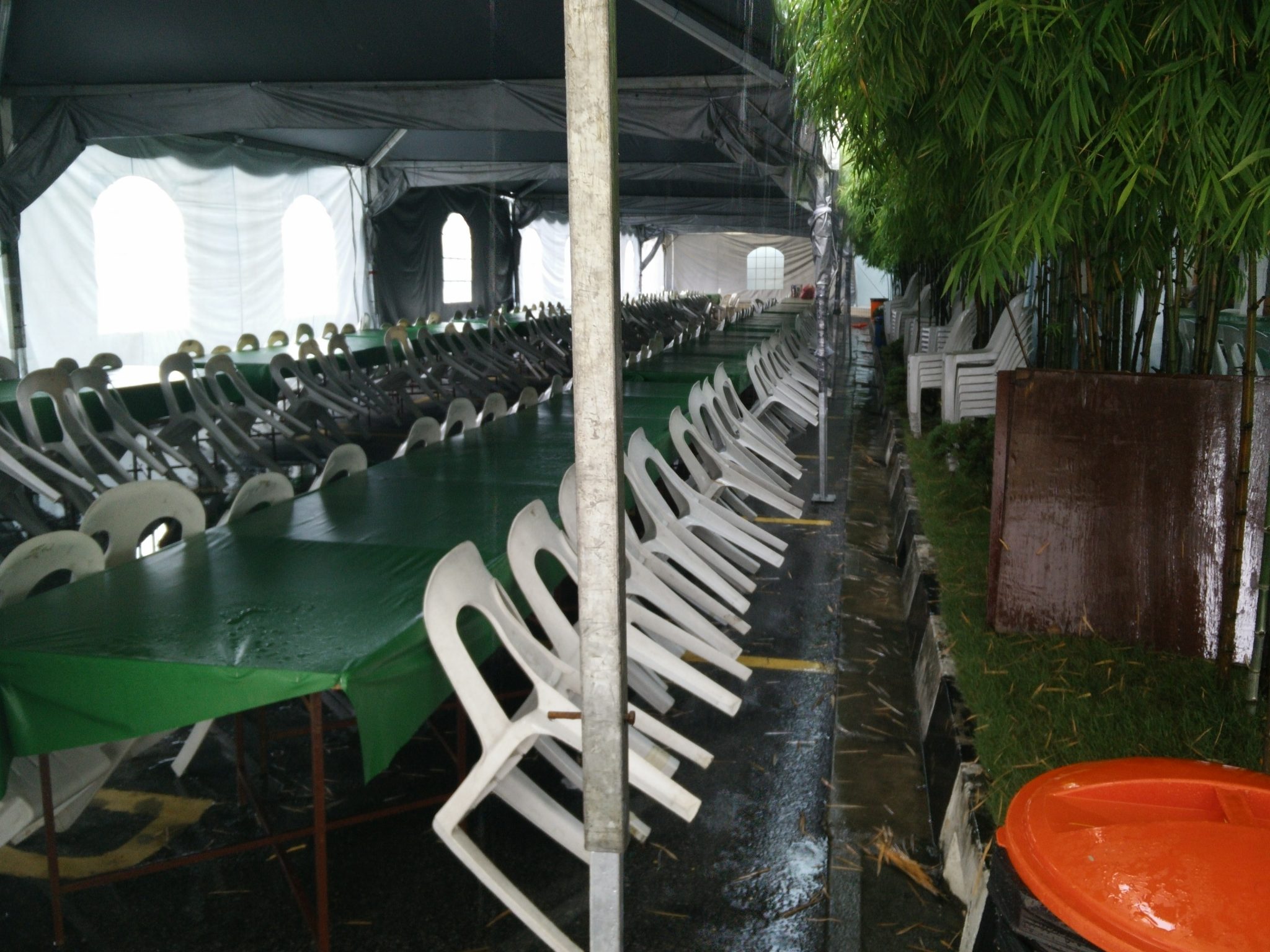
    Flooded "inside" because it rains
    Flooded “inside” because it rains

    Stay tuned for the next episode where I’ll try to get into life after work 🙂

  • |

    The End of an Era – I’ve Sold My Motorbike and Left Vietnam

    This is post 8 of 12 in the series “South East Asia”

    1. Applying for a Myanmar (Burma) visa in Bangkok
    2. One night in Bangkok
    3. Visiting Rural Thailand – enjoy the silence
    4. Sleeping in a monastery on a mountain top in Hpa-An, Myanmar
    5. Overview of tourist hotspots in Myanmar (Burma)
    6. Naypyitaw – The official capital of Myanmar
    7. Being sick on the road
    8. The End of an Era – I’ve Sold My Motorbike and Left Vietnam
    9. Cambodia – First Impressions
    10. Koh Ta Kiev – Where the boat leaves from
    11. The Future of Sihanoukville, Cambodia and the Surrounding Areas
    12. What Were We Thinking (and other ramblings)

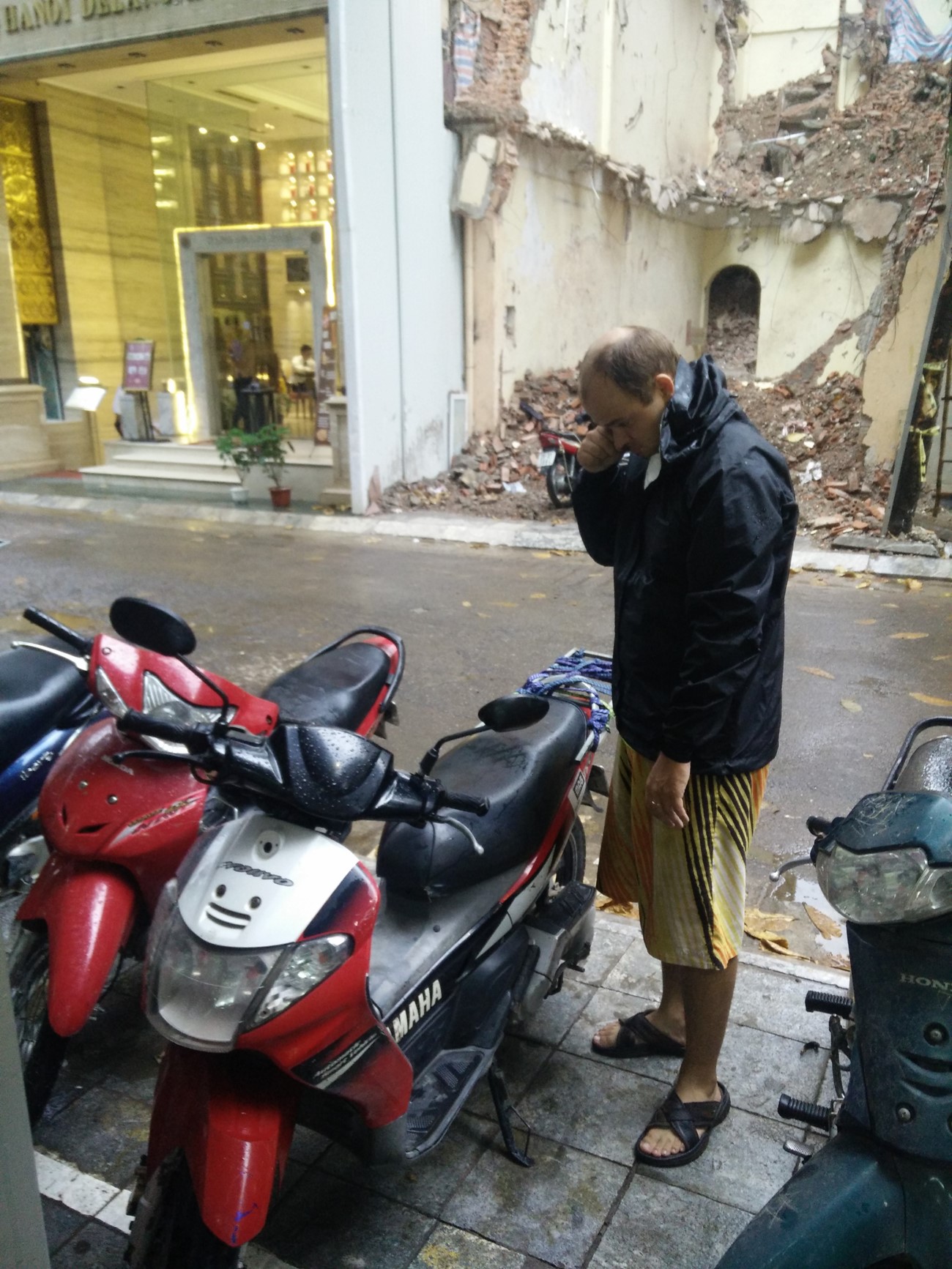
    June 8th, 2016 I sold my motorbike after 3 months. I had just returned from a 3-week trip to the corners of the north. It has served me through some rough times all over Vietnam. It’s taken me about 7000km’s from Ho Chi Minh City in the south to Hanoi in the north including de-routes to almost every major thing worth seeing as well as the remotest parts of Vietnam. Needless to say, this bike was no random bike to me and although I’m not actually crying in the picture I don’t think it would be inappropriate if I did – it was an emotional goodbye. The end of an era.

    MISSING: Yamaho Nuovo 2003. Last spotted outside cafe in Hanoi, June 8th 2016. Noticeable marks: Old as hell, makes a lot of noise, has blue spot on front bumper. If spotted please send compassionate thoughts my way and take a moment of silence for this old warrior.

    Incidentally, looking at the picture now, I just noticed the striking contrast in the background between the new modern hotel to the left and the ruins to the right.

    I don’t have a bike anymore – what’s next?

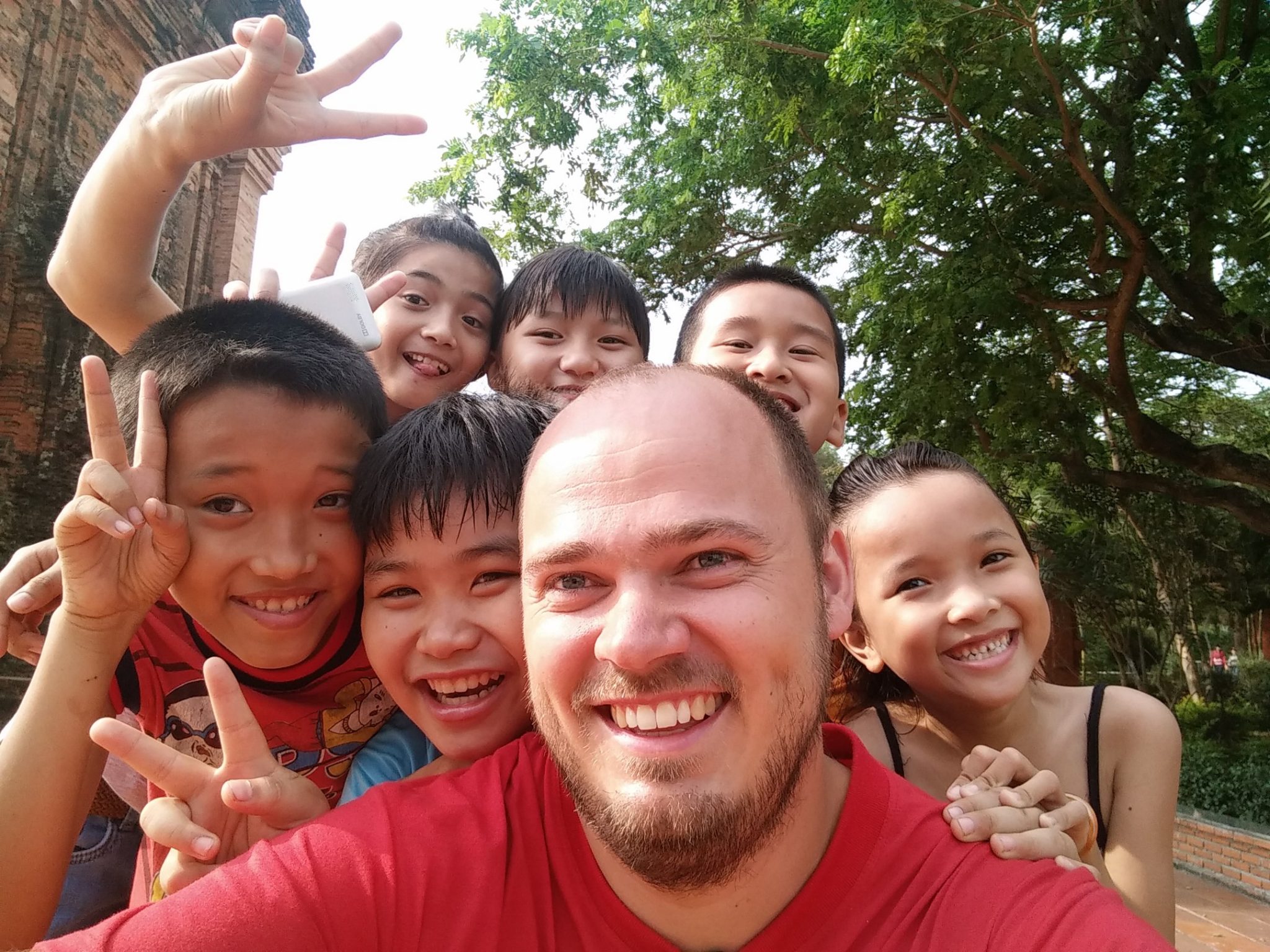
    About two months earlier I had met My, a local Vietnamese girl, in Tuy Hoa about 300 km’s south of Hoi An. One of those places in Vietnam that only sees foreigners on very rare occasions. My (pronounced Mi) was studying to become an English teacher which meant her English was quite good. Many Vietnamese, who wants to practice English, try to talk to foreigners whenever they have the chance to practice their English – you will see students everywhere in Hanoi and Saigon doing this. My was no different and on the top of Nhan Mountain, Tuy Hoa she approached me after taking 30 minutes to build up the confidence. Meanwhile, I spent my time talking to an entire primary school class that was also up there.

    Some of the kids from a primary school class in Tuy Hoa

    Now, why am I telling you this? Because My had finished her final exams before the degree and had a month before the graduation ceremony. As luck would have it, she was going to spend this month travelling around with me. What this means is that for the next 3 weeks or so (it is tentative when she has to be back) she will be travelling with me. Solo travel is great but not travelling alone certainly has it’s perks.

    Alright, so back to the actual topic of the headline – what’s next? Cambodia!

    The Journey from Hanoi to Cambodia

    We booked a night bus ticket (first in 3 months!) from Hanoi to Hoi an – an 18-hour bus ride after which when you’re done all you’ve only really accomplished is switching around a couple of letters (hint: they’re anagrams). Then another 10-hour night bus to Kon Tum. Then a local bus to Pleiku at 6am in the morning. Then, finally, after 4 days of constant bussing, a bus took us from Pleiku across the border to Ban Lung in Cambodia. We had crossed most of Vietnam – 1500km.

    Since My speaks Vietnamese we had a lot of extra options to choose from. For the night bus going from Hoi An to Kon Tum we got picked up just outside Hoi An so we didn’t have to take a bus the wrong way for an hour to Da Nang – the ticket was also half price of what the hostel offered. In Kon Tum we rented a bike, although they don’t really rent out bikes. The 6am local bus from Kon Tum to Pleiku was also only an option because of My. And finally the bus to Cambodia – I would have no idea where to take it from or even about its existence. We got picked up in an intersection while the bus rolled by not even coming to a full stop – we just jumped on. Try to arrange a bus pickup at 8am at some random intersection without speaking the language and no travel agent to do it for you. Easy? think again.

    I’m not done riding a motorbike. Not by a long shot. Riding around Kon Tum.

    Entering Cambodia and Getting a Visa

    Getting a visa was not a problem although less strict borders might have caused us some trouble. My is Vietnamese and therefore part of the ASEAN network – much like Schengen in Europe. She only had to pay $2 and that was it.

    I had to pay $30 and provide a photo – that’s it. Done. Visa for you my friend. Sounds easy? Well it is, except I didn’t have $30… or a photo. The conversation went roughly like this:

    Immigration officer (IO): “Photo?”

    Me: “No photo, sorry…”

    *Disgruntled look*

    IO: “$30?”

    Me: “No dollars, sorry. Credit card?”

    *Very disgruntled look and some muffled murmuring*

    IO: “No credit card”

    Me: “Can I pay in Vietnamese Dong? I thought it was ok to pay in Dong – I’m sorry”

    IO: “No Dong!”

    *Staring contest. Awkward silence*

    Me: “How about this: $30 is 670k dong. I’ll give you 800k Dong and we forget about the photo too?”

    *Silence*

    *I give him the money*

    *He looks at me, takes the money and stamps my Visa*

    And that’s how I got my Cambodian Visa. No more problems. Lesson learned – bring $$$. I would later learn that Cambodia runs on dollars, so much that even the ATM’s gives dollars.

    On June 11th, we rolled into Ban Lung, Cambodia. We had no money, no sim card, no guide book and generally no clue but I’ve been in this situation before so we booked a place for the night and spent the evening getting some food and took care of the basics when arriving in a new country.

  • |

    Re-returning to Vietnam – so new and so familiar

    Traffic. Traffic is terrible in Ho Chi Minh City, Vietnam.

    It’s been about 14 months since I was here last and I swear it feels like traffic has gotten worse – or maybe I’ve just forgotten.

    Amy has forgotten how to drive here. She rented a motorbike and drove out. 20 mintues later she was back – she wasn’t able to cross the roads in this chaotic city. Red lights are taken as suggestions. You must be constantly aware of your surroundings.

    After less than 24hours we’re ready to leave this city.

    Vietnam, the place where you can get a Pho for a dollar and a freshly made pineapple juice for 50 cents.

    Da Nang. The pearl of Vietnam. Where the traffic police isn’t corrupt and where the streets are clean. Good food, good people, amazing beaches and weddings by the dozen. We’ve established ourselves, got upgraded to an appartment with two rooms and a kitchen. Life is good

    I got on a motorbike for the first time in a year – shaky at first but I’m getting the hang of it again. Traffic is nowhere near as bad in HCMC but still – rush hour in the city center – not for everyone.


    I’ve spent the first part of this post talking about traffic. It says something about the impact it leaves on you. But there are other things…

    When you come here you’ll see everything from “hamburger bros” selling western style burgers to local places serving pipefish, ostrich, pork belly and other local delicacies. Where you can point at the fish while it’s still alive and you can make sure the food is fresh.

    The place where you can get a Pho for a dollar and a freshly made pineapple juice for 50 cents.

    An hour massage will set you back about $12.

    Vietnam, where the toilet doubles as both the laundry room for the family, and where the dishes are washed for the guests. Where you learn some perspective about what hygiene is. In western culture we’re obssessed with cleanliness.


    All of the above and many more things is why I love Vietnam. It’s like I feel at home here but it also feels like I’ve been away for a decade. It’s so vastly different from my home culture. When I’m driving on my motorbike with Amy on the back I’ve got a sensation of freedom and fear in equal parts. Of adventure and uncertainty.


    Oh, how I’ve missed the joy of open-ended long term travelling. It’s good to be on the road again


  • Thailand – Ko phi phi & Krabi

    This is post 6 of 7 in the series “Working in Malaysia”

    1. First day in Penang, Malaysia
    2. Settling in – To work in Penang
    3. Weekend trip to Singapore
    4. Wrapping up life in Penang
    5. Beach hopping in Phuket, Thailand…
    6. Thailand – Ko phi phi & Krabi
    7. 12m cliffjump in Phi Phi Laguna, Thailand

    The next morning i took the ferry to Krabi and I just spent most of my evening in the hostel room and rested up. I slept so much and the next morning I was finally feeling well and from there on out I didn’t have any problems with my stomach.

    The evening before I wanted to go drink a beer but I decided to abstain so as to not push my luck. The hostel had a really nice bar though!

    Around noon I took the plane out of Krabi to Kuala Lumpur and that was the last I saw of Thailand.

    My buddy over at loosetranslations.com has made a great post about Kuala Lumpur if you’re interested

Leave a Reply

Your email address will not be published. Required fields are marked *