|

How to: Bargaining, haggling, bartering – the art of getting good prices

This is post 1 of 1 in the series “How-to Guides”

Bargaining, haggling, bartering (or “farting about the price” directly translated from Danish – don’t ask me why) is a term known to almost everyone. However, to those who don’t know, in short it’s the art of securing the best price when buying/selling goods. As the customer you want the price to be low and as the seller you want the price to be high. This guide is written from the buyer’s perspective.

I’ve written this guide because I feel that I’m a halfway decent bargainer and during the last 12 months, I’ve spent 9 of those in South East Asia which really gave me a chance to sharpen those skills. I base my self-proclaimed proficiency on the fact that I usually get low prices compared with other (western) travellers for the same goods (the same tours, the same food and the same clothes etc.). I also have a Vietnamese girlfriend which gives me a good grasp of what prices I should be getting. As a westerner, getting local prices is not common.

Bargaining in today’s world

In western cultures we only rarely haggle as most prices are fixed and unnegotiable in shops. You might be able to get a small discount but short of flea markets/yard sales, the used car market, and a few others there isn’t really much to be done so although being good at bargaining can get you a few good deals, in the long run, the main benefit of bargaining in western cultures is probably that happy sensation you get when you feel like you just saved some money. Because let’s admit it, everyone loves being “smart”, ie. booking the hotel at the lowest price, utilizing a coupon, or saving some money on gas. Knowing that the guy next to you is paying twice the price you are, for the same thing, just makes the bed a little bit softer and the steak a little bit juicier.

Now, when you turn your eyes towards other parts of the world like the middle-east, Africa or south-east Asia bargaining becomes not only useful but completely necessary and unavoidable, especially if you spend your time anywhere slightly touristy. Just for being a tourist, you’ll easily end up paying 10x the price or even paying for something you shouldn’t be paying for in the first place. Everything is negotiable. Period.

So without further ado, let’s get started

Know the value of what you’re buying

This is a big one. Know the price of what you’re trying to buy! You have a valuable advantage if you know what you’re supposed to be paying (let’s call it local price). The vendor already knows how low he can go and still make a profit. You need to get as close as possible to that limit. For more common things like water, you can just go straight for the local price. If you know it’s $1 around the corner don’t even haggle. Just demand the water for $1. In most cases he will agree as you and him both know it’s a fair price and he is still making a profit – quick and easy. I’ve seen friends buy water for $4 when I just bought a water from the same guy for $1.

Knowing the value is essential in almost any purchase. You have no idea if you’re getting a good price for that cab ride from the airport if you don’t know what the general price for a cab ride is in that country. Hell, if you don’t even know the currency you’re bargaining in, things get rough. Add to that the fact that you probably don’t speak the language and their English is limited at best.

Taxi: “City center – 500 baht”
You: “Uh, how much is that in dollars?”
Taxi: “City center – 500 baht”
You: “How far is it?”
Taxi: “City center – 500 baht”
You: “Ok, thank you…”

If you’ve done this trip before and you know the price to your place is 300 baht, just show him 300 baht and the address. He’ll say yes.

Trays of fried insects at a street market stall

Figure 1: Bug market in Bangkok. It’s not always easy to “determine the value”

Ask several vendors about the same product

If you want to buy, say a pair of sunglasses, you might feel good about bargaining the first guy you ask down from $10 to $5 thinking you’ve saved 50% but if the real value is closer to 3$ then it wasn’t such a good deal after all. If you’re not so lucky as to know the price beforehand, asking multiple vendors gives you ballpark numbers. In some cases, this won’t work though, for example when I was in Ukraine I asked the first taxi driver for the price and then he followed me around for the next half hour and surprisingly enough every cab driver I asked after this, gave me the same price. I even tried asking a police officer but the same thing happened – the cab driver that followed me around told him what to say. In the end I got the real price (much lower – about 1/3) from a random bystander who saw me walk around. None of the people spoke English but luckily both me and him spoke German so he arranged to get a taxi for me at the heavily discounted price.

Ask staff, friends and the internet

Hotel/hostel staff can be a huge help in figuring out prices. Not only will they know the prices but often they will know which market to go to, to get what and when etc. which can be a tremendous help. If you’re real lucky they will even help you go and buy it which has happened many times for me. Other travellers in the area that you happen to meet will also give a good idea of the prices and finally of course, you can consult the internet, aka. Mr. Google. Take note that foreigners might be wrong and the internet might be outdated. Hostel staff is usually your best bet but sometimes you can’t speak their language or other things might prevent you from asking them.

Experience and common sense

This might seem obvious but the point here is that you pay attention to what you pay instead of just paying. You also try to see what kind of shop you just got that cheap meal in – for example in Vietnam when something has “binh dan” in the name it’s cheap. This means “Popular” or “Common” or “Woking Class”, in other words it’s the budget solution. You can also use common sense to figure out that when you just bought a cab ride for 20k and the next guy wants 200k for roughly the same length of ride – something’s wrong. This applies for everything – try to get a general idea of how expensive in the country is. This can be hard when you first enter a new country but after a while you get an idea of the general price which can weed out the most ludacris prices.

When I’ve travelled in Myanmar, Thailand, Vietnam, Laos, Malaysia and Cambodia I don’t have to start all over again if I go to for example The Philippines or Indonesia.

Use cash and use exact money

Credit cards can be fine and in some parts of the world you won’t ever need real cash but in the rest of the world and in places where you typically want to haggle, cash is king. There are a number of different benefits of being able to pay in cash.

The first reason is the immediate nature of cash. You get your goods; they get their cash – instantly. Credit cards, bank cheques, bank transfers and promises of future prosperity can all be good and well but with cold cash in hand the deal is done right then, right there. You don’t have to wait for days for a cheque to clear or the bank transfer to come through and you probably do not have a credit card machine to instantly verify the authenticity of the card. Cash can be counterfeit but that risk is slim and if someone moves into that class of criminality it’s a whole different ballgame. Lately, mobile transfers (very quickly transferring cash directly using your cell phone) has started to move in on the territory of cash as it’s also fast, precise and reliable (safe). For the most cases, though, you both need to have bank accounts in the same country and an internet connection which sets its clear limitations.

Secondly, cash has a psychological effect. You can dangle the money in front of the vendor and/or use the familiar: “I know it says 50k dong on the sign but I only have 35k dong on me, is that enough?”. If you are paying by any of the other ways, this trick (which is surprisingly effective), won’t work. It also works in more subtle ways, for example if it says 1 for $6 and 3 for $15 and you only have $10 you can say: “I only have $10, can I get two for that?” so that you get the bulk discount without having to buy all 3.
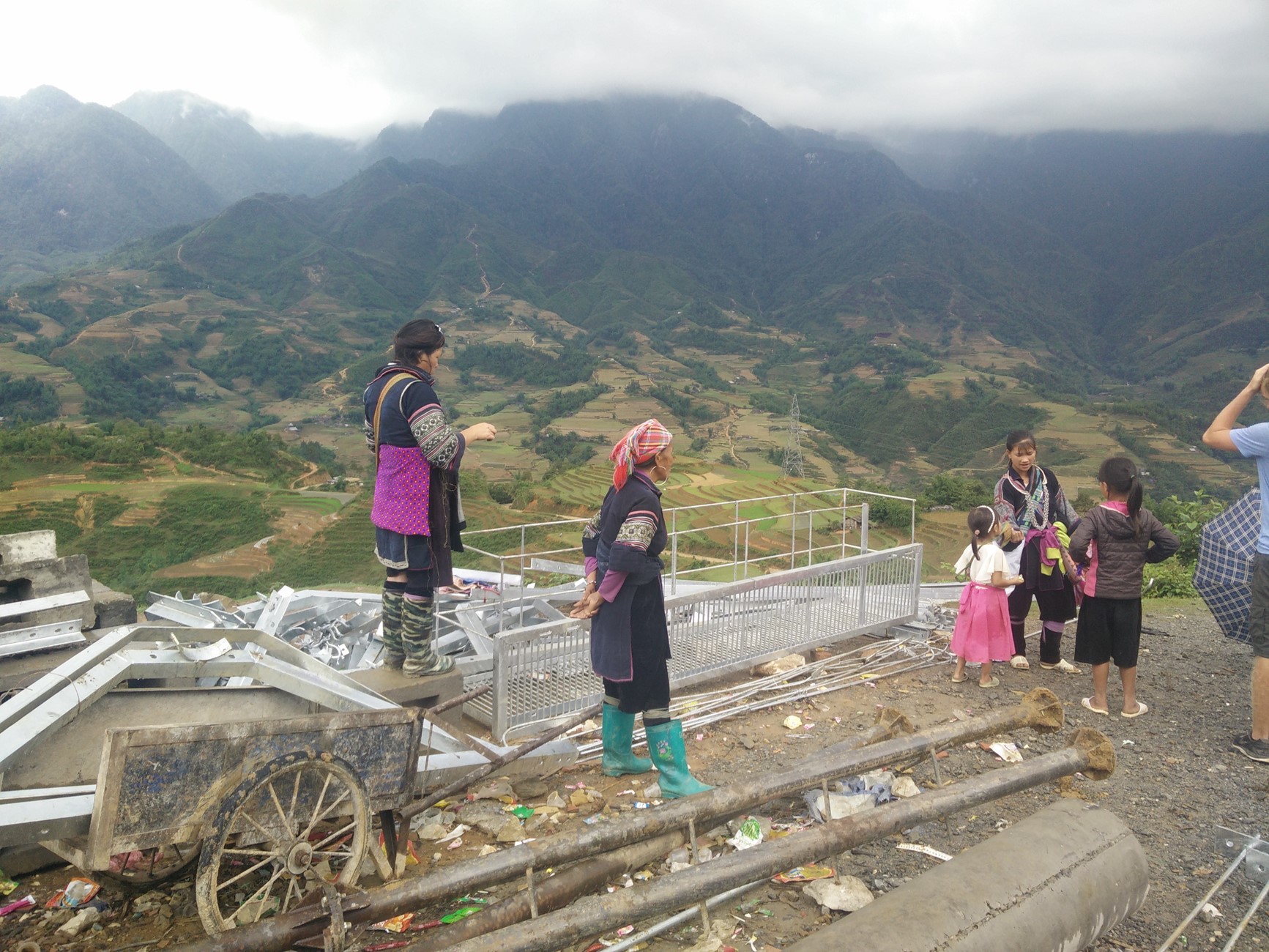
Women in traditional clothing with children by a mountain road

Roaming vendors in Sapa, North Vietnam taking a break and having a chat

Thirdly, as an extension to the above two reasons, cash makes the transfer fast and simple which are valued highly by a busy vendor. If you don’t have exact cash, the vendor might try to get more money out of you by saying he doesn’t have change on your bill hoping you’ll just give him the full bill rather than not buy the goods. Taxi drivers often do this, maybe accompanied with a quick “tip, ok?”. If you don’t accept given him that tip he could make you go through hoops like going to a nearby store to change the large bill and in the end you just end up saying whatever and giving him the money. It’s usually not a lot of money but it all adds up in the long run.

Alternatively, the deal just falls through simply because your bill is too large and he simply can’t give you change which is a shame seeing as you’ve both just come to a fine agreement.

Make the vendor suggest a price first

Simple but good advice when you don’t know what the price is supposed to be. Anyone who’s been doing salary negotiations have probably also heard this advice before. Let the employer offer you a salary first and then work from there. If you make the first move and set it too low, you’ve done yourself a disfavour and might even appear unserious. On the other hand, if you set it too high, you might seem greedy or infatuated with yourself to name a few things.

In short: let the vendor/employer give you ballpark numbers first and work from there.

Say how much you want to pay instead of asking for the price

This applies mostly when buying by the kilo or buying by size rather than number. As mentioned earlier, knowing the value of whatever you’re buying makes it easier for you to haggle. Besides showing the vendor a degree of confidence – you know the prices, you’ve done this before, don’t f*** around with me – it also plays the ball to this court, forcing him (or her) to make the first move on prices. Say you want some watermelon and instead of asking how much for a specific watermelon, say you want $3 worth of watermelon and then let the vendor pick a watermelon of appropriate size. Sometimes the vendor might pick a surprisingly large watermelon or even two watermelons which means you’ve grossly overestimated how much watermelon costs but now at least you know because he/she just made it obvious to you.
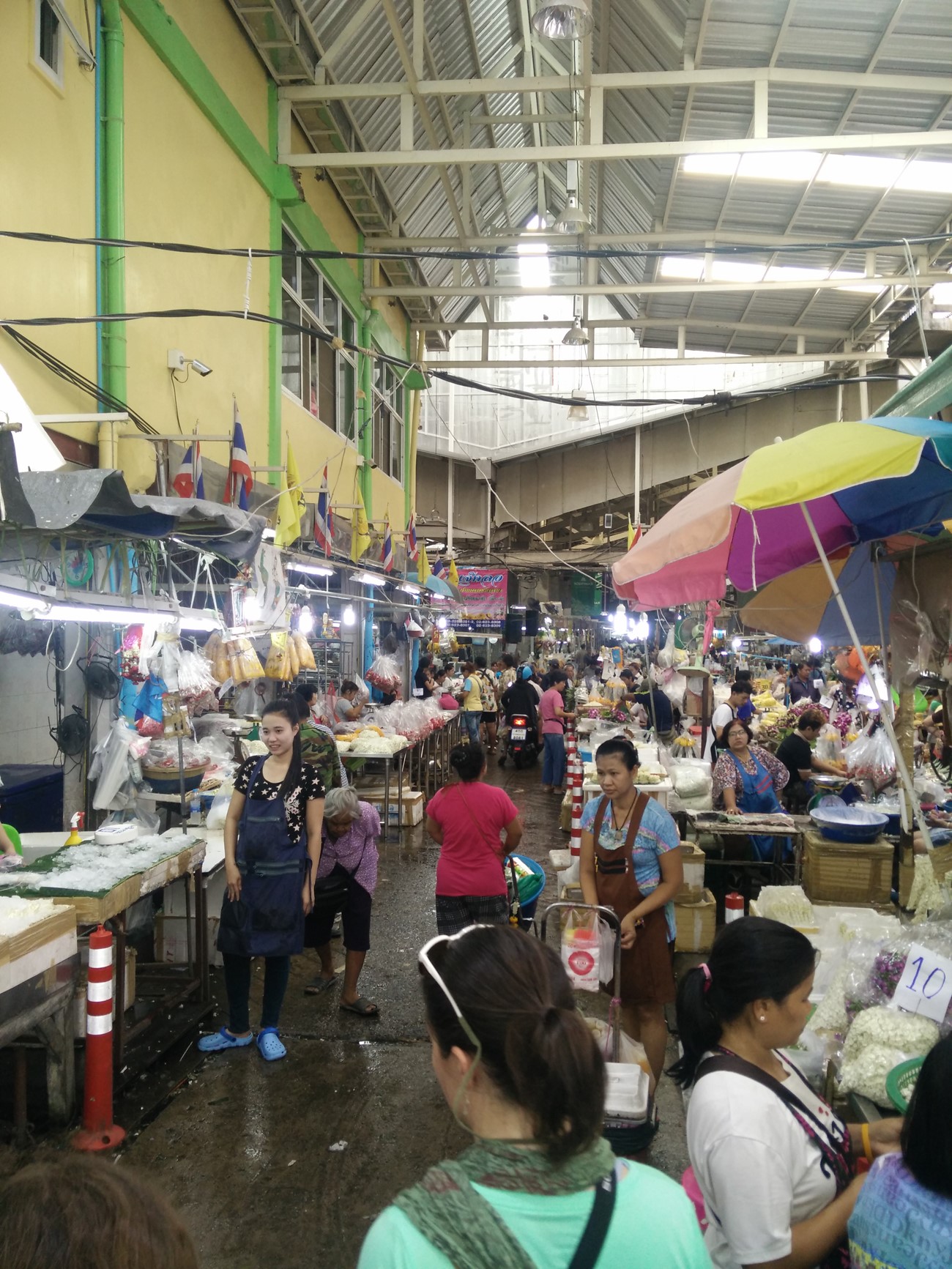
Busy indoor market hall with stalls and shoppers

Flower market in Bangkok

Conversely, if you say “Can I buy that that watermelon for 3$?”, it makes it easy for the vendor to just say yes even though it’s actually only worth $1. Of course, if you know that this particular melon is worth $1.10 and you demand to buy it for $1 you potentially saved yourself $0.10 but that is not a likely scenario and requires you to have a pretty firm grip on watermelon prices. It works for water because water is the same price all over town – for watermelons… let’s call it advanced bargaining.

Asking several vendors, the same question also gives you an idea who gives you the best prices simply by visually showing you what your money is worth. Of course with things such as fruit there is also the topic of quality but that’s a whole different aspect and is essentially a sub category of knowing the value of what you’re buying.

Don’t show large amounts of money

Appearances do affect the prices you get. If you look like a rich westerner in fancy clothes and you flash large $$$ bills everywhere you go, it’s only natural they will try to ask you for higher prices. I wouldn’t recommend “dressing up”, or more accurately “dressing down”, for going to a market because it’s not that important but “appearing poor” does have an effect and so does a large wad of cash. Bringing smaller bills also gives you higher granularity of paying the exact amount.

There is also the aspect of safety. If you are walking around a crowded local market with large amounts of cash sticking out of your back pocket or with money sitting there quite visibly in your wallet whenever you pay for something makes you an obvious target for pickpockets and/or scammers.

Be wary of scammers

Scammers might try to push the prices up by telling you that just today it’s more expensive so the prices you’ve read on the internet are normally correct, just not this particular day.

A common example is cab drivers (yes, cab drivers are notoriously unethical) who will tell you that you need to take a large de-route because of a traffic jam or a road work. While he may be right, you have no way of knowing and most likely he just scammed you out of a few extra moneys. Your only defences against this type of behaviour is asking others beforehand so you know or simply calling his bluff by telling him to run right into that traffic jam, you’ve got lots of time.

Another example is in Bangkok where you can choose to take the highway or not. The highway has tolls on it and is longer and therefore more expensive – but faster. The cab driver would want this as he racks up more money faster (faster speed of the car, faster spinning of the meter) – traffic jams gives him very little money for his time. He will try to convince you to avoid the local roads as there is a traffic jam or roadwork to get you on the highway but in most cases this is not the case. Last time I had to take a taxi, I knew this because I had asked the hostel staff and although he asked multiple times to go on the highway I kept firm and it saved me about 30% of the price while only extending the trip from 50 to 60 minutes.

Conclusion

Know the value, pay with cash and don’t accept the first offer you get.

Similar Posts

  • |

    The Future of Sihanoukville, Cambodia and the Surrounding Areas

    This is post 11 of 12 in the series “South East Asia”

    1. Applying for a Myanmar (Burma) visa in Bangkok
    2. One night in Bangkok
    3. Visiting Rural Thailand – enjoy the silence
    4. Sleeping in a monastery on a mountain top in Hpa-An, Myanmar
    5. Overview of tourist hotspots in Myanmar (Burma)
    6. Naypyitaw – The official capital of Myanmar
    7. Being sick on the road
    8. The End of an Era – I’ve Sold My Motorbike and Left Vietnam
    9. Cambodia – First Impressions
    10. Koh Ta Kiev – Where the boat leaves from
    11. The Future of Sihanoukville, Cambodia and the Surrounding Areas
    12. What Were We Thinking (and other ramblings)

    Joe raised his glass and shouted “To another season!!” and emptied it. Joe is the owner of Seagarden at Otres Beach near Sihanoukville, Cambodia and today is his birthday.

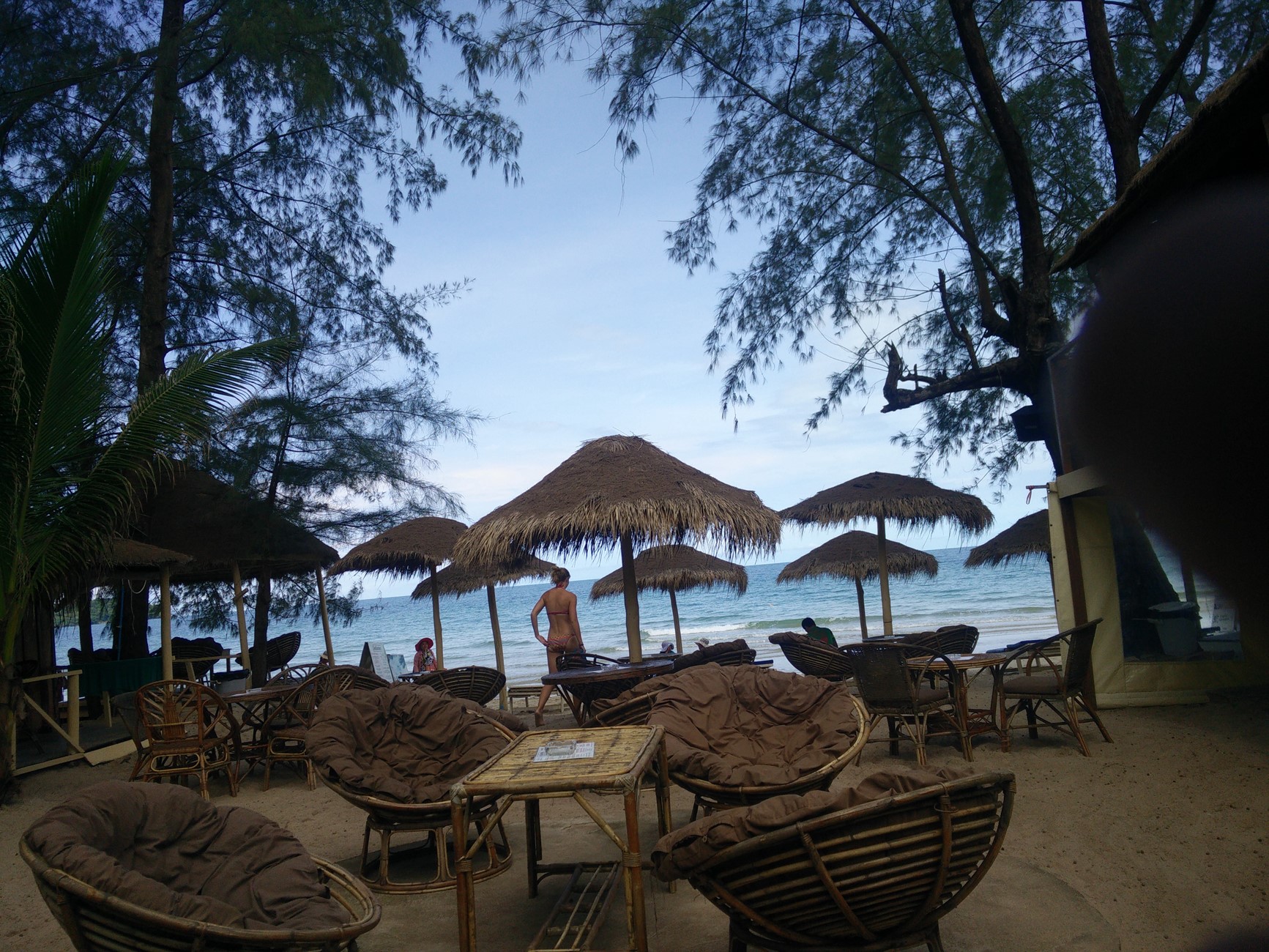
    For the last year or so, Otres Beach has been under the threat of being completely removed. Currently 50-something laid back chilled beach establishments fills up the space – most of them run by expat westerners that found their happiness here. The staff is a mix of locals and westerners – the guests are all foreigners. This is a place where the beer is ice-cold, the weather is hot and the weed is cheap. Showing up here for a day or two but then staying for a month or more is a recurring story.

    Beach bar with straw umbrellas and rattan chairs near Sihanoukville

    The problem is that technical ownership of the land is somewhat chaotic to say the least and I personally have only scratched the surface about who owns what and wants who to do what.

    The short story is that the entire area is threatened by Chinese investors looking to build luxury casino hotels in the area. Based on the large number of empty or abandoned casinos all around Cambodia it doesn’t seem to be a very successful plan but nonetheless many casinos are in the making.

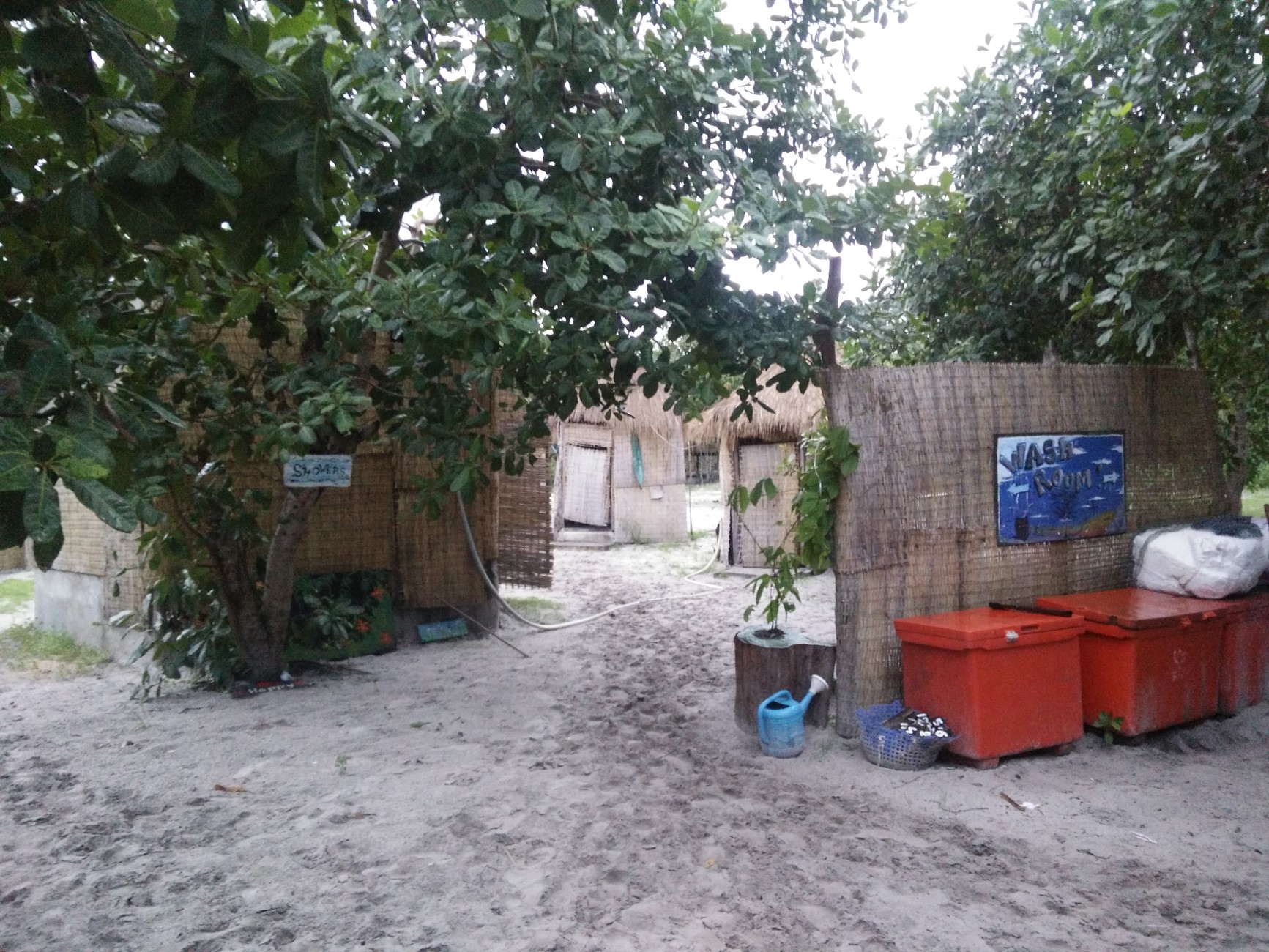
    On Koh Ta Kiev (an island off the coast of Sihanoukville and Otres beach) I asked around what the deal was with that and got various vague answers. From what I could gather, half the island is owned by Chinese and half owned by the French. The various accommodations out there are just built with a somewhat bribe-induced dubious permission which is why they never know when it’s revoked and the whole area is cleared. Furthermore, there is a large amount of free-roaming cows just grazing at will. These are apparently owned by the military and have been shifted around from island to island over the years – “sometimes the government comes over and moves some of the cows to another island – we don’t know why”. Lastly, some local fishers put some shacks on the island into an area called “the fishing village”.

    Sandy path between wooden huts on an island off Sihanoukville

    To sum up: there are a lot of different forces operation out here and to me, the foreign tourist, it’s all very hairy.

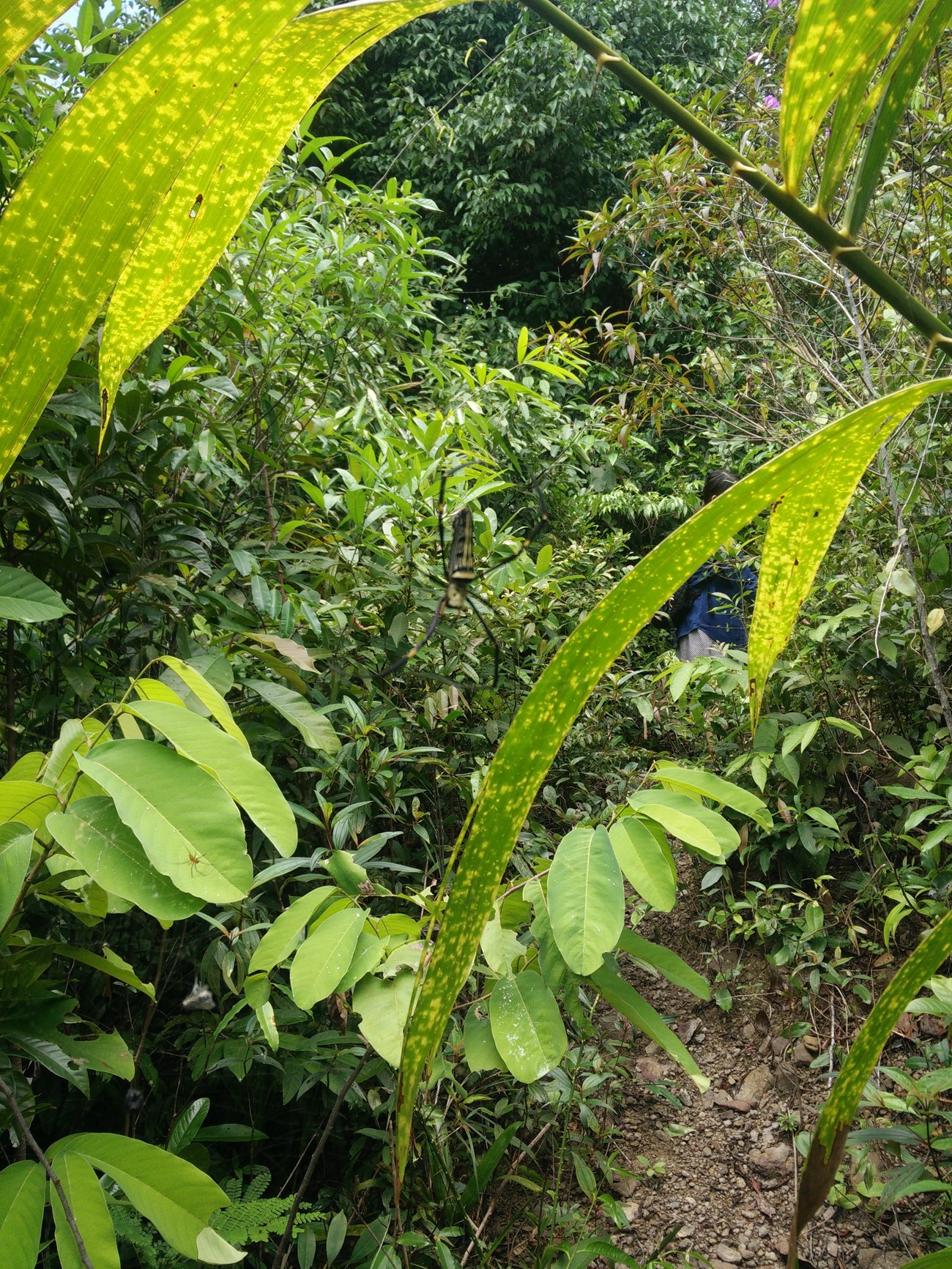
    Last year, the Chinese came and cleared a huge path straight through the jungle to make way for a road but then, just as quickly as they arrived, they left again. The theory is that the Cambodian government is putting pressure on the Chinese to develop these areas and apparently some sort of timeline required that there would be a road by the end of 2015 or whatever. To comply with this requirement, they just cleared some random jungle and left again. The French side remains untouched as the Cambodian government apparently are more lenient with them.

    Dense green jungle plants on an island off Sihanoukville

    In conclusion: I don’t think anyone really knows what’s going to happen even just within the next year.

    I really would love to know more about all this and not just here but also at other locations in Cambodia. Are the Chinese building Casinos against their will because of some strange arrangements with the Cambodian government? How long will we be able to drink pina coladas at these remote islands? Please comment if you know anything.

  • |

    Red Reef (or Ganh Do), Part of Xuan Dai Bay

    This is post 1 of 2 in the series “Phu Yen Province”

    1. Red Reef (or Ganh Do), Part of Xuan Dai Bay
    2. Nhan Mountain (Núi Nhạn), Tuy Hoa, Phu Yen

    Few people have heard of Song Cau in the Phu Yen province in eastern Vietnam but that’s far from the same as saying the area has nothing to offer. Xuan Dai Bay with its gorgeous sceneries is a must visit.

    So what’s so special about it?

    “The landscape and scenery is outstanding and unlike anything you’ve seen before – unless you’ve been to paradise that is.”

    In the bay, there is a small fishing village called Ganh Đo or “Red Reef”, known for fishing and famous for its fish sauce. In fact, so well-known that the locals are able to lead a comfortable life in an otherwise poor province. However, Ganh Do is so much more than fishing and fish sauce. The landscape and scenery is outstanding and unlike anything you’ve seen before – unless you’ve been to paradise that is.

    aerial photo of red reef in xuan dai bay in phu yen province
    Aerial photo of Red reef, comfortably located in the peaceful Xuan Dai Bay. Photo: Lee Nguyen Tran

    How did Red Reef get its name?

    If you’re wondering how Red Reef got its name it’s due to the many reddish – brown reefs scattered around the area.

    reddish brown reefs that give red reef its name
    The reddish-brown reefs responsible for giving Red Reef its name. Photo: Le Nguyen Tran

    Red Reef Beach

    Aside from it’s unique beauty and quaint atmosphere, another appealing feature is the Red Reef beach. It has very smooth sand and mild waves, it’s flat, clean, and with shallow waters; even at 50 meters from the beach, the water is only waist deep.

    picture of corner of red reef beach in phu yen vietnam
    A picturesque corner of the quiet beach. Photo: Lee Nguyen Tran

    In the morning, the life in Red Reef is tranquil and gentle. The fishermen, out catching squids, paddle slowly along the shore. Early risers are out and about in the relaxing environment, breathing the fresh air and swimming in the cool water.

    sunrise a red reef beach in phu yen province, vietnam
    Red Reef beach at sunrise. Photo: Lee Nguyen Tran

    Meet the friendly fishermen

    “It’s so rare that foreign tourists come to visit their place that being invited in for food and accommodation without even asking for it, is highly likely.”

    Red reef is an accommodating destination for those who’d like to explore Vietnamese life far away from the tourist circuits. The local fishermen are very kind and friendly here – far beyond what you’d expect. It’s so rare that foreign tourists come to visit their place that being invited in for food and accommodation without even asking for it, is highly likely. They have no other reason than wanting to talk to you and because of their extraordinary hospitality.

    fishermen getting ready in the morning at red reef beach, phu yen, vietnam
    Fishermen getting ready for the day. Photo: Lee Nguyen Tran

    Don’t forget the surrounding area

    If you’re not already packing your bags to go see this gem, this should convince you. Red Reef has a special terrain. Not only does it have the before mentioned dream of a beach but mountains and rice fields can be found in the area as well so there are landscapes to please anyone. It’s not often you have so much beauty and variety packed into one place.

    surrounding area of red reef
    The outstanding terrain in the are surrounding Red Reef. Photo: Lee Nguyen Tran

    When you have the chance, set foot on these lands. You will instantly feel the rustic charm of both the landscape and the people here.

  • |

    North Vietnam Roadtrip April 2017

    The original day-by-day maps stopped working when maps.ie lost its route data. This map was redrawn in November 2026 from the places we saved in Google Maps: a pin where we slept, a line for each day. The lines are straight, not the actual roads. Night 4 wasn’t saved, so days 4 and 5 share one line.

    What is this!?

    I’m on another trip to north vietnam! This time together with Amy!

    It will be around 2 weeks and will be to many of the same spots but also some new ones. Since it’s shorter we’ll probably skip the left part of the north and focus on cao bang and hi giang.

    Day 1

     Day 2


     Day 3


     Day 4


     Day 5


     Day 6


     Day 7

    Day 7 was spent just hiking around Dong Van!

     Day 8


     Day 9

    For some reason this is creating trouble to plot but we went all the way from Dong Van to Ha Giang City. A 150km long, very mountainous ride!!

     Day 10

     Day 11

     Day 12

     Day 13

     Day 14

  • |

    Koh Ta Kiev – Where the boat leaves from

    This is post 10 of 12 in the series “South East Asia”

    1. Applying for a Myanmar (Burma) visa in Bangkok
    2. One night in Bangkok
    3. Visiting Rural Thailand – enjoy the silence
    4. Sleeping in a monastery on a mountain top in Hpa-An, Myanmar
    5. Overview of tourist hotspots in Myanmar (Burma)
    6. Naypyitaw – The official capital of Myanmar
    7. Being sick on the road
    8. The End of an Era – I’ve Sold My Motorbike and Left Vietnam
    9. Cambodia – First Impressions
    10. Koh Ta Kiev – Where the boat leaves from
    11. The Future of Sihanoukville, Cambodia and the Surrounding Areas
    12. What Were We Thinking (and other ramblings)

    Update: I’ve written a post about the future of this area. Have a read: The Future of Sihanoukville, Cambodia and the Surrounding Areas

    As I’m writing this I’m listening to “Zac Brown Band – Where the Boat Leaves From” and it couldn’t be more spot on. It’s uncanny how this song just is this place.

    Koh Ta Kiev is a small remote island off the southern coast of Cambodia near Sihanoukville. It’s a small island and currently has about 50 people on it, including staff. My and I lodged ourselves in a jungalow at the last point on the southern bay.

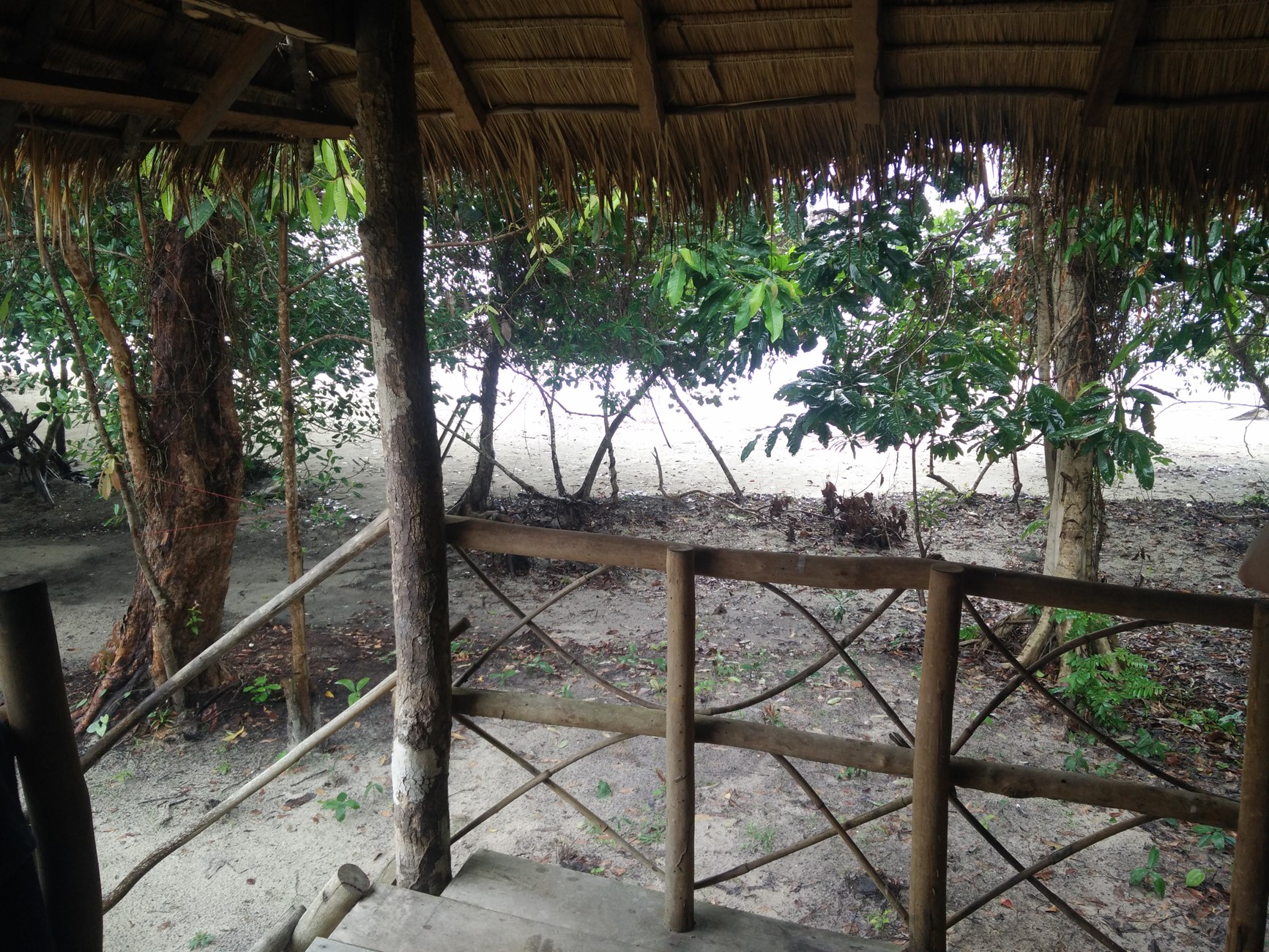
    View from a thatched jungalow over a wooden fence to the beach on Koh Ta Kiev

    View from the Bungalow

    On the other side of the island, about 45 minutes of walking through dense jungle path, you have the treehouse which literally has treehouse like bungalows. Except for a fishing “village” which has no permanent shops, those are the only two places open on the island now and with no permanent residents it’s not a busy place. The boat arrives once a day IF there are any people coming in and IF the weather permits. Not a given these days as we are in low-season / rainy season. We were 3 coming in with the boat and that’s a lot apparently. The next day, 4 left and none came, leaving us with a grand total of 4 guests including us.

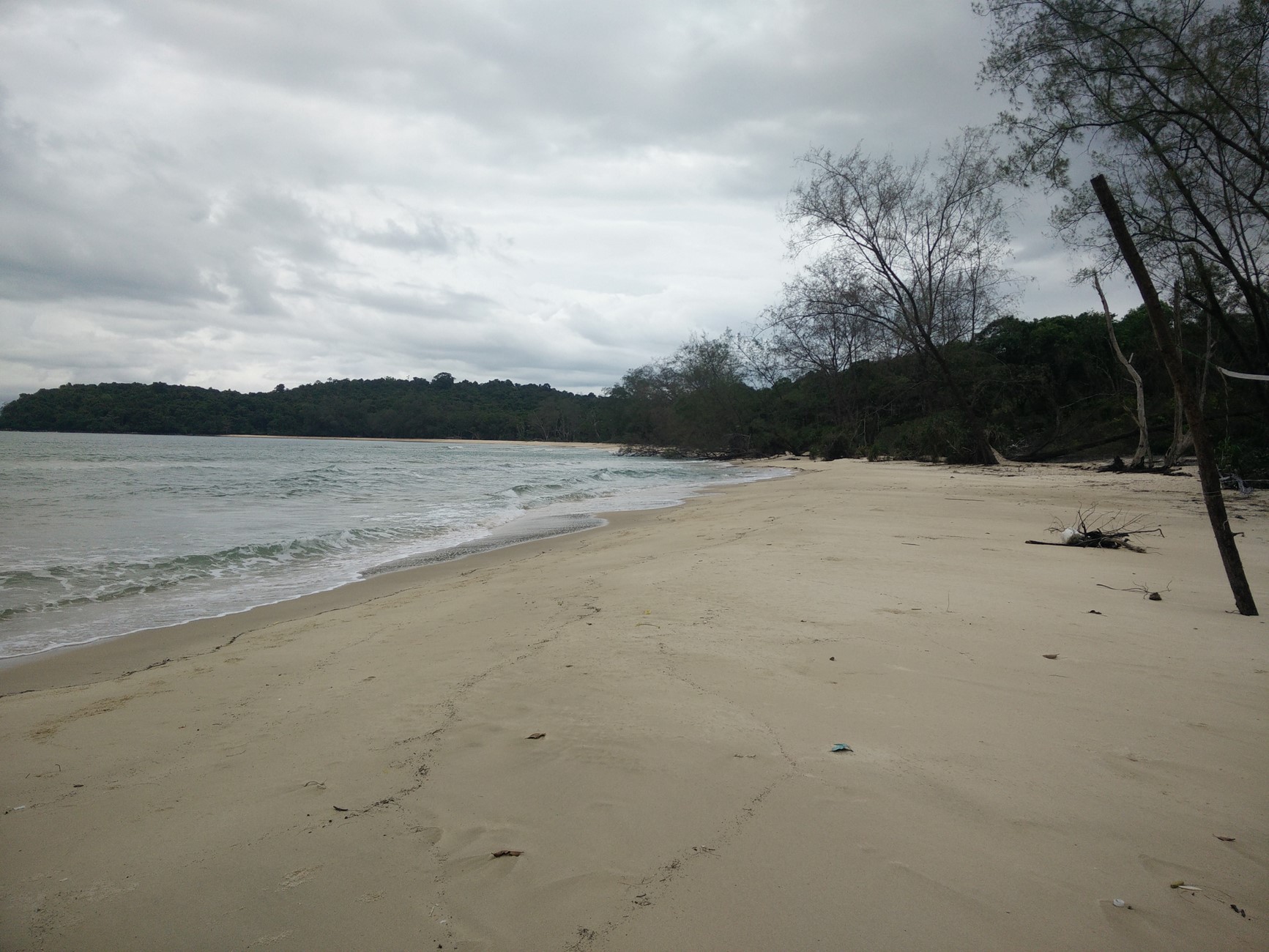
    Empty sandy beach on Koh Ta Kiev under a cloudy sky

    Untold unstirred beaches ripe for exploration

    There is no WiFI *gasp* and the only place to charge your electronics is in the bar in the evening. They turn on the generator to get some lights but only in the bar. If you want lights in your bungalow they’ll provide you with some candles. But then again what do you need your phone for? It’s truly one of those islands you just go to, to get away from it all – “you can take your worries and dump ’em in the blue ocean”. During the day they have solar panels which are used to power the gently playing stereo.

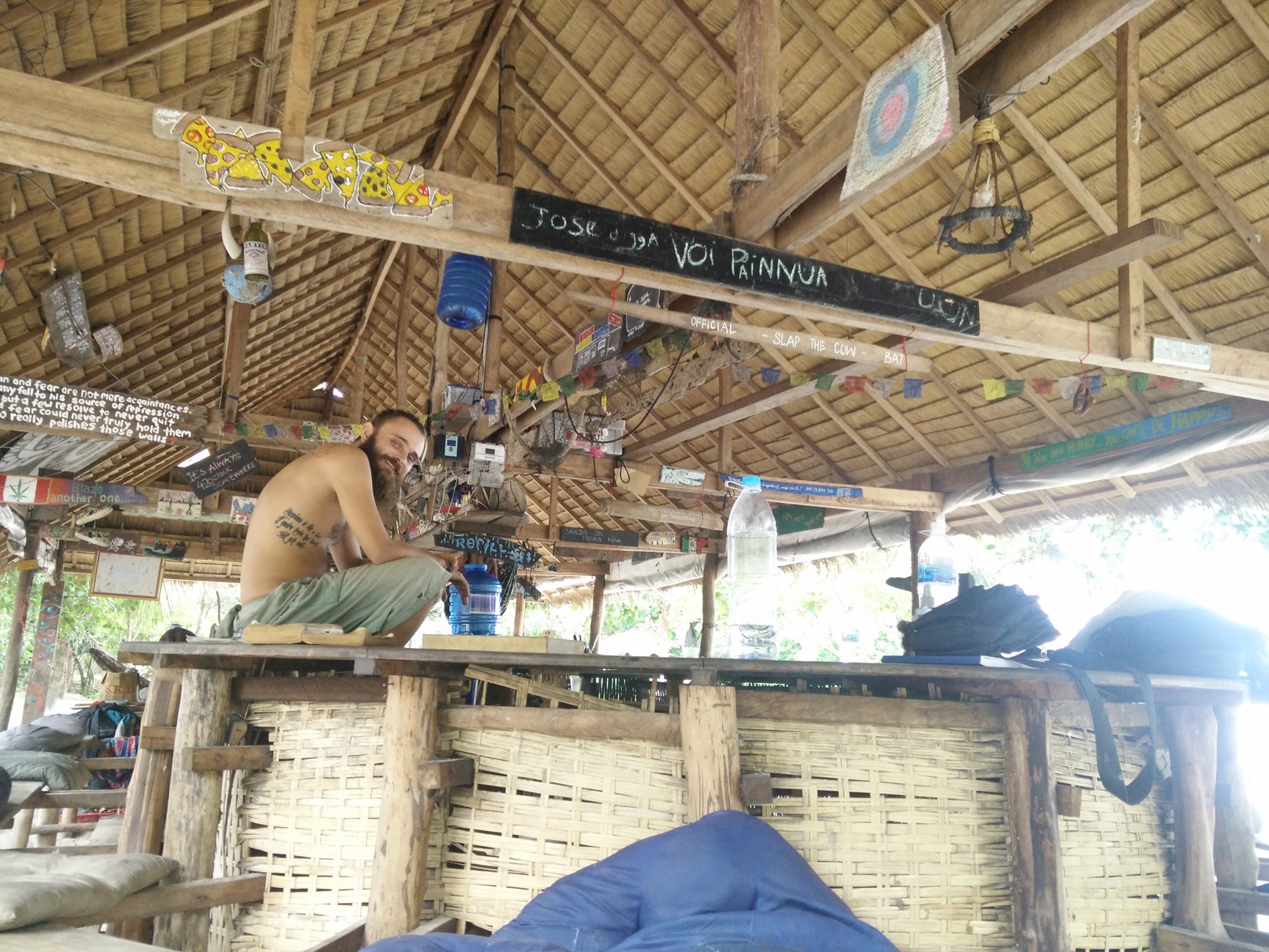
    Thatched beach bar with a hand-painted sign on Koh Ta Kiev

    Ossi aka Monkey Boy aka Green Boy sitting in the bar

    Ice is shipped in to Koh Ta Kiev every day with the passenger boat – about 30kg’s for the kitchen and 20kg’s for the bar. Tough luck if there’s no boat. However, if the boat stays away for too long, there’s coconuts a plenty if you know how to pick them from the trees.

    So the bar, the jungle, the ocean, the bathroom and the bungalows is really all there is but that’s all you need. If that’s not enough, the bar sells spliffs and condoms for $2 each and any item can be made “happy” for $3. You can snorkel anywhere on the island and when the sun goes down you can see bioluminescent plankton anywhere in the water – a very unique experience. Sun -rise/-set isn’t too shabby either.

    Selfie of Thor and My on the beach on Koh Ta Kiev

    “Time you enjoy wasting is not wasted” – Unknown

    If you’ve read this far, I thank you and if you ever have the time to visit Koh Ta Kiev – please do!

    It’s time for me to get back to my beer but I’ll leave you with “Where the Boat Leaves From” as Zac Brown Band explains it better than I do. Take a listen!

    ZAC BROWN BAND

    “Where The Boat Leaves From”

    There’s a place, where the boat leaves from
    It takes away all of your big problems
    You got worries you can drop them in the blue ocean
    But you gotta get away to where the boat leaves from

    Take one part sand, and one part sea, one part shade of banana tree
    The drinks they’re cold and the raggae is hot
    And I know this is the place for me

    So get away to where the boat leaves from
    It takes away all of your big problems
    You got worries you can drop them in the blue ocean
    But you gotta get away to where the boat leaves from

    See the problem is that you’re right there
    And there’s a perfectly good island somewhere
    Where a ride that floats and don’t grab your coats
    You won’t need it where we are going

    Get away to where the boat leaves from
    It takes away all of your big problems
    You got worries you can drop them in the blue ocean
    But you gotta get away to where the boat leaves from

    Pick me up
    Pick me up
    Pick me up

    Put me down
    Down on the sand where its cool
    Put me down
    When I fall off my stool
    Put me down
    I’ll just sleep there til morning comes around

    With sunshine tanned ladies and piña colodas
    And Bob Marley songs that are playing
    There’s a song in my ear that I want you to hear
    Soft tropical lips that are singin

    Get away to where the boat leaves from
    It takes away all of your big problems
    You got worries you can drop them in the blue ocean
    But you gotta get away to where the boat leaves from

    So get away to where the boat leaves from
    it takes away all of your big problems
    You got worries you can drop them in the blue ocean
    but you got to get away to where the boat leaves from

    so get away to where the boat leaves from
    it takes away all of your big problems
    you got worries you could drop them in the blue ocean

    [x4]
    oooooo pick me up
    oooooo pick me up

    i gotta go

    [x4]
    oooooo pick me up
    oooooo pick me up

  • |

    Top 5 things to do around Bali, Indonesia

    So you’ve just arrived to Bali fresh from the plane and you’ve found a place to stay and you need something to do – you’ve come to the right place. We’ve got both top tourist spots and your hidden gems.

    1. Tanah lot

    This is one of the biggest attractions on Bali with many people making the pilgrimage every day. Tanah lot is a row of waterside temples and astounding views. Picture worthy indeed and a great place to visit. If you have the option get here for sunset. It’s beautiful.

    MAP: Tanah Lot

    tanah temple bali
    This is not the actual Tanah Lot temple but one of the nearby temples as it is a whole row of temples.

    2. Pengempu Waterfall (aka. Air Terjun Pengempu)

    This is a small but beautiful waterfall you won’t see listed anywhere else. It is not hard to find and the 30 minutes we were there not a single other person showed up. Another couple showed up when we left but that’s it.

    To get to the waterfall from the road you have to climb some steps which takes about 10 minutes give or take. Nothing that can’t be done in flipflops.

    MAP: Pengempu Waterfall

    pengempu waterfall bali
    A nice little waterfull off the beaten track

    3. GitGit waterfall

    Probably the most famous waterfall on Bali so expect to see a lot of tourists there. As this is a list of top things to do in Bali, It’d be a shame to leave this one out.

    Popular for its bridge walkway and cool water where you can take a swim, makes this place worth a visit.

    MAP: Gitgit Waterfall

    git git waterfall bali
    Git Git Waterfall

    Photo source: Wikipedia.com

    4. Ubud local nightmarket (aka. Pasar Senggol Sindu)

    I lived in Ubud for a month and for the first two weeks I wasn’t able to find a local market to buy my necessities like clothes and everyone just led me to the supermarkets near Ubud (western style indoor supermarket with aircondition) – even the locals.

    Finally, one day I found the market as I was casually driving by and it was just as I had hoped. Cheap clothes, cheap shoes, cheap food. We’re talking less than $1 per meal. I didn’t see a single other foreigner when I was there.

    MAP: Ubud local nightmarket

    ubud night market bali
    The night market in Ubud. Sorry for the bad quality of the picture!

    5. Mt. Batur

    The volcano on the Island of Bali. It’s active. Many tours are arranged here and fun things such as cooking your own food using the heat from the lava are on the program. Ask any travel agency about the details and if you’re adventurous go do it yourself. Hiking up to see the sunrise is a prominent activity and very popular. Get there before the crowds (start around 3:30am) and you’ll have a pleasant ascend.

    I’ve heard rumours that scams are going on where they tell you that guides are mandatory. It’s not true (!) and it’s easy to find the way by yourself. Although, as before, if you prefer to just relax and let someone else guide you – the guides aren’t expensive.

    MAP: Mt. Batur

    mt. batur bali sunrise
    The beautiful Mt. Batur at sunrise.

    Photo source: balitrekkingtour.com

    Transportation

    To get around, the local way, I would rent a scooter. They are about 60-100k IDR / day (=$4.5 – $8) for a new model scooter and all they require is a scanned copy of your passport (they’ll copy it for you). You are then free to roam wherever you may please at your own pace and that’s freedom like nothing else. Be aware that you get no insurance with that price and that traffic can be terrible. I would not recommend renting a scooter here if this is your first time.

    If motorbiking is not your thing you can rent a car + driver for a full day for around 250k (=$20), at least when I checked last time in Ubud. So if you’re 4 people or you prefer a car this is definitely a viable alternative.

    The beaches of Bali

    I didn’t mention any of the beaches but they are everywhere. If you’re out for that resort style beach with comfy chairs and cocktails, the south Kuta peninsula is your go-to place.

  • |

    Applying for a Myanmar (Burma) visa in Bangkok

    This is post 1 of 12 in the series “South East Asia”

    1. Applying for a Myanmar (Burma) visa in Bangkok
    2. One night in Bangkok
    3. Visiting Rural Thailand – enjoy the silence
    4. Sleeping in a monastery on a mountain top in Hpa-An, Myanmar
    5. Overview of tourist hotspots in Myanmar (Burma)
    6. Naypyitaw – The official capital of Myanmar
    7. Being sick on the road
    8. The End of an Era – I’ve Sold My Motorbike and Left Vietnam
    9. Cambodia – First Impressions
    10. Koh Ta Kiev – Where the boat leaves from
    11. The Future of Sihanoukville, Cambodia and the Surrounding Areas
    12. What Were We Thinking (and other ramblings)

    I’m currently enjoying my time in Bangkok while slowly figuring out where to go next and I’m locking in on Myanmar. So much that I went to apply for a visa today and it was actually very easy.

    NOTE: This is for getting a stamp in your passport before entry. This is needed if you are crossing into Myanmar over land! You can now apply for e-visa online which is good enough if you fly to Myanmar. Flying to Myanmar in general is much easier all the way around.

    To and from

    Take a skytrain to Surasak Skytrain Station and walk a few hundred meters to The Embassy of the Union of Myanmar. The visa office application is open 9-12 every day except Myanmar AND Thailand holidays. Due to an incident involving a forgotten passport I arrived at 9 and finished around 10:20 while my travel companion had to go back to the hostel to pick up her passport and got back at the embassy around 10:30. She finished around 11:45. This means that it takes about 1½ hours and you don’t have to get up insanely early. There were about 50-60 people in queue in front of us but the expedition for each person was very fast (<5 minutes) and there were several counters. We were there on a Tuesday.

    What you need

    Your passport and money that’s all you need. about 1400 bahts will get you visa the same day, 1250 baths will get it to you the day after and the budget solution will get it to you two days after for 800 bahts. I opted for the last option. Be mindful that you will not have your passport in that time, so make sure you don’t need it for anything.

    Other than that you can bring two passport style photos (any kind really – they seemed very easy with shape/size/color etc) and a copy of your passport if you have it. If you don’t have those things they do it there for you. 8 photos is 100bahts and a copy of your passport is 3 bahts.

    You also need and application which is one paper (double sided) and very easy to fill up. You need to write some basic information, your present and current job and the place you stay in Myanmar. If you haven’t figured out yet where you are going to stay, just pick any hostel out of a guidebook or ask the guy next to you where he is staying (that’s what I did). Furthermore it’s worth noting that if you get something wrong, they help you at the counter. You don’t have to go to the back of the line.

    Getting back the passport

    When you apply for the visa the day before you get a yellow receipt – keep it! You need it to get your passport back. I don’t know what happens if you lose it – but you probably shouldn’t 🙂

    Depending on which option you chose you will then have to get back the same day, next day, or the day after respectively between 15:30 – 16:30. Pick-up is swift and the wait is long. Remember your yellow receipt!

3 Comments

  1. Good advices on haggling!!
    I always felt like an amateur when travelling in countries with tradition for haggling.
    Fine conclusion and easy to remember: Know the value, pay with cash, and don’t accept the first offer.
    Great!

Leave a Reply

Your email address will not be published. Required fields are marked *