|

Overview of tourist hotspots in Myanmar (Burma)

This is post 5 of 12 in the series “South East Asia”

  1. Applying for a Myanmar (Burma) visa in Bangkok
  2. One night in Bangkok
  3. Visiting Rural Thailand – enjoy the silence
  4. Sleeping in a monastery on a mountain top in Hpa-An, Myanmar
  5. Overview of tourist hotspots in Myanmar (Burma)
  6. Naypyitaw – The official capital of Myanmar
  7. Being sick on the road
  8. The End of an Era – I’ve Sold My Motorbike and Left Vietnam
  9. Cambodia – First Impressions
  10. Koh Ta Kiev – Where the boat leaves from
  11. The Future of Sihanoukville, Cambodia and the Surrounding Areas
  12. What Were We Thinking (and other ramblings)

There are four main tourist hotspots in Myanmar: Yangon (formerly Rangoon), Mandalay, Bagan and Inle. They are located as a diamond shape if you look at a map of Myanmar with Yangon in the south, Mandalay in the north, Bagan in the west and Inle in the east.

myanmar-tourist-hotspots
Relative locations of the tourist hotspots in Myanmar

Along with these there are a few others depending on your route and your preferences. Really, though, if you want to boil it all down, Yangon and especially Mandalay function more as transport hubs and Bagan/Inle are the only real tourist spots. Since Myanmar is not that easy to enter overland, most people are flying to either Mandalay or Yangon.

However, as I have made it a point to not fly unless absolutely necessary, I took the overland route which took me through Hpa-An. A stop I would highly recommend even if you are only in Myanmar for a week. The capital, Naypyitaw (since 2006 – it used to be Yangon), is also definitely worth visiting if you want to get off the beaten track.

Yangon (and Mandalay) – Two large cities

Both cities function as transport hubs even though Yangon is the more common one. Yangon is interesting in the way that it allows no motorbikes in the city center, not even for locals which gives a different feel than the rest of south east asia. It also has a number of interesting temples and locations. It’s a decent and nice town to hang around in for a day or two.

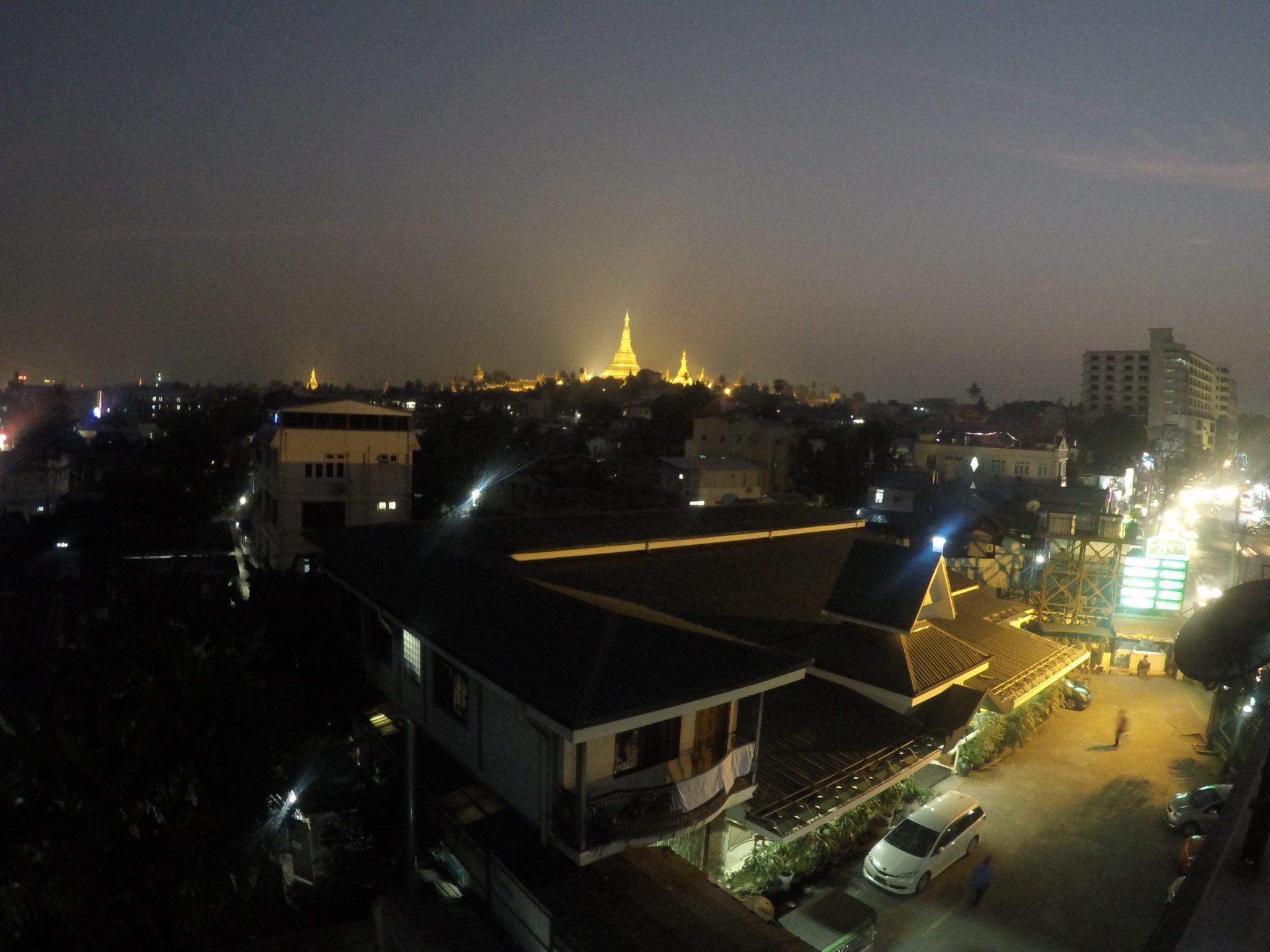
One thing you shouldn’t miss is the Shwedagon Pagoda in Yangon which is very impressive! Bear in mind though that you need proper clothes (pants, cover your shoulders etc.), will need to pay an entrance fee and will have to deal with many many tourists. This is one of the most touristy spots in all of Myanmar but still worth it.

schwedagon pagode in yangon, myanmar
The Schwedagon Pagoda seen from afar. To see it inside, go have a look yourself, I won’t give it away

Mandalay really has nothing interesting going for it. It’s good if you want a quiet hotel (not hostel) and/or can find a cheap flight ticket here. Other than that it just functions as a bus/train/plane hub to nearby places of more interest. The only thing worth seeing in the city is a very picturesque teak bridge called U Bein Bridge. I personally recommend skipping Mandalay and focus on something more unique and special, namely ALL the rest of Myanmar.

Bagan – Temples galore

Note: I’ve heard from multiple sources (other travellers) that you can no longer climb the temples at night, ie. for sunrise and sunsets. This is a very large part of what makes Bagan unique. This is, however, still Myanmar and I’m sure you can just do it anyway – even if you do get “caught” then a small bribe or simply saying you’re sorry should be enough. Has anyone been there since this change that can confirm/update on this ? Please comment!

In short, this is a massive archaeological site boasting an astonishing 2700 (approximately) temples. During it’s prime it was closer to 13000. This doesn’t mean that the area is huge, in fact you can drive from one end to the other on an e-bike in about 30-60 minutes. Without having the exact numbers I’d estimate it to be an area of around 20 * 10 km.

The area is surrounded by 3 cities: New Bagan, Old Bagan and Nyang-U. The night-busses arrive in Nyang-U but most of the backpackers go to New Bagan – a taxi ride of about 7000 kyats although they will ask for 15000 from you. in Nyang-U there are cheaper (and worse quality accomodation) and in Old Bagan is where the more upscale accomodation is. I staid in New Bagan which is quite touristy and expensive but has a good vibe. Lots of backpackers in that area.

When you get there, rent an e-bike (motorbikes are not rented to foreigners in Bagan) and scoot around the temples. This is basically the whole thing. Go with a group of friends and see the temples or drive around alone and get lost in the land of temples. Find yourself an empty roof and just sit there and contemplate about things in life.

bagan-relax
Finding a nice temple to be alone can be a very relaxing experience

There are very few bars in New Bagan and the temple area is the whole thing. But it’s worth it. This area is obscenely picturesque and when you see the sunrise/sunset you will fall in love. At sun-rise about 25 hot air balloons fly every morning, making for some of the most beautiful sunrises you will ever see.

bagan-beauty
The beauty of Bagan. Atleast some of it – so many amazing pictures have been taken in this area

Inle Lake

Most of the flashpackers you see out there will do one or two days at Inle Lake. It’s a small city called Nyaungshwe near the lake where everyone stays and it’s from here the tours/trekking starts.

The lake is beautiful and there is a reason why everyone goes here but it has become murky and brown even though just a generation ago you could drink from the lake. Motorized boats sailing around tourists add to this but mostly it is due to fishermen and other locals using the same motorized boats and fertilizers used in the floating gardens.

You can get a day-tour boat trip from any hostel you stay in taking you to the sights of the lake – the floating gardens, the four tribes living on the lake and the fishermen amongst other things. It makes for a great day and is worth doing. Remember sun-screen!

fishermen-inlelake-myanmar
Fishermen on Inle Lake

Another day can be spent on a bicycle ride around the monastery’s and caves in the area. For an evening activity visit one of the two vineyards in the area – one is close and has an amazing sunset view but unfortunately lacks good wine – the other has good wine but is further away and requires a tuk-tuk ride or an avid bicycler.

If you spend more days in the area, you can go on two or three day hiking tours in the mountains or alternatively hike from Kalaw to Inle Lake instead of taking the bus directly to Inle. Trekking is always a fun activity and the mountains are beautiful – if you are going in the dry season some of the waterfalls along the Kalaw – Inle Lake route will be dried out so maybe a tour along the lake starting and ending in Nyaungshwe is better.

Similar Posts

  • |

    Nhan Mountain (Núi Nhạn), Tuy Hoa, Phu Yen

    This is post 2 of 2 in the series “Phu Yen Province”

    1. Red Reef (or Ganh Do), Part of Xuan Dai Bay
    2. Nhan Mountain (Núi Nhạn), Tuy Hoa, Phu Yen

    Nhan Mountain

    “Nhan Mountain boasts interesting architecture, pleasing surroundings and is a historically significant spot for the Cham people. This trifecta of interest makes it a must visit for anyone who has the chance – foreign and domestic tourists alike.”

    Nhan Mountain (Núi Nhạn) is found rising high near the city center of Tuy Hoa, the capital city of the Phu Yen province in Vietnam. Nhan Mountain boasts interesting architecture, pleasing surroundings and is a historically significant spot for the Cham people. This trifecta of interest makes it a must visit for anyone who has the chance – foreign and domestic tourists alike.

    nhan tower tuy hoa phu yen
    Aerial photo of Nhan Tower. Original Photo Source: Internet

    For those very reasons, Nhan Mountain is the first thing locals think about when Tuy Hoa is mentioned. It’s become a famous landmark for Tuy Hoa and the entire Phu Yen province.

    Even so, Nhan Mountain isn’t often visited by foreign tourists, simply because very few know about Tuy Hoa (or even Phu yen) at all. In other words: it’s a hidden gem.

    Architecture and Religion of Nhan Mountain

    So far, the Cham people technique of placing bricks tight together without any kind of mortar or adhesive has remained a secret to researchers.

    Standing majestically on top of Nhan Mountain, Nhan Tower is an amazing piece of architecture. Nhan tower was built by the Cham people, who lived in the Đà Rằng delta region, between late 11th century and early in 12th century period. It’s the most unique symbol of the long-standing culture of the Cham people.

    nhan tower traditional clothes tuy hoa phu yen
    Nhan Tower up close. The two girls in the foreground are wearing traditional Vietnamese clothes (Ao Dai). Photo: My Nguyen

    When the French colonists invaded Vietnam (1945-1954), they destroyed parts of Nhan tower causing a lot of damage. However, Phu Yen authorities fully repaired and restored both the inside and the outside of the tower in 1960.

    The tower itself is a quadrant with four stories’. The tower is 25 meters high and each side of the tower is 10 meters high. The four-story tower illustrates the beauty, art and creativeness of the Cham people and resembles the architecture found in other places such as the Po Nagar Cham towers in Nha Trang.

    The roof is made of a lotus bud stone slab which is a Linga symbol of the Cham people. In the top of the tower, four sides have false windows to distinguish between the upper and lower tower.

    Inside the tower, the wall was built perpendicular from the bottom to the end of the body. The closer to the top, the smaller it is resulting in a pyramidal roof without the use of terracing or pilasters.

    Another sculpture of Durga the goddess, may be found inside the temple: it depicts the four-armed goddess holding a hatchet, a lotus and a club while standing on a buffalo. This sculpture belongs to the Tra Kieu style of Cham art from the end of the 10th century to the beginning of the 11th century.

    durga slayer of buffalo demon
    Durga, the slayer of the buffalo-demon, is represented in the temple. Original Photo Source: Internet

    Nhan Tower is not only a historical and cultural relic but also represents typical architectural and sculptural work of the Cham people. The tower was built using bricks and decorated with stones and ceramics. So far, the Cham people technique of placing bricks tight together without any kind of mortar or adhesive has remained a secret to researchers.

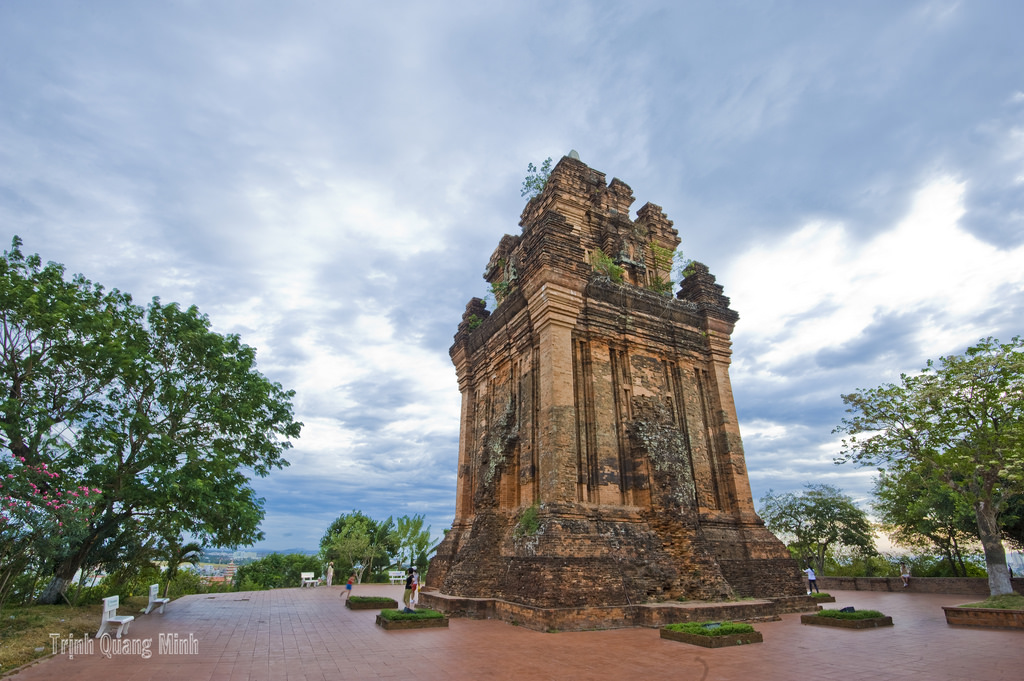
    nhan tower on a cloudy day
    Nhan Tower on a cloudy day. Photo: Trinh Quang Minh

    The tower, shrouded by old trees, is regarded by the locals as having ancient supernatural powers holding the spirits and ghosts of long forgotten times. This is holy ground and many come here to pay homage to the Gods.

    paying homage to the gods nhan tower tuy hoa phu yen
    Paying Homage to the Gods on Nhan Mountain. Original Photo Source: Internet

    Further attractive features of Nhan Mountain

    When visiting Nhan Mountain you will a get a sincere feeling of comfort and peace unlike most other places. It will not only help you understand history and religion but also provide insight into the spiritual life and social structure of the Cham people.

    Even without the tower, the view from the top of the mountain makes this place worth a visit. From here you can see all over Tuy Hoa city and enjoy the calming view of this tranquil city as well as Chop Chai Mountain

    chop chai tuy hoa phu yen
    Spectacular view from Nhan Mountain. From here you have the view of Tuy Hoa city and Chop Chai Mountain. Original Photo Source: Internet

    A common joke is that you would rather live outside something beautiful (a palace for example) instead of inside it because then you get to look at the beauty all day while if you’re inside you only get to look at the ugly outside.

    Luckily, you won’t have to worry about that with Nhan Tower as it is just as beautiful up close as far away. At night, Nhan tower is a shimmering beacon of light due to an advanced light system. Even far away, several kilometers, you can clearly see Nhan mountain shine bright in the night.

    Especially, when Nhan mountain is used to celebrate cultural and recreational activities. And it often is.

    To give a few examples:
    A cultural performance show is celebrated from 6-8pm every Saturday

    shows at nhan mountain tuy hoa phu yen
    Shows and other celebrations on Nhan Moutain. Original Photo Source: Internet

    Nguyen Tieu poetic festival takes place annually on the first full moon day of the lunar new year (Tet). This poetic night is the annual meeting event for poets and supporters gathering under the full moonlight, chanting the lyrical rhymes or discussing the art of poetry. You can experience these magnetic cultural activities and have a chance to harmonize with the rich Vietnamese culture.

    poetry night on nhan mountain tuy hoa phu yen
    Poetry night on Nhan Mountain. Original Photo Source: Internet

    Finally, there is yet an amazing piece of architecture located on the way to the top of the mountain that shouldn’t be missed when traveling to Phu Yen. The monument is called The Heroic Martyrs Monument, is 30 meters high and stands out white under the blue sky. With its elaborate and majestic dimensions, this creative, artsy design, looks like a giant sail and should by all means not be missed.

    heroic martyrs monument on nhan mountain tuy hoa phu yen
    Heroic Martyrs Monument on Nhan Mountain. Original Photo Source: Internet


  • |

    The Future of Sihanoukville, Cambodia and the Surrounding Areas

    This is post 11 of 12 in the series “South East Asia”

    1. Applying for a Myanmar (Burma) visa in Bangkok
    2. One night in Bangkok
    3. Visiting Rural Thailand – enjoy the silence
    4. Sleeping in a monastery on a mountain top in Hpa-An, Myanmar
    5. Overview of tourist hotspots in Myanmar (Burma)
    6. Naypyitaw – The official capital of Myanmar
    7. Being sick on the road
    8. The End of an Era – I’ve Sold My Motorbike and Left Vietnam
    9. Cambodia – First Impressions
    10. Koh Ta Kiev – Where the boat leaves from
    11. The Future of Sihanoukville, Cambodia and the Surrounding Areas
    12. What Were We Thinking (and other ramblings)

    Joe raised his glass and shouted “To another season!!” and emptied it. Joe is the owner of Seagarden at Otres Beach near Sihanoukville, Cambodia and today is his birthday.

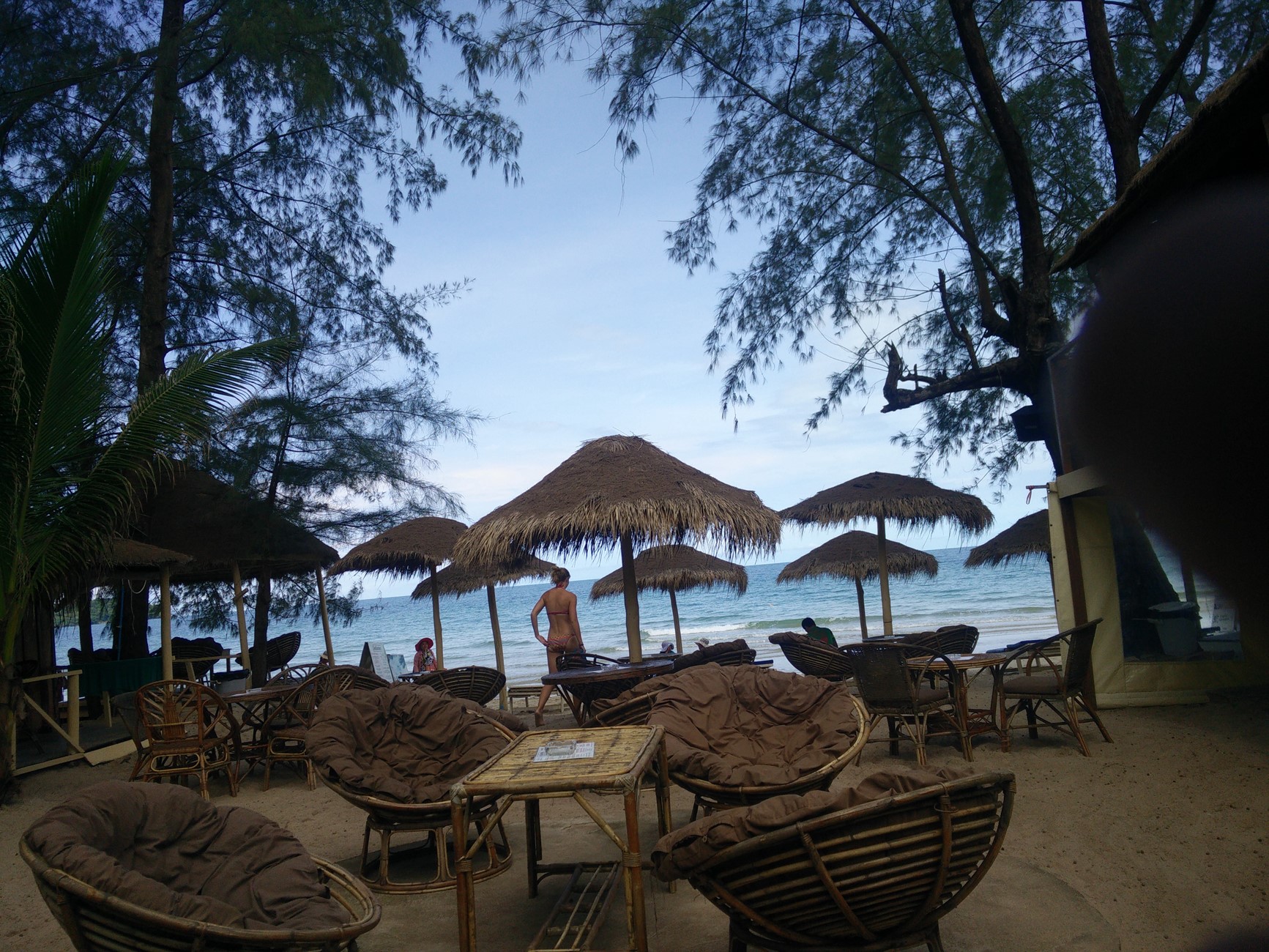
    For the last year or so, Otres Beach has been under the threat of being completely removed. Currently 50-something laid back chilled beach establishments fills up the space – most of them run by expat westerners that found their happiness here. The staff is a mix of locals and westerners – the guests are all foreigners. This is a place where the beer is ice-cold, the weather is hot and the weed is cheap. Showing up here for a day or two but then staying for a month or more is a recurring story.

    Beach bar with straw umbrellas and rattan chairs near Sihanoukville

    The problem is that technical ownership of the land is somewhat chaotic to say the least and I personally have only scratched the surface about who owns what and wants who to do what.

    The short story is that the entire area is threatened by Chinese investors looking to build luxury casino hotels in the area. Based on the large number of empty or abandoned casinos all around Cambodia it doesn’t seem to be a very successful plan but nonetheless many casinos are in the making.

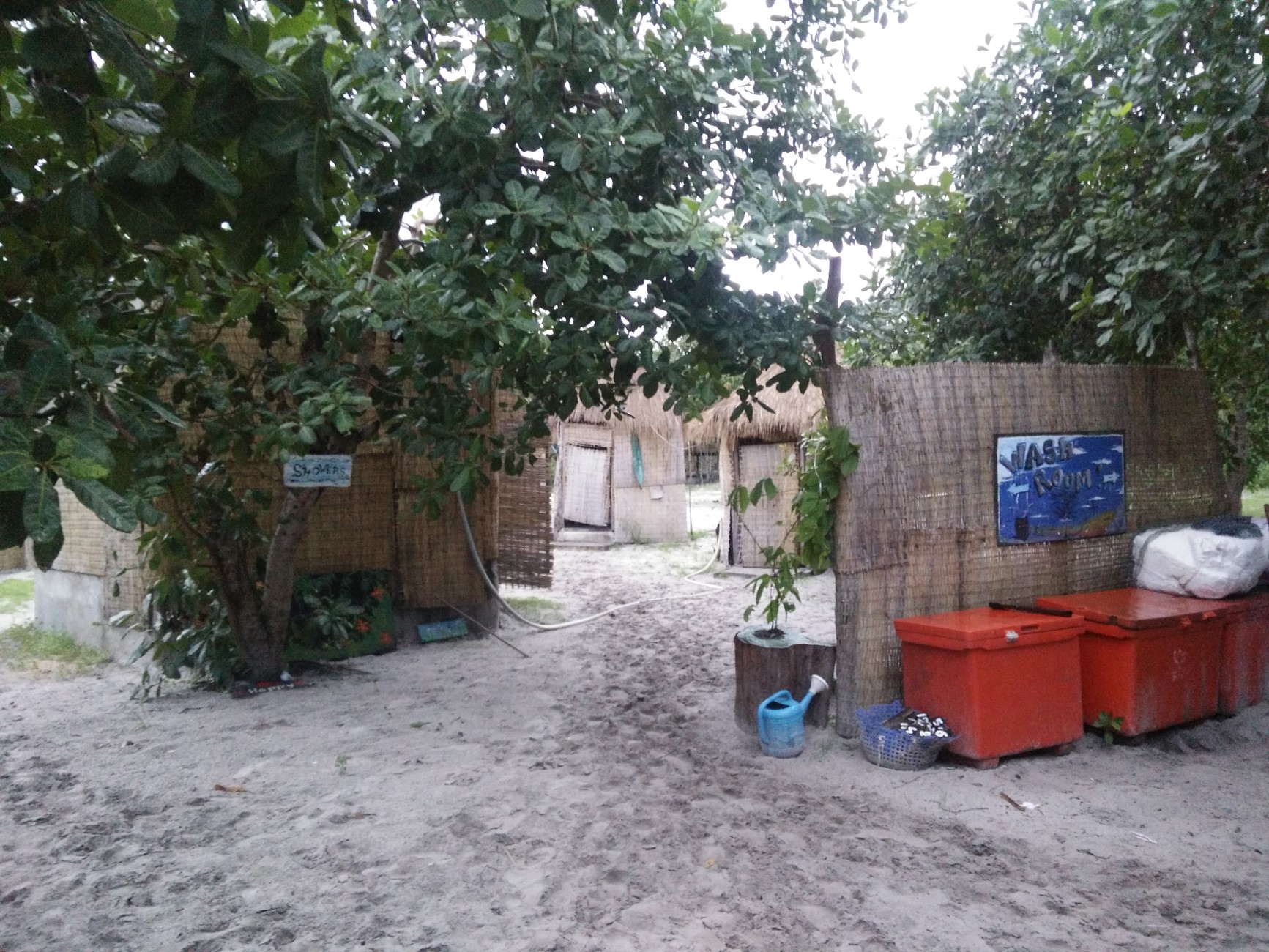
    On Koh Ta Kiev (an island off the coast of Sihanoukville and Otres beach) I asked around what the deal was with that and got various vague answers. From what I could gather, half the island is owned by Chinese and half owned by the French. The various accommodations out there are just built with a somewhat bribe-induced dubious permission which is why they never know when it’s revoked and the whole area is cleared. Furthermore, there is a large amount of free-roaming cows just grazing at will. These are apparently owned by the military and have been shifted around from island to island over the years – “sometimes the government comes over and moves some of the cows to another island – we don’t know why”. Lastly, some local fishers put some shacks on the island into an area called “the fishing village”.

    Sandy path between wooden huts on an island off Sihanoukville

    To sum up: there are a lot of different forces operation out here and to me, the foreign tourist, it’s all very hairy.

    Last year, the Chinese came and cleared a huge path straight through the jungle to make way for a road but then, just as quickly as they arrived, they left again. The theory is that the Cambodian government is putting pressure on the Chinese to develop these areas and apparently some sort of timeline required that there would be a road by the end of 2015 or whatever. To comply with this requirement, they just cleared some random jungle and left again. The French side remains untouched as the Cambodian government apparently are more lenient with them.

    Dense green jungle plants on an island off Sihanoukville

    In conclusion: I don’t think anyone really knows what’s going to happen even just within the next year.

    I really would love to know more about all this and not just here but also at other locations in Cambodia. Are the Chinese building Casinos against their will because of some strange arrangements with the Cambodian government? How long will we be able to drink pina coladas at these remote islands? Please comment if you know anything.

  • |

    How to: Bargaining, haggling, bartering – the art of getting good prices

    This is post 1 of 1 in the series “How-to Guides”

    Bargaining, haggling, bartering (or “farting about the price” directly translated from Danish – don’t ask me why) is a term known to almost everyone. However, to those who don’t know, in short it’s the art of securing the best price when buying/selling goods. As the customer you want the price to be low and as the seller you want the price to be high. This guide is written from the buyer’s perspective.

    I’ve written this guide because I feel that I’m a halfway decent bargainer and during the last 12 months, I’ve spent 9 of those in South East Asia which really gave me a chance to sharpen those skills. I base my self-proclaimed proficiency on the fact that I usually get low prices compared with other (western) travellers for the same goods (the same tours, the same food and the same clothes etc.). I also have a Vietnamese girlfriend which gives me a good grasp of what prices I should be getting. As a westerner, getting local prices is not common.

    Bargaining in today’s world

    In western cultures we only rarely haggle as most prices are fixed and unnegotiable in shops. You might be able to get a small discount but short of flea markets/yard sales, the used car market, and a few others there isn’t really much to be done so although being good at bargaining can get you a few good deals, in the long run, the main benefit of bargaining in western cultures is probably that happy sensation you get when you feel like you just saved some money. Because let’s admit it, everyone loves being “smart”, ie. booking the hotel at the lowest price, utilizing a coupon, or saving some money on gas. Knowing that the guy next to you is paying twice the price you are, for the same thing, just makes the bed a little bit softer and the steak a little bit juicier.

    Now, when you turn your eyes towards other parts of the world like the middle-east, Africa or south-east Asia bargaining becomes not only useful but completely necessary and unavoidable, especially if you spend your time anywhere slightly touristy. Just for being a tourist, you’ll easily end up paying 10x the price or even paying for something you shouldn’t be paying for in the first place. Everything is negotiable. Period.

    So without further ado, let’s get started

    Know the value of what you’re buying

    This is a big one. Know the price of what you’re trying to buy! You have a valuable advantage if you know what you’re supposed to be paying (let’s call it local price). The vendor already knows how low he can go and still make a profit. You need to get as close as possible to that limit. For more common things like water, you can just go straight for the local price. If you know it’s $1 around the corner don’t even haggle. Just demand the water for $1. In most cases he will agree as you and him both know it’s a fair price and he is still making a profit – quick and easy. I’ve seen friends buy water for $4 when I just bought a water from the same guy for $1.

    Knowing the value is essential in almost any purchase. You have no idea if you’re getting a good price for that cab ride from the airport if you don’t know what the general price for a cab ride is in that country. Hell, if you don’t even know the currency you’re bargaining in, things get rough. Add to that the fact that you probably don’t speak the language and their English is limited at best.

    Taxi: “City center – 500 baht”
    You: “Uh, how much is that in dollars?”
    Taxi: “City center – 500 baht”
    You: “How far is it?”
    Taxi: “City center – 500 baht”
    You: “Ok, thank you…”

    If you’ve done this trip before and you know the price to your place is 300 baht, just show him 300 baht and the address. He’ll say yes.

    Trays of fried insects at a street market stall

    Figure 1: Bug market in Bangkok. It’s not always easy to “determine the value”

    Ask several vendors about the same product

    If you want to buy, say a pair of sunglasses, you might feel good about bargaining the first guy you ask down from $10 to $5 thinking you’ve saved 50% but if the real value is closer to 3$ then it wasn’t such a good deal after all. If you’re not so lucky as to know the price beforehand, asking multiple vendors gives you ballpark numbers. In some cases, this won’t work though, for example when I was in Ukraine I asked the first taxi driver for the price and then he followed me around for the next half hour and surprisingly enough every cab driver I asked after this, gave me the same price. I even tried asking a police officer but the same thing happened – the cab driver that followed me around told him what to say. In the end I got the real price (much lower – about 1/3) from a random bystander who saw me walk around. None of the people spoke English but luckily both me and him spoke German so he arranged to get a taxi for me at the heavily discounted price.

    Ask staff, friends and the internet

    Hotel/hostel staff can be a huge help in figuring out prices. Not only will they know the prices but often they will know which market to go to, to get what and when etc. which can be a tremendous help. If you’re real lucky they will even help you go and buy it which has happened many times for me. Other travellers in the area that you happen to meet will also give a good idea of the prices and finally of course, you can consult the internet, aka. Mr. Google. Take note that foreigners might be wrong and the internet might be outdated. Hostel staff is usually your best bet but sometimes you can’t speak their language or other things might prevent you from asking them.

    Experience and common sense

    This might seem obvious but the point here is that you pay attention to what you pay instead of just paying. You also try to see what kind of shop you just got that cheap meal in – for example in Vietnam when something has “binh dan” in the name it’s cheap. This means “Popular” or “Common” or “Woking Class”, in other words it’s the budget solution. You can also use common sense to figure out that when you just bought a cab ride for 20k and the next guy wants 200k for roughly the same length of ride – something’s wrong. This applies for everything – try to get a general idea of how expensive in the country is. This can be hard when you first enter a new country but after a while you get an idea of the general price which can weed out the most ludacris prices.

    When I’ve travelled in Myanmar, Thailand, Vietnam, Laos, Malaysia and Cambodia I don’t have to start all over again if I go to for example The Philippines or Indonesia.

    Use cash and use exact money

    Credit cards can be fine and in some parts of the world you won’t ever need real cash but in the rest of the world and in places where you typically want to haggle, cash is king. There are a number of different benefits of being able to pay in cash.

    The first reason is the immediate nature of cash. You get your goods; they get their cash – instantly. Credit cards, bank cheques, bank transfers and promises of future prosperity can all be good and well but with cold cash in hand the deal is done right then, right there. You don’t have to wait for days for a cheque to clear or the bank transfer to come through and you probably do not have a credit card machine to instantly verify the authenticity of the card. Cash can be counterfeit but that risk is slim and if someone moves into that class of criminality it’s a whole different ballgame. Lately, mobile transfers (very quickly transferring cash directly using your cell phone) has started to move in on the territory of cash as it’s also fast, precise and reliable (safe). For the most cases, though, you both need to have bank accounts in the same country and an internet connection which sets its clear limitations.

    Secondly, cash has a psychological effect. You can dangle the money in front of the vendor and/or use the familiar: “I know it says 50k dong on the sign but I only have 35k dong on me, is that enough?”. If you are paying by any of the other ways, this trick (which is surprisingly effective), won’t work. It also works in more subtle ways, for example if it says 1 for $6 and 3 for $15 and you only have $10 you can say: “I only have $10, can I get two for that?” so that you get the bulk discount without having to buy all 3.

    Women in traditional clothing with children by a mountain road

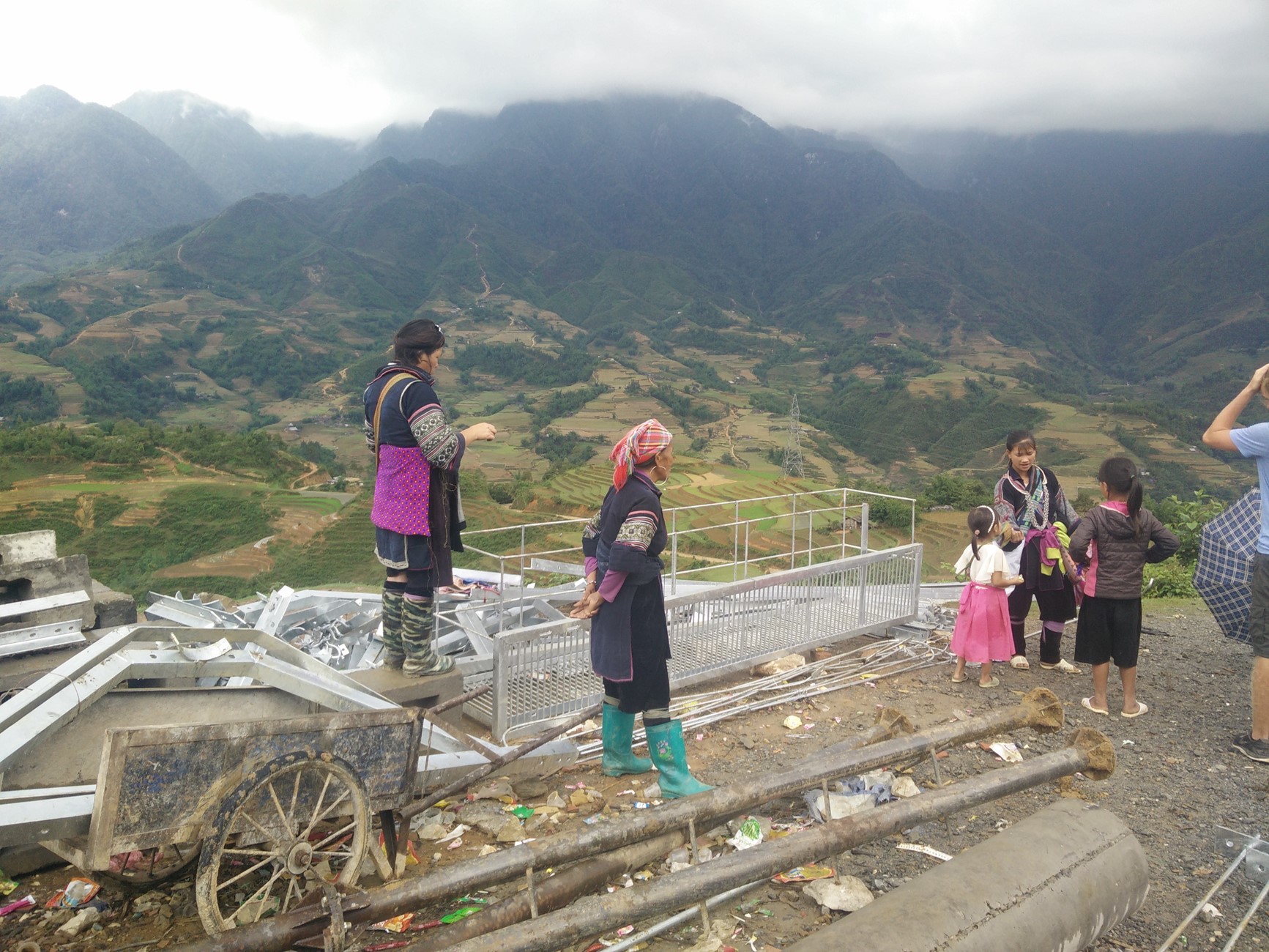
    Roaming vendors in Sapa, North Vietnam taking a break and having a chat

    Thirdly, as an extension to the above two reasons, cash makes the transfer fast and simple which are valued highly by a busy vendor. If you don’t have exact cash, the vendor might try to get more money out of you by saying he doesn’t have change on your bill hoping you’ll just give him the full bill rather than not buy the goods. Taxi drivers often do this, maybe accompanied with a quick “tip, ok?”. If you don’t accept given him that tip he could make you go through hoops like going to a nearby store to change the large bill and in the end you just end up saying whatever and giving him the money. It’s usually not a lot of money but it all adds up in the long run.

    Alternatively, the deal just falls through simply because your bill is too large and he simply can’t give you change which is a shame seeing as you’ve both just come to a fine agreement.

    Make the vendor suggest a price first

    Simple but good advice when you don’t know what the price is supposed to be. Anyone who’s been doing salary negotiations have probably also heard this advice before. Let the employer offer you a salary first and then work from there. If you make the first move and set it too low, you’ve done yourself a disfavour and might even appear unserious. On the other hand, if you set it too high, you might seem greedy or infatuated with yourself to name a few things.

    In short: let the vendor/employer give you ballpark numbers first and work from there.

    Say how much you want to pay instead of asking for the price

    This applies mostly when buying by the kilo or buying by size rather than number. As mentioned earlier, knowing the value of whatever you’re buying makes it easier for you to haggle. Besides showing the vendor a degree of confidence – you know the prices, you’ve done this before, don’t f*** around with me – it also plays the ball to this court, forcing him (or her) to make the first move on prices. Say you want some watermelon and instead of asking how much for a specific watermelon, say you want $3 worth of watermelon and then let the vendor pick a watermelon of appropriate size. Sometimes the vendor might pick a surprisingly large watermelon or even two watermelons which means you’ve grossly overestimated how much watermelon costs but now at least you know because he/she just made it obvious to you.

    Busy indoor market hall with stalls and shoppers

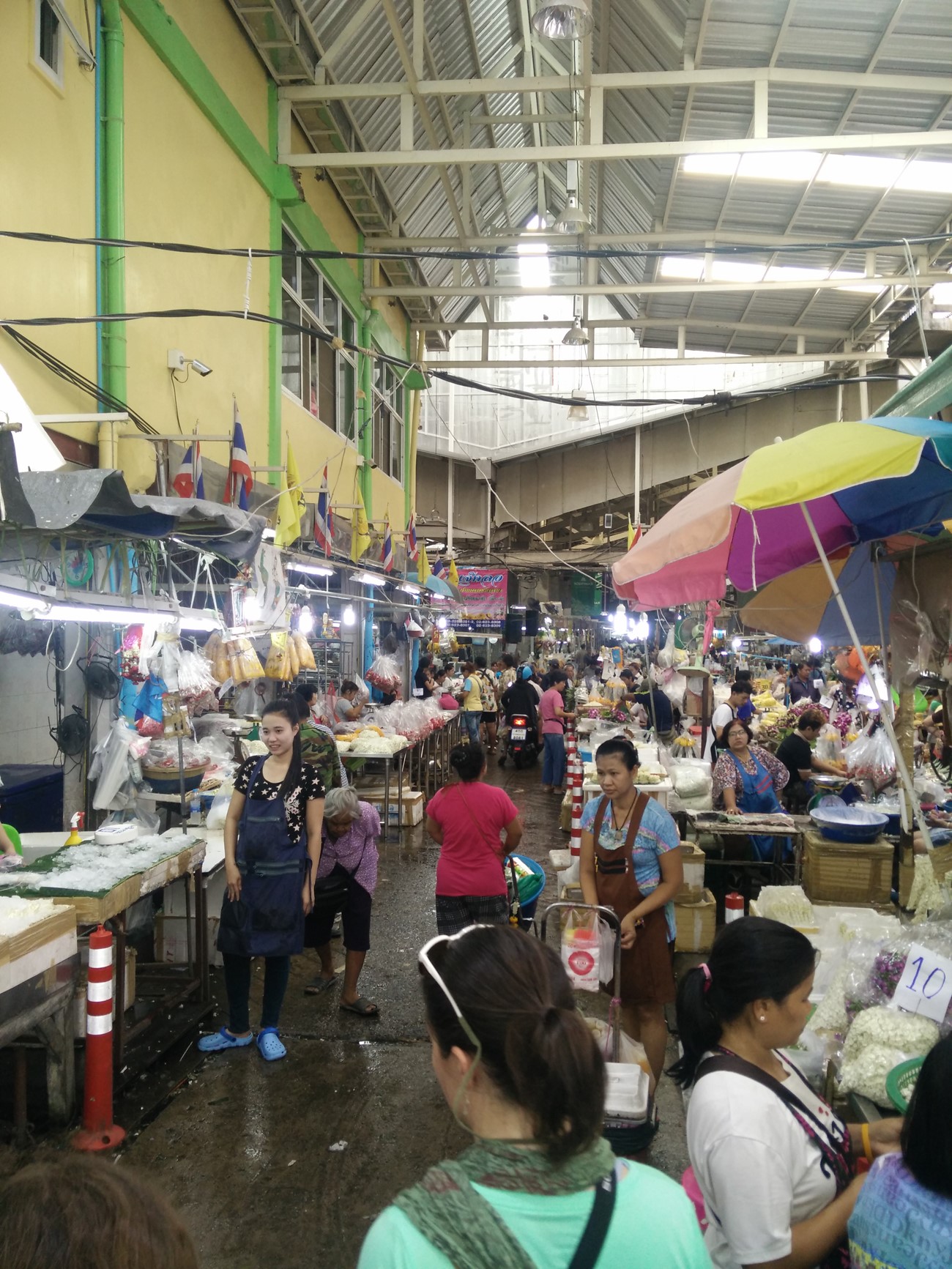
    Flower market in Bangkok

    Conversely, if you say “Can I buy that that watermelon for 3$?”, it makes it easy for the vendor to just say yes even though it’s actually only worth $1. Of course, if you know that this particular melon is worth $1.10 and you demand to buy it for $1 you potentially saved yourself $0.10 but that is not a likely scenario and requires you to have a pretty firm grip on watermelon prices. It works for water because water is the same price all over town – for watermelons… let’s call it advanced bargaining.

    Asking several vendors, the same question also gives you an idea who gives you the best prices simply by visually showing you what your money is worth. Of course with things such as fruit there is also the topic of quality but that’s a whole different aspect and is essentially a sub category of knowing the value of what you’re buying.

    Don’t show large amounts of money

    Appearances do affect the prices you get. If you look like a rich westerner in fancy clothes and you flash large $$$ bills everywhere you go, it’s only natural they will try to ask you for higher prices. I wouldn’t recommend “dressing up”, or more accurately “dressing down”, for going to a market because it’s not that important but “appearing poor” does have an effect and so does a large wad of cash. Bringing smaller bills also gives you higher granularity of paying the exact amount.

    There is also the aspect of safety. If you are walking around a crowded local market with large amounts of cash sticking out of your back pocket or with money sitting there quite visibly in your wallet whenever you pay for something makes you an obvious target for pickpockets and/or scammers.

    Be wary of scammers

    Scammers might try to push the prices up by telling you that just today it’s more expensive so the prices you’ve read on the internet are normally correct, just not this particular day.

    A common example is cab drivers (yes, cab drivers are notoriously unethical) who will tell you that you need to take a large de-route because of a traffic jam or a road work. While he may be right, you have no way of knowing and most likely he just scammed you out of a few extra moneys. Your only defences against this type of behaviour is asking others beforehand so you know or simply calling his bluff by telling him to run right into that traffic jam, you’ve got lots of time.

    Another example is in Bangkok where you can choose to take the highway or not. The highway has tolls on it and is longer and therefore more expensive – but faster. The cab driver would want this as he racks up more money faster (faster speed of the car, faster spinning of the meter) – traffic jams gives him very little money for his time. He will try to convince you to avoid the local roads as there is a traffic jam or roadwork to get you on the highway but in most cases this is not the case. Last time I had to take a taxi, I knew this because I had asked the hostel staff and although he asked multiple times to go on the highway I kept firm and it saved me about 30% of the price while only extending the trip from 50 to 60 minutes.

    Conclusion

    Know the value, pay with cash and don’t accept the first offer you get.

  • | |

    One night in Bangkok

    This is post 2 of 12 in the series “South East Asia”

    1. Applying for a Myanmar (Burma) visa in Bangkok
    2. One night in Bangkok
    3. Visiting Rural Thailand – enjoy the silence
    4. Sleeping in a monastery on a mountain top in Hpa-An, Myanmar
    5. Overview of tourist hotspots in Myanmar (Burma)
    6. Naypyitaw – The official capital of Myanmar
    7. Being sick on the road
    8. The End of an Era – I’ve Sold My Motorbike and Left Vietnam
    9. Cambodia – First Impressions
    10. Koh Ta Kiev – Where the boat leaves from
    11. The Future of Sihanoukville, Cambodia and the Surrounding Areas
    12. What Were We Thinking (and other ramblings)

    Waking up late

    Bangkok is a rough time if you don’t like noise, people, beer, lights and general chaos… However, if you do it’s an experience worth having.

    Bangkok Temple crawl

    Me and two mates (Chip from the US and Soloman from Scotland) decided to go for a bugs and temples day which would start out with temples in the morning and then later bugs in the evening. I’d looked up a couple of temples that I thought interesting and dotted them into Google Maps so with those we had a general plan.

    Soloman had to switch hostel and since most of the temples were in that vicinity, we jumped in a cab got him checked in at the new place and started walking towards the temples.

    We saw the Royal Grand Palace and it is incredibly large. We got 4 tickets at the entrance and only ended up using one. After walking around in the sun for a couple of hours without food or water we got to a point where we’d seen enough Grand Palace. It’s amazing but also huge so after seeing the emerald Buddha we left to get some water.

    Royal grand palace in bangkok
    One part of the Royal Grand Palace. The palace is huge!

    Next stop was Wat Pho which is where the Reclining Buddha is at. It’s a massive gold Buddha located inside the temple. It’s called the Reclining because of the very relaxed position the Buddha is assuming. Definitely worth a visit.

    reclining buddha in wat pho
    The reclining Buddha in the Wat Pho temple in Bangkok. It is not possible to see in this picture but the buddha is about 50 meters long

    Final stop was Wat Arun. Unfortunately, it was closed for renovation but we did get to cross a river using a local boat. It was an interesting experience since the river is completely filled with boats – large, small and even a tugboat with a barge was coming through. A bit chaotic but we managed to get across. And as it was only 2.5Baht (7 us cents) there is not really any room for complaining. The area around it was very interesting and we did manage to get lost, suddenly ending up in a school area surrounded by thai kids in uniforms and some very small local streets. So even though the temple was closed, the trip across the river most certainly was not for naught.

    Back at the hostel

    After visiting Wat Arun we were all tired and needed food and rest after a full day of walking in the sun, so after watching a free Muay Thai fighting match for about 15 mins (the match ended with a brutal KO), we got back to my hostel.

    Every day there would be someone sitting out on the terrace in front of the hostel having a beer and today was no different so we quickly joined them. This lasted the next 4 hours from around 8pm to 12pm, the same as every day, as this is when the hostel stops serving alcohol. During this time, I managed to get some food and an hour of sleep too so that I was a bit more rested. I still hadn’t gotten to eat bugs yet and I was determined not go to bed before tasting bugs.

    Finally getting to eat bugs

    Around midnight we all grabbed a cab to a place called Nana Plaza in the city center. It’s the second most party street of Bangkok but not really that appealing. It’s characterized by a lot of old white people walking the streets, overpriced beer and working girls everywhere. It’s a place you can visit once and then the charm goes off pretty quickly. Debauchery and gluttonous indulgence at its finest so we only stayed for one beer. As I was anxious to get a bite of some zesty bug I convinced the others to make the next stop a street food vendor around the corner that we saw on the way in.

    bugs in bangkok
    Eating bugs in Bangkok

    The bugs as you see them above are not as bad as they look. The easiest bugs to eat are the little white maggots as the taste resembles salted chips. The crickets (both large and small) have the same taste but the legs are annoying as they are hard to eat and get stuck in your teeth. I later learned that the trick is to hold the legs and eat the rest – just like you would not eat the tail of a shrimp. The beetles were the hardest as the hard shell makes for a very inconvenient bite to eat – not a single one of us managed to eat one without spitting it out. However, we later learned that the way to eat them is to peel the shell off and only eat the inner part of the bug. This makes sense and would certainly be easier but it’s hard work for very little food.

    All in all bugs were a very interesting experience and I was pleasantly surprised with the taste although I would probably steer clear of them if I had the chance to eat a good pad thai instead.

    Khao san road

    After the bug eating experience we went to Khao San Road which is the main party street of Bangkok. After a cab ride with a man that enjoyed breaking the law by going 120km/t while blasting through red lights, we made it. The night was just a “normal” Bangkok style party after this where we ended up in a disco dancing the night away until around 4:30am. By the end of the evening my MiFit watch told me I had moved around 30000 steps or the equivalent of about 13miles – the target is 8000 steps. It was a rough day but included so much of what you can do in a city like Bangkok. Although I only had 3 beers total the entire night, it was quite a rough day/night and one I’ll remember. I also slept like a log that night.

    banana-stand in khao san road
    Doing a banana-stand at Khao San Road in the heart of Bangkok
  • |

    12m cliffjump in Phi Phi Laguna, Thailand

    This is post 7 of 7 in the series “Working in Malaysia”

    1. First day in Penang, Malaysia
    2. Settling in – To work in Penang
    3. Weekend trip to Singapore
    4. Wrapping up life in Penang
    5. Beach hopping in Phuket, Thailand…
    6. Thailand – Ko phi phi & Krabi
    7. 12m cliffjump in Phi Phi Laguna, Thailand

    During my last visit to Thailand  I only wrote very few words as I was having food poisoning. Before that happened though, I had an amazing guided trip which included a cliffjump from a 12m cliff. When I signed up to the jump we figured it would be some well tested place with lots of space and an easy path to the top so that any fat white tourist could do it. I was wrong. It was not until we got there we realized we had to free climb a pretty vertical cliff. And on top of that they didn’t even move the boat underneath until we asked so that at least when we fell down we wouldn’t have to deal with the boat’s rather hard exterior as well. Happy to say, I made it to the top and with GoPro in hand – I jumped.

    Below is the cliff that we climbed and jumped from as seen from the boat.

    cliffjump from boat
    The cliff as seen from the boat
  • |

    LIVE JOURNAL WEEK 1: Solo motorbike trip around northern Vietnam

    This is post 1 of 3 in the series “North Vietnam Motorbike Roadtrip”

    1. LIVE JOURNAL WEEK 1: Solo motorbike trip around northern Vietnam
    2. LIVE JOURNAL WEEK 2: Solo motorbike trip around northern Vietnam
    3. LIVE JOURNAL WEEK 3: Solo motorbike trip around northern Vietnam

    Total foreigners spotted: 10 (Ban Gioc Waterfalls)

    Map of the motorbike route around northern Vietnam, week 1

    DAY1: Hanoi -> Dinh ca

    After a week in Hanoi (mostly due to sickness), I was itching to get on my bike again. I still wasn’t fully recovered but nothing could be worse than smoky polluted Hanoi. It would in either case be better to just get out in the countryside, get some fresh air and a cheap private room.

    I knew this was probably the last time I was going to see foreigners for a least a couple of weeks. I felt good about it – I’d heard stories about the north. How beautiful it is and how warm and friendly the people are.

    Furthermore, I’d decided to make much less use of Google Maps. I was in no rush and I knew I had to drive north east-ish.

    12:00: I left smoky Hanoi around noon and didn’t look back. I started by taking AH-1. The same route that I had been on so many times before, the main coastal artery that connects south and north Vietnam.

    14:00: Lunch time. After having been served 70k dinners in Hanoi as “cheap” it was a pleasant surprise that the first place I stopped wanted only 30k/$1,5 (without bargaining) for a big ol’ plate of rice as well as free tra da (icetea). More food than I could eat. This place also introduced me to the before mentioned warm and friendly locals. Two seconds after entering the shop I was offered beer, cigarettes and a hit of “thuoc lao” on the special pipes they use here made out of bamboo (about 80cm tall) that mostly looks like a bong. I’ve never tried them but I’ve seen other foreigners try them and mostly they end up coughing for a good 5 minutes. Being sick and all I had to refuse a million times (they kept asking) as I didn’t want to risk it.

    Local man smoking a bamboo water pipe

    I soon after turned down a back road just to see what’s up down there so to speak. The road was filled with potholes and the speed was slow. On the other hand, though, everyone was smiling, the landscape was beautiful and every single place I stopped they asked me if I wanted beer and cigarettes. There were people fishing, people playing pool and generally people hanging around everywhere waiving me down to come join them.

    I hung out with some of them but still no beer.

    17:00: check in at a hotel. Relax.

    19:00: Late night exploring – took a small road but was greeted by several barking dogs. Turned around. Saw many people play tennis, volleyball etc. Apparently this city had a lot of “richer” people vacationing. This was a Saturday – so made sense.

    24:00: sleep

    DAY2: Dinh ca -> Bac Son

    11:00: Wake up very late for some reason. I felt more sick than yesterday and the weather was bad. I didn’t feel this day. Got a Pho Bo (beef noodle soup) for 20k.

    12:00: Check out – staff was smiling – made me happy J

    12:15: Speedometer stopped working

    12:30: Asked mechanic to fix it

    13:30: He gave up – said he couldn’t fix it. It was free though. I kept driving – put on a jacket as it was getting chilly.

    14:30: Saw a nice town that I liked – everyone was smiling, so I checked in for the evening to wait out the bad weather.

    The rest of the evening I relaxed. I got a Banh Mi (bread with egg) for 10k and a com rang (fried rice) and a beer (!) for 35k total. The hotel room had a tv with English channels so I did some business on my computer and watched tv. No wifi though but whatever.

    Another thing I had noticed was that my bike would randomly stop and had trouble starting again. I’d experienced this problem before – definitely the ignition – great. Just what I needed

    22:00: sleep

    DAY3: Bac son -> Doc Xuan

    5:30: Woke up and looked out the window. What an amazing sunrise. Beautiful, majestic mountains with the sun rising above them. This was so pretty – why hadn’t I noticed this view the day before? Fell asleep again.

    Sunrise over the mountains at Bac Son

    6:30: Woke up again – this time for good. Very early I know and I don’t know why. I felt fresh and happy. Chickens were clucking outside and the view was still spectacular. Also the sun was showing and man did I feel good!

    7:30: Pho bo (beef noodle soup – 20k), shower, packing.

    8:00: Bike to mechanic. They were 3 people looking at it, it took 45 minutes but he fixed the ignition. He said he couldn’t fix the speedometer either. 40k total – so cheap!

    9:00: Left Bac son very happy. Everything was good and the sun was shining.

    10:30: Enjoying the views and the people. Saw a mountain with some water buffalo tracks going up them. First I tried driving them but boy was that a bad idea – with some careful backing up of the bike I managed to get backwards down this hill I optimistically tried to climb. I parked the bike and climbed the mountain on foot. So I sat there on a steep hill with a view to my bike and the road for about an hour. It was a good hour.

    For the next hour or so I drove towards Lang Son to get my speedometer fixed but as I’ve decided to use Google Maps very little I missed a turn so I ended up in Dong Dang instead. A true border town. Well, fudge it, I’ll repair it later! In Dong Dang I was once again offered Thouc Lao (remember? A type of tobacco smoked from a huge pipe) but I refused again.

    When I neared the Chinese border I didn’t think to stop. Unaware I was at a border control about to leave Vietnam and being on a scooter (I’m used to just drive by whatever roadblocks people put up as scooters can go anywhere), I happily and ignorantly drove past 3 Vietnamese border checkpoints (I counted on the way back) and left Vietnamese soil. On the way in to China though, in no man’s land, I got whistled at followed by some very stern looks. One guy was pulling out a notebook and didn’t look too happy but I just hurried back before he could stop me and luckily nothing happened. Given it’s a very remote northern Vietnamese border but still… I won’t forget the look on that guys face.

    After some very curvy, mountainous roads with astonishing scenery washing over me and some trucks who you would think are out to kill you, I stopped in a tiny town. It wasn’t any particular town but the place was peaceful and it felt right to stop at this particular moment, 8 hours after I set out.

    River seen from a bridge on the way from Bac Son to Doc Xuan

    17:00: Shower, dinner, relax, sleep, repeat.

    This hotel was strange, there was nothing going on in the area and he took my bike in at 7 in the evening – surely I wouldn’t be needing it at such late hours. I also didn’t get a key because I could lock the door from inside. I guess it didn’t occur to him that I wanted to go out and therefore would want to lock the door behind me.

    DAY4: DUC XUAN – BAN GIOC WATERFALL – RURAL HOMESTAY

    6:15: It knocked on my door and breakfast was served. So early!! I thought it came at 8. Put the breakfast on the table and fell asleep again

    7:10: Ate cold breakfast. Understood why the hotel “closed” so early the evening before.

    8:00: Went to buy water and was offered rice wine. Twice. I accepted – what better way to start the day. I also received snack roasted dog meat to go with the wine – of course I didn’t know it was dog meat until after I ate it. Chewy.

    8:30: Packed and ready to go

    I didn’t quite know what the plan was today, I knew I wanted the Ban Gioc waterfalls but I figured they were too far away so I might as well take it slow and sleep somewhere near. Get it first thing in the morning. I started driving towards them off the highway I’d been on the day before and this road was (as usual) very beautiful but also very bad and it was a long bumpy ride until I finally hit the main vein again. By “main” I mean paved and relatively pothole free. I could also feel the rice wine wearing off which gave me a form of mini hangover.

    The main road was great – I could lean down in the curves and the trucks would stick to their own side. Heaven!

    12:00: Saw a sign going somewhere unknown – followed it. Didn’t find whatever was down there but I saw some very quaint cities that I’m sure don’t see a lot of tourists

    12:30: Arrived at Ban Gioc Waterfall and parked my bike as I was going to stay here a couple of hours.

    Ban Gioc Waterfall

    It was very beautiful but I had one thing in mind – I wanted to go to China without actually getting a visa and it was right there on the other side of the river. Just about 40m’s away – an easy swim. It looked frightening as it certainly wasn’t exactly a discrete place. I would have to swim over while everyone was watching and I would have to leave all my stuff behind (my bag with my entire life).

    I figured since I was a tourist I would get some leeway and at most get whistled at or something so without thinking further about it I jumped into the water. I was the only one in the water.

    I swam out a couple of meters and looked around but couldn’t see anyone yelling at me – so far so good. I took a deep breath and went for it. It’s easier to ask for forgiveness than permission. Don’t look back. Don’t stop. Just keep swimming and so I did.

    About halfway over I saw a group of about 10 policemen at the Chinese side and they were all looking at me. They had assault rifles. My heart was racing; I’ll tell you that. They didn’t seem to look that angry though – just very very frightening. I decided to keep swimming – directly towards them so as to let them know I wasn’t going to make some kind of weird run for it.

    When I got over they looked at me intensely but no one stopped me, so I snapped some pictures with the policemen and a selfie with a Chinese tourist, walked around for 30 minutes and went back through the waterfall. Such a strange experience…

    … But I’ve now been to China!

    Thor standing on a rock in front of Ban Gioc Waterfall

    Back on Vietnamese soil I tried to climb a path behind the waterfall but this time I was promptly stopped. Swim the border: sure, climb a hill: no!

    My mind was soon diverted though as a large group of Vietnamese on vacation from Lac Son called at me to come join them. I sat with them for an hour and we took a lot of pictures. I also got some food, ricewine and a beer.

    Note: A large group of foreigners on motorbikes entered the falls just as I left. Those were the first I’d seen in a long time.

    15:30 Leaving Ban Gioc. I now had about 20km of river drive along the Chinese border. It’s strange to see how easy this border is to cross. Nothing more than a short walk to the other side which might get you wet feet but that’s it. Some places the river is no more than 10 meters. I guess it’s no coincidence that this exact border is also where so many invasions from China has begun. This area has a lot of history.

    16:00 As it was getting late, I was on the look-out for a place to stay. However, as I passed an extremely beautiful mountain view over some rice fields I decided to stop for a bit and write on my computer.

    As I was sitting there, a family passed by. The dad asked me (in Vietnamese) what I was doing and I showed him my route map. After 10 minutes he invited me in for a drink.

    We drank about 15 shots of ricewine and then I was invited to sleep there (luckily as I was in no condition to drive)! They served me more delicious food and more rice wine but I had respectfully started refusing as I wanted to be ok the next morning.

    Rest of the evening was talking, eating, drinking, watching Vietnamese tv and google translating on my phone.

    Host cooking a pot over an open fire in a village house near Ban Gioc

    21:00: sleep

    DAY 5 – RURAL HOMESTAY – QUANG UYEN

    8:00: Woke up and was immediately served rice wine and some food. Sat around, talked to the father and uncle who were heavily into the rice wine already. I managed to take care of “business” in a toilet with no door, no paper and no running water. The toilet is also right next door to the pig.

    10:00: Rest of the family woke up

    11:00: Me and one of the sons (Hieu) went to see a nearby cave. We took my scooter to get there and dropped off the uncle at home on the way there too. 3 people on my scooter. I was driving. No helmets.

    The cave was amazing. Just incredible. First of all, it was behind a private residence, second of all there were no signs of any sort and forget about finding it on google maps. There was no entrance ticket and it had no name as far as I know – it was just called “the cave”. After a hike there, we started venturing into the cave and quickly it became completely dark. Unlike so many other caves I’ve been to, here there were no path to walk on, no lights on the wall, no other people at all. The only thing to help you were a few bamboos in strategic places to help you climb the worst parts. As it’s impossible fully to describe something like that I’ll just stop here, and just believe me – of all the caves I’ve been in so far, this experience was the most unique.

    14:00: I was back at the family. I got some lunch and said goodbye to the family to continue my journey.

    18:00: After a long day on very bad roads through narrow mountain passes with more extraordinary scenery, more curvy bends, and more huge 18-wheeled trucks driving on tiny roads, I made it to Quang Uyen where I stayed for the night.

    DAY 6 – QUANG UYEN – CAO BANG CITY

    8:00. Woke up.

    The first part of the day was nice and easy. I rested up until 12 and took full advantage of the English tv channels and cozy atmosphere of the nha nghi (guesthouse) I was in.

    12:00 Left the guesthouse towards hang Pac Bo (Pac Bo Cave).

    For the next 4 hours I drove through obscenely pleasant mountainous areas. However, describing these roads over and over again seems kind of redundant as they are all very beautiful and I’m running out of adjectives. I felt like I was in “the Shire” from Lord of the Rings. There are so many good pictures to choose from but in the name of brevity I’ll give you just this one for now.

    Motorbike on a mountain road below karst peaks between Quang Uyen and Cao Bang

    16:00 I pulled up to Pac Bo Cave, no more than a few kilometres from the Chinese border.

    As per usual there were nothing but locals, although unlike Ban Gioc Waterfall, I didn’t see a single non-asian for the full 2 hours I was there.

    This cave is particularly important to the Vietnamese as this is where Ho Chi Minh hid for several weeks to avoid detection after he crossed the border from China in 1941. It was the first time in 30 years that Ho Chi Minh had set foot in Vietnam and within four years, on September 2. 1945, he read the declaration of independence that proclaimed Vietnam free from Japanese suppression and French Rule.

    The cave itself is quite modest but the historical value of it is enormous. You take a 1hour walk to the cave and back in a circle loop, through peaceful surroundings and along a nice stream of water that’s sacred to the locals.

    Narrow entrance to a limestone cave near Cao Bang

    Thor standing on a rock by a clear turquoise stream near Cao Bang

    During my time there I fell into conversation with a girl and her family (it’s not hard – everyone wants to talk to you) and I got invited to dinner. I followed the family back to their farmhouse just outside of Cao Bang where I took a shower using a few buckets of water and was served traditional Vietnamese dinner including such things as pig liver and melon fruit. A very interesting day and a very interesting house. Unlike my last homestay, they had such modern things as a gas stove (as opposed to a fireplace) and a smartphone.

    21:00 I checked into a hotel and soon after fell asleep.

    DAY 7 – CAO BANG CITY – BA BE LAKE

    This day was one of the more uneventful ones, though that doesn’t mean it wasn’t interesting.

    I started by driving to the center of cao bang city and parked my bike. The city center was two main streets in sort of an L-shape and then if you crossed one of the surrounding bridges you would get a couple more streets of city. This made the city considerably larger than any of the towns I’d been in lately which were basically just a main street with a guesthouse and a marketplace.

    I had a coffee, an actual well tasting cappuccino, so delicious. I went to a toilet with things such as soap and paper, hell I’m happy there was a seat or even running water.

    I bought a nailclipper at the local market.

    Finally, I went to a war monument on top of a hill, behind a primary school and a closed gate, which gave an excellent view of the city.

    View over Cao Bang city from a hilltop monument

    I also tried getting my speedometer fixed again but alas, after an hour of trying he had to give up. Didn’t cost me a dime. In Denmark they charge $80 just to look at it – you know, to find out what the problem is so they can give the actual price of fixing it.

    15:00: I left Cao Bang towards Ba Be lake. The drive was pleasant on good road through beautiful mountains with warm people. Wherever I go people want to take pictures of me – it’s like I’m a celebrity.

    Green valley with fields and mountains on the road from Cao Bang to Ba Be Lake

    As a side note, I’ve noticed something, it’s like there are two types of ways people look at me. Either I’m an interesting guest and I’m not allowed to pay for anything and they want to talk to me and invite me to do things, OR I’m a walking money bag that it’s perfectly fine to overcharge, in fact it’s fair, seeing as I’m white I must have much more money and therefore it’s only fair I pay more. Like vigilante Robin Hood’s. Out here, though, the first type that just want to talk to me are way overrepresented though, which is great.

    21:00 I arrived at a hotel that I liked near Ba Be Lake. This day I was driving for several hours in the dark in the mountains which is a special experience. Dogs come running out from houses and the air is thick with mosquitoes. Everywhere along the road people are sitting, drinking beer and well; it’s just not something I’ve done a lot – night mountain driving.

One Comment

  1. A stopover with the direct flight from Inle to Ngapali creates the perfect 5 by giving the opportunty to discover Myanmar s finest beach (rated first best in Asia 2016 by trip advisor) 🙂 thank you for your great article

Leave a Reply

Your email address will not be published. Required fields are marked *