|

Playing house for a month in Bali

Those who have followed the blog will know I’ve been travelling fairly fast. In fact, during the first half of 2016 where I roamed the countries of SEA (South East Asia), the longest I stayed in one place was 5 nights. You could say I had a restlessness in me – or in more colourful terms: I was footloose and fancy free, free as air. I was living off savings from my last 4 years of employment where I’d been droning away with a 9-5 job. Alright, to be fair the job was a good one and had a lot of perks and although I thoroughly enjoyed my time I had realized that 9-5 just wasn’t for me at this point in time.

Now, dear reader, why am I telling you all this? I’ll tell you. It’s because this time the cards are different. When you dive into it there are three major differences from my last go on the merry-go-round of travelling:

  1. Money aren’t unlimited. This time I’m part time working to finance it (doing mobile app development with a dash of blogging).
  2. I have a girlfriend, My, who I met 6 months ago. So it’s now no longer solo travelling.
  3. I’ve seen enough temples and museums.

These three above reasons are why I’m now trying a different type of travel. This time we’ll get a place for a longer period of time. We’ll pay a monthly rate and we’ll get to know our neighbours and the area. We’ll get into a routine, we’ll cook. This way it’s cheaper and much more relaxing. The downside, of course, is that we only get to see one place and if we’re unlucky that place isn’t very good and we’re stuck for a while. 6 days in since we arrived and I’m as happy as a monkey with a banana (there are monkeys with bananas just outside my window and they look happy).

We’ve found a nice place in the centre of Ubud, Bali with a bedroom, bathroom, terrace and a kitchen (pictures at the bottom of this post). Anyone travelling who’s been travelling longer term probably agrees that a kitchen and a fridge is particularly joy-inducing. The landlady is the sweetest old Indonesian lady. She lends us a rice-cooker and takes My to the local market to get fresh goods at “Bali prices” vs tourist prices just to name a few of the things she does.

first breakfast in new place
Our first breakfast in our new place

I’ve rented some co-working space at a fairly famous place called Hubud (short for: Hub-In-Ubud). A co-working space is a place where small teams and individuals can rent some office space so they can work. Typically, it sports a good internet connection, a pleasant work environment and a coffee machine (oh dear Lord, don’t forget the coffee machine). This one is filled to the brim with creative, entrepreneurial, location independent amazing people and besides giving me a place to work it’s outstanding for networking.

Lastly, and importantly we’ve rented a scooter. Although I live in walking distance from Hubud a scooter is needed for everything else – and at $46 for a whole month (including repair and service) why would you not do it? There is no public transportation at all and the only other ways of getting around is by taxi or walking.

Well, that’s the initial setup. I’ll get back to ya’ll a while in to let you know how I feel further down the road!

view from terrace over rice paddys
The view from our terrace over the nearby rice paddys
better view of rice paddys
A better view of the rice paddys
the kitchen
The kitchen

Similar Posts

  • |

    LIVE JOURNAL WEEK 2: Solo motorbike trip around northern Vietnam

    This is post 2 of 3 in the series “North Vietnam Motorbike Roadtrip”

    1. LIVE JOURNAL WEEK 1: Solo motorbike trip around northern Vietnam
    2. LIVE JOURNAL WEEK 2: Solo motorbike trip around northern Vietnam
    3. LIVE JOURNAL WEEK 3: Solo motorbike trip around northern Vietnam

    Note: this post is alive, meaning I will continuously update it during my trip. Internet permitting, I will try to update on a daily basis

    Total foreigners spotted: 50+ (about 10 talked to) The last two days I spotted and talked to many as I entered Ha Giang Province

    Map of the motorbike route around northern Vietnam, week 2

    DAY8: BA BE LAKE

    Today was the first day since my trip started where I stayed at the same place for two nights in a row. This was to have a full day of exploring Ba Be Lake and by a full day I mean mostly just a 5 hour boat tour.

    I took the boat tour which was great. To be honest, though, I wasn’t overly impressed with the lake as seen from the boat. Maybe I’ve been spoiled over the last couple of months but all I could think was, meh – seen better. We (me and my boatsman) came to a cave in the area and again it wasn’t too big or too much of anything but it had a spot on a rock with a nice view over a river that went into the lake.

    Selfie of Thor sitting on a rock above the river at Ba Be Lake

    The boat tour took me to a temple that, again, wasn’t anything special but I was invited to an enormous lunch by a large group of locals. Beer and food, with fruit as dessert. They gave me a plastic glove which I barely could fit my hand in and then it was just a matter of digging in. Lots of picture taking and smiles and “where are you from?” – always a blast!

    Shared picnic of food on banana leaves and newspaper at Ba Be Lake

    After the boat ride I decided to drive around the lake a bit on my motorcycle. There were some quaint minority villages around the lake and I still had a couple of hours to kill.

    The ride was pleasant along the lake and on the other side of the lake I found my spot. A lush green meadow connected to the lake with water buffalos mud bathing, locals repairing their boats and kids swimming. I took my bike all the way out to the water and sat around for about 30 minutes just looking at the lake.

    Red motorbike parked on the grass by Ba Be Lake

    After this I went back to the guesthouse had some dinner and called it a day.

    As a final note this place was rather “touristy” and during the whole day I think I saw at least 15 foreigners. This place was crawling with tourists!

    DAY 9: BA BE LAKE – BAO LAC

    9:00 Wake up

    10:00 Early start and I was ready to go. I got a terrific Mi Xao (Fried noodles) and an extra liter of gas just in case I wouldn’t make it to the next gas station.

    Plate of fried noodles with vegetables and chopsticks

    I wasn’t overly ambitious about how far I’d make it today but Bao Lac seemed like a good place to stop. Ready for Ha Giang province the next day.

    Oh yeah, and the path was insane as always. I noted this in my map as “wtf beautiful”.

    Forested mountain valley on the road from Ba Be Lake to Bao Lac

    16:00: About 30 km’s from Bao Lac I ran into Martin, a retired British fire serviceman. For the last 6 months he’d been on a bicycle (not motorbike) trip from Florida through Japan, Korea, China and now Vietnam. As I hadn’t talked to any foreigners since I left Hanoi I felt good about having some conversation so I followed him for the next 30 km’s and we talked about our travels and whatever topics came to mind. I wasn’t planning on staying with him all the way to Bao Lac but about 1½ hour later, just before nightfall, the conversation was still going.

    17:30: When we arrived in Bao Lac we shared a room, took a shower and went for dinner. Dinner turned into beer and ruou (rice liqour) and it was great speaking English again. I also finally got to trying “thuoc lao”, the tobacco they smoke here.

    23:00: Fittingly, Ladder 49 – a movie about firemen, were on TV and with that running, I feel asleep.

    DAY 10: BAO LAC – MEO VAC

    8:00 I woke up. Being hung over from the day before it was a slow start for me but Martin seemed fine.

    9:30: Martin left and I took a shower, turned around and fell asleep again.

    11:45: My alarm clock rang as it was checkout time.

    I’ve gotta admit that it was pretty hard not just staying in bed at this time but I soldiered on and got on my bike.

    More spectacular breath taking scenery. Today’s special was cloud driving. As it was dripping a little bit the clouds were hanging low, low enough that I was literally in the clouds and often above them as well.

    Panorama of hills under low clouds between Bao Lac and Meo Vac

    Red motorbike on a gravel road in the mist between Bao Lac and Meo Vac

    15:00: 3 hours later I had made it to Meo Vac and found a guesthouse to check in. The room had a pretty good view, especially considering the modest $7 I paid.

    View over Meo Vac from the guesthouse window, with clouds on the mountains

    For lunch I had a simple 10k ($0.50) sticky rice dish and for dinner I had a 30k ($1.5) Pho Ga (Chicken Noodle soup). When I got my soup I was promptly rather insistently “asked” to come join a group of locals drinking ruou (rice liquor) and sit at their table.

    I noticed two peculiar new habits I hadn’t seen before. One was that they would always drink two at a time and the two people that were drinking would shake hands afterwards.

    1. Clink
    2. Drink (2 people)
    3. Shake hands

    Another was that the woman at the table would not shake hands with me, instead she would hold her hands together and bow – sort of if she was praying. I don’t know what the reason for this instead of shaking hands was but if anyone knows, please share in the comments!

    When I got up to leave I tried to pay but was told that my food had already been paid for. No need for me to pay anything.

    You can say much about these people and being cheap is not one of them. What they lack in smartphones and Audi’s they make up for in generosity and wealth of life. We could learn a thing or two from these people.

    A friend of mine, Teun, once said that it’s amazing that even though these people have next to nothing they are still so much more generous and open. It’s like they are so much richer in life than “we” the typical westerners are. They have the ability to invite strangers into their houses, sleep in their beds, eat their food and drink their drinks. Share everything they’ve got with you.

    In Denmark we don’t invite strangers in from the street, because, what if they steal your new laptop!?

    The rest of the evening I got some writing done and fell asleep around midnight.

    DAY11: MEO VAC

    I woke up ready to go around 10 but the weather was exceptionally bad this day. I went to the room and figured I’d take a nap. That nap lasted till 14 – I guess my choice was made for me.

    A lot of Netflix and some good food along with some work on the computer.

    I also fixed my baggage holder on the bike which was almost falling off.

    DAY12: MEO VAC – DONG VAN

    This was a day of exploring small backroads. Unfortunately, it rained a lot leaving little room for grandiose spectacular mountain-over-valley views. It was a good day still and I enjoy driving in the clouds. When you see the other people riding towards you it’s like ghosts coming out of the fog.

    Besides, there were still lots to look at. In every small village and along the roads you see minority people working, talking, walking and generally doing many different things. Even though this area is very remote it’s very alive and vibrant.

    I did a double loop from Meo Vac -> Dong Van -> Meo Vac -> Dong Van using different roads. I only had to drive down the same road for a couple kilometres.

    In Dong van I started seeing foreigners. As I was getting into the main part of the “Hi Giang loop” that many people take (mostly on rented bikes) it was common to see foreigners.

    Driving down the street looking for a guesthouse, I was approached by a Vietnamese guy who I later found out to be Mr. Hung. He’s running a restaurant/bar, a hotel and a hostel in the town and as he offered some very reasonable prices and speaks excellent English so I agreed to follow him to his neck of the woods.

    He is a nice accommodating guy who wants you to have a good stay so if you’re ever in Dong Van, check out his place called Xuan Thu. It’s also the only place in town where you can go to a real bar with pool and western music. Quite enjoyable after almost 11 days of hardly any foreigners!

    Xuan Thu restaurant and bar with its terrace in Dong Van

    Day13: DONG VAN – HA GIANG

    This was a long day!

    I left the hotel around 10 to go to Lung Cu, the northern most national flagpole of Vietnam. It is basically a large tower with a huge Vietnamese flag close to the Chinese border, symbolizing the final frontier towards a potential Chinese invasion.

    Thor in a motorbike helmet below a flag tower with the Vietnamese flag near the Chinese border

    It was a rainy day and therefore, unfortunately the pictures are mostly of clouds. It’s a shame because the top of Lung Cu gives an extraordinary 360 view of the surrounding rural Vietnamese/Chinese country side.

    Check out this (very cloudy) video on Youtube:
    https://youtu.be/E-QJMTygIsk

    After Cung Lu I decided to check out the border crossing just because I like to see how the borders are but when the pavement stopped and turned into a dirt path suitable for walking only, I decided to turn around. Would be fun to follow this road into China because it seemed so easy and there was definitely no border control – but my common sense stopped me.

    Next stop on my rainy itinerary was the first H’mong (Vietnamese minority) king’s palace in the area. He was supportive of the French in the time around the beginning of the nineteen-hundreds and so a palace was built for him. It was designed by Chinese architects with three appealing courtyards and fitting chambers. It also looks like something out of the movie “Crouching Tiger, Hidden Dragon” and you can almost see them fly around on the roofs.

    Old wooden house with tiled roofs around a courtyard between Dong Van and Ha Giang

    16:30: My itinerary for the day was over and it was just a matter of heading towards Ha Giang City. It was 140 kilometres through treacherous curvy mountain passes. Add to that, single lane roads, trucks, rain, and the impending nightfall Ha Giang seemed far away. Besides, I’d miss the views. I figured I’d go as far as it made sense and then just grab a room somewhere along the way.

    However, as I was driving along the road I passed two Vietnamese that worked at the H’mong king palace and they recognized me and told me they were going to Ha Giang City as well. Later when I stopped to take a picture, they passed me and we waved again. This procedure repeated itself as I got passed every time I stopped to take a picture. In the end, I figured I’d just stay behind them as they knew the way. One thing leads to another and before I knew it, I was in Ha Giang City.

    21:30 I checked in at the first (and only) dorm I’d seen in two weeks, grabbed a beer and promptly fell asleep.

    Day 14: HA GIANG CITY

    8:00 I got up

    10:00: After the long drive yesterday, I decided it was fair to treat myself with a day of rest in Ha Giang City – besides it was raining.

    13:00: As the day progressed it cleared up and it actually became very hot. I went to the provincial museum to learn about the many minorities in this area. It is strange to see that the dresses they show in the museum are also the ones you actually see when you drive around. They’ve kept these traditional clothes through so many years – it truly is marvellous.

    16:00: I finally gave my helmet that second layer of paint so that it now looks real spiffy! Representing the colors of home

    Motorbike helmet painted red and white like the Danish flag

    19:00: We played some games of pool of which I won 2/2 so that was a good evening!

    22:00: sleep

  • |

    How to: Bargaining, haggling, bartering – the art of getting good prices

    This is post 1 of 1 in the series “How-to Guides”

    Bargaining, haggling, bartering (or “farting about the price” directly translated from Danish – don’t ask me why) is a term known to almost everyone. However, to those who don’t know, in short it’s the art of securing the best price when buying/selling goods. As the customer you want the price to be low and as the seller you want the price to be high. This guide is written from the buyer’s perspective.

    I’ve written this guide because I feel that I’m a halfway decent bargainer and during the last 12 months, I’ve spent 9 of those in South East Asia which really gave me a chance to sharpen those skills. I base my self-proclaimed proficiency on the fact that I usually get low prices compared with other (western) travellers for the same goods (the same tours, the same food and the same clothes etc.). I also have a Vietnamese girlfriend which gives me a good grasp of what prices I should be getting. As a westerner, getting local prices is not common.

    Bargaining in today’s world

    In western cultures we only rarely haggle as most prices are fixed and unnegotiable in shops. You might be able to get a small discount but short of flea markets/yard sales, the used car market, and a few others there isn’t really much to be done so although being good at bargaining can get you a few good deals, in the long run, the main benefit of bargaining in western cultures is probably that happy sensation you get when you feel like you just saved some money. Because let’s admit it, everyone loves being “smart”, ie. booking the hotel at the lowest price, utilizing a coupon, or saving some money on gas. Knowing that the guy next to you is paying twice the price you are, for the same thing, just makes the bed a little bit softer and the steak a little bit juicier.

    Now, when you turn your eyes towards other parts of the world like the middle-east, Africa or south-east Asia bargaining becomes not only useful but completely necessary and unavoidable, especially if you spend your time anywhere slightly touristy. Just for being a tourist, you’ll easily end up paying 10x the price or even paying for something you shouldn’t be paying for in the first place. Everything is negotiable. Period.

    So without further ado, let’s get started

    Know the value of what you’re buying

    This is a big one. Know the price of what you’re trying to buy! You have a valuable advantage if you know what you’re supposed to be paying (let’s call it local price). The vendor already knows how low he can go and still make a profit. You need to get as close as possible to that limit. For more common things like water, you can just go straight for the local price. If you know it’s $1 around the corner don’t even haggle. Just demand the water for $1. In most cases he will agree as you and him both know it’s a fair price and he is still making a profit – quick and easy. I’ve seen friends buy water for $4 when I just bought a water from the same guy for $1.

    Knowing the value is essential in almost any purchase. You have no idea if you’re getting a good price for that cab ride from the airport if you don’t know what the general price for a cab ride is in that country. Hell, if you don’t even know the currency you’re bargaining in, things get rough. Add to that the fact that you probably don’t speak the language and their English is limited at best.

    Taxi: “City center – 500 baht”
    You: “Uh, how much is that in dollars?”
    Taxi: “City center – 500 baht”
    You: “How far is it?”
    Taxi: “City center – 500 baht”
    You: “Ok, thank you…”

    If you’ve done this trip before and you know the price to your place is 300 baht, just show him 300 baht and the address. He’ll say yes.

    Trays of fried insects at a street market stall

    Figure 1: Bug market in Bangkok. It’s not always easy to “determine the value”

    Ask several vendors about the same product

    If you want to buy, say a pair of sunglasses, you might feel good about bargaining the first guy you ask down from $10 to $5 thinking you’ve saved 50% but if the real value is closer to 3$ then it wasn’t such a good deal after all. If you’re not so lucky as to know the price beforehand, asking multiple vendors gives you ballpark numbers. In some cases, this won’t work though, for example when I was in Ukraine I asked the first taxi driver for the price and then he followed me around for the next half hour and surprisingly enough every cab driver I asked after this, gave me the same price. I even tried asking a police officer but the same thing happened – the cab driver that followed me around told him what to say. In the end I got the real price (much lower – about 1/3) from a random bystander who saw me walk around. None of the people spoke English but luckily both me and him spoke German so he arranged to get a taxi for me at the heavily discounted price.

    Ask staff, friends and the internet

    Hotel/hostel staff can be a huge help in figuring out prices. Not only will they know the prices but often they will know which market to go to, to get what and when etc. which can be a tremendous help. If you’re real lucky they will even help you go and buy it which has happened many times for me. Other travellers in the area that you happen to meet will also give a good idea of the prices and finally of course, you can consult the internet, aka. Mr. Google. Take note that foreigners might be wrong and the internet might be outdated. Hostel staff is usually your best bet but sometimes you can’t speak their language or other things might prevent you from asking them.

    Experience and common sense

    This might seem obvious but the point here is that you pay attention to what you pay instead of just paying. You also try to see what kind of shop you just got that cheap meal in – for example in Vietnam when something has “binh dan” in the name it’s cheap. This means “Popular” or “Common” or “Woking Class”, in other words it’s the budget solution. You can also use common sense to figure out that when you just bought a cab ride for 20k and the next guy wants 200k for roughly the same length of ride – something’s wrong. This applies for everything – try to get a general idea of how expensive in the country is. This can be hard when you first enter a new country but after a while you get an idea of the general price which can weed out the most ludacris prices.

    When I’ve travelled in Myanmar, Thailand, Vietnam, Laos, Malaysia and Cambodia I don’t have to start all over again if I go to for example The Philippines or Indonesia.

    Use cash and use exact money

    Credit cards can be fine and in some parts of the world you won’t ever need real cash but in the rest of the world and in places where you typically want to haggle, cash is king. There are a number of different benefits of being able to pay in cash.

    The first reason is the immediate nature of cash. You get your goods; they get their cash – instantly. Credit cards, bank cheques, bank transfers and promises of future prosperity can all be good and well but with cold cash in hand the deal is done right then, right there. You don’t have to wait for days for a cheque to clear or the bank transfer to come through and you probably do not have a credit card machine to instantly verify the authenticity of the card. Cash can be counterfeit but that risk is slim and if someone moves into that class of criminality it’s a whole different ballgame. Lately, mobile transfers (very quickly transferring cash directly using your cell phone) has started to move in on the territory of cash as it’s also fast, precise and reliable (safe). For the most cases, though, you both need to have bank accounts in the same country and an internet connection which sets its clear limitations.

    Secondly, cash has a psychological effect. You can dangle the money in front of the vendor and/or use the familiar: “I know it says 50k dong on the sign but I only have 35k dong on me, is that enough?”. If you are paying by any of the other ways, this trick (which is surprisingly effective), won’t work. It also works in more subtle ways, for example if it says 1 for $6 and 3 for $15 and you only have $10 you can say: “I only have $10, can I get two for that?” so that you get the bulk discount without having to buy all 3.

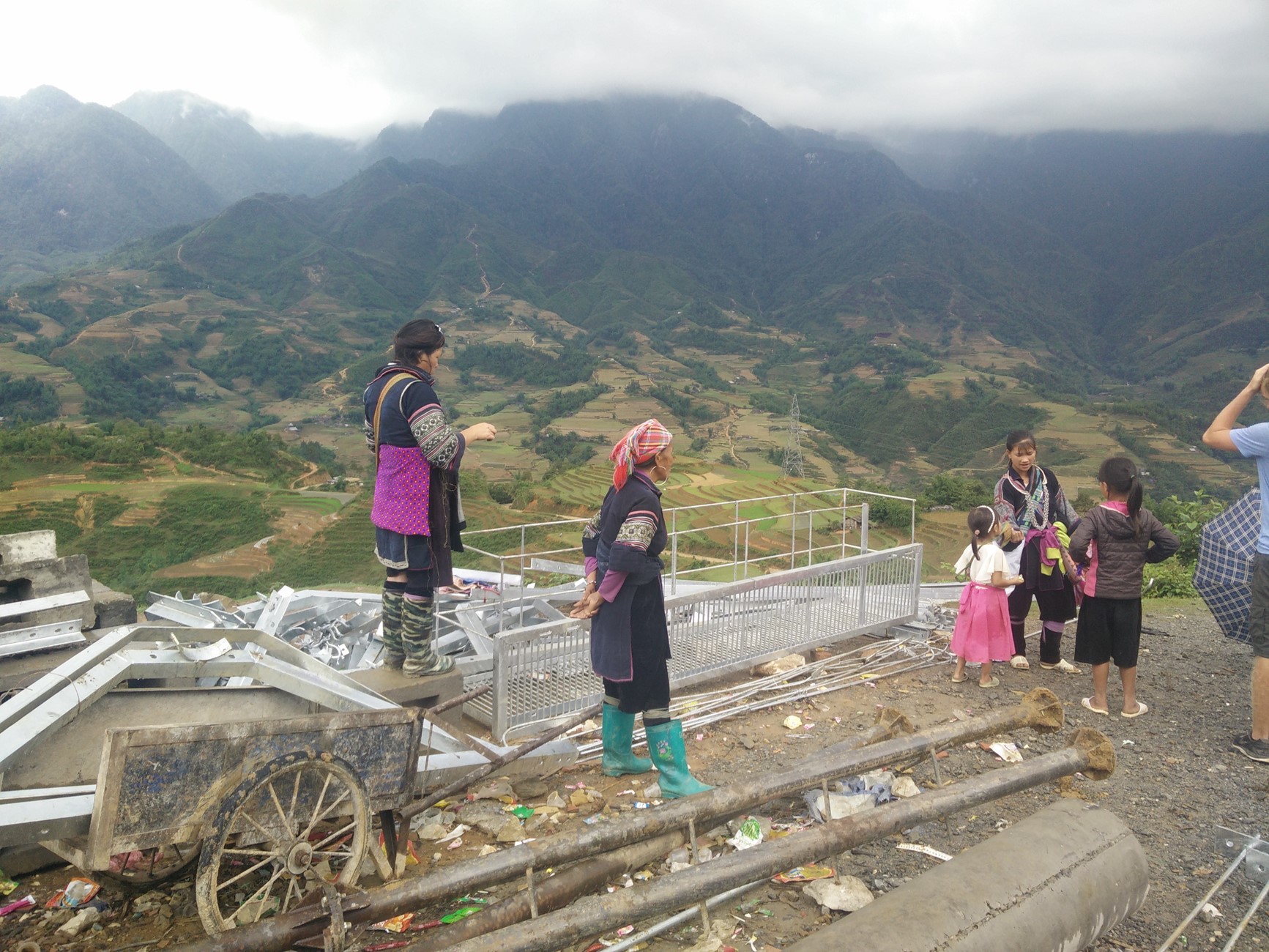
    Women in traditional clothing with children by a mountain road

    Roaming vendors in Sapa, North Vietnam taking a break and having a chat

    Thirdly, as an extension to the above two reasons, cash makes the transfer fast and simple which are valued highly by a busy vendor. If you don’t have exact cash, the vendor might try to get more money out of you by saying he doesn’t have change on your bill hoping you’ll just give him the full bill rather than not buy the goods. Taxi drivers often do this, maybe accompanied with a quick “tip, ok?”. If you don’t accept given him that tip he could make you go through hoops like going to a nearby store to change the large bill and in the end you just end up saying whatever and giving him the money. It’s usually not a lot of money but it all adds up in the long run.

    Alternatively, the deal just falls through simply because your bill is too large and he simply can’t give you change which is a shame seeing as you’ve both just come to a fine agreement.

    Make the vendor suggest a price first

    Simple but good advice when you don’t know what the price is supposed to be. Anyone who’s been doing salary negotiations have probably also heard this advice before. Let the employer offer you a salary first and then work from there. If you make the first move and set it too low, you’ve done yourself a disfavour and might even appear unserious. On the other hand, if you set it too high, you might seem greedy or infatuated with yourself to name a few things.

    In short: let the vendor/employer give you ballpark numbers first and work from there.

    Say how much you want to pay instead of asking for the price

    This applies mostly when buying by the kilo or buying by size rather than number. As mentioned earlier, knowing the value of whatever you’re buying makes it easier for you to haggle. Besides showing the vendor a degree of confidence – you know the prices, you’ve done this before, don’t f*** around with me – it also plays the ball to this court, forcing him (or her) to make the first move on prices. Say you want some watermelon and instead of asking how much for a specific watermelon, say you want $3 worth of watermelon and then let the vendor pick a watermelon of appropriate size. Sometimes the vendor might pick a surprisingly large watermelon or even two watermelons which means you’ve grossly overestimated how much watermelon costs but now at least you know because he/she just made it obvious to you.

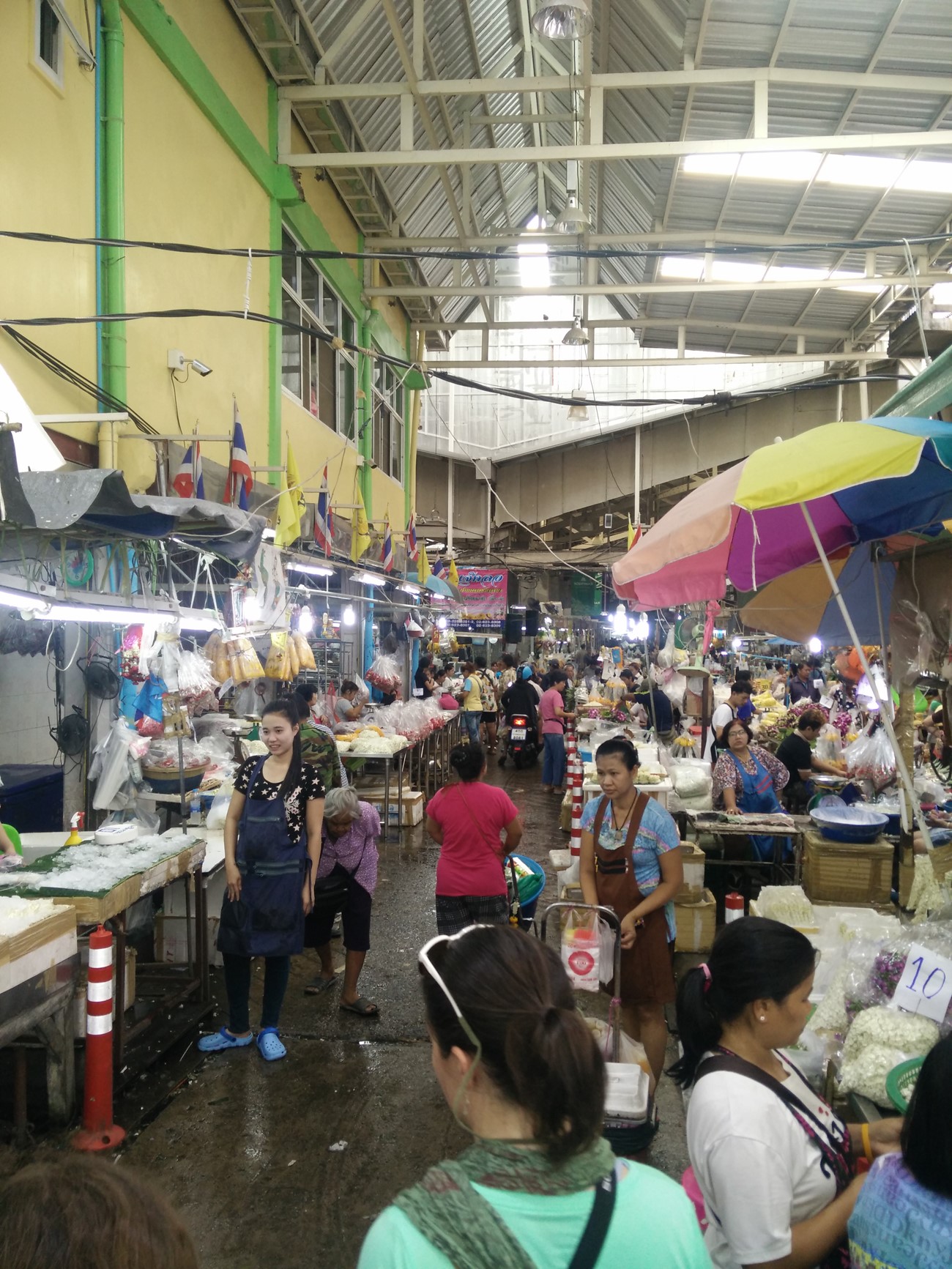
    Busy indoor market hall with stalls and shoppers

    Flower market in Bangkok

    Conversely, if you say “Can I buy that that watermelon for 3$?”, it makes it easy for the vendor to just say yes even though it’s actually only worth $1. Of course, if you know that this particular melon is worth $1.10 and you demand to buy it for $1 you potentially saved yourself $0.10 but that is not a likely scenario and requires you to have a pretty firm grip on watermelon prices. It works for water because water is the same price all over town – for watermelons… let’s call it advanced bargaining.

    Asking several vendors, the same question also gives you an idea who gives you the best prices simply by visually showing you what your money is worth. Of course with things such as fruit there is also the topic of quality but that’s a whole different aspect and is essentially a sub category of knowing the value of what you’re buying.

    Don’t show large amounts of money

    Appearances do affect the prices you get. If you look like a rich westerner in fancy clothes and you flash large $$$ bills everywhere you go, it’s only natural they will try to ask you for higher prices. I wouldn’t recommend “dressing up”, or more accurately “dressing down”, for going to a market because it’s not that important but “appearing poor” does have an effect and so does a large wad of cash. Bringing smaller bills also gives you higher granularity of paying the exact amount.

    There is also the aspect of safety. If you are walking around a crowded local market with large amounts of cash sticking out of your back pocket or with money sitting there quite visibly in your wallet whenever you pay for something makes you an obvious target for pickpockets and/or scammers.

    Be wary of scammers

    Scammers might try to push the prices up by telling you that just today it’s more expensive so the prices you’ve read on the internet are normally correct, just not this particular day.

    A common example is cab drivers (yes, cab drivers are notoriously unethical) who will tell you that you need to take a large de-route because of a traffic jam or a road work. While he may be right, you have no way of knowing and most likely he just scammed you out of a few extra moneys. Your only defences against this type of behaviour is asking others beforehand so you know or simply calling his bluff by telling him to run right into that traffic jam, you’ve got lots of time.

    Another example is in Bangkok where you can choose to take the highway or not. The highway has tolls on it and is longer and therefore more expensive – but faster. The cab driver would want this as he racks up more money faster (faster speed of the car, faster spinning of the meter) – traffic jams gives him very little money for his time. He will try to convince you to avoid the local roads as there is a traffic jam or roadwork to get you on the highway but in most cases this is not the case. Last time I had to take a taxi, I knew this because I had asked the hostel staff and although he asked multiple times to go on the highway I kept firm and it saved me about 30% of the price while only extending the trip from 50 to 60 minutes.

    Conclusion

    Know the value, pay with cash and don’t accept the first offer you get.

  • |

    Overview of tourist hotspots in Myanmar (Burma)

    This is post 5 of 12 in the series “South East Asia”

    1. Applying for a Myanmar (Burma) visa in Bangkok
    2. One night in Bangkok
    3. Visiting Rural Thailand – enjoy the silence
    4. Sleeping in a monastery on a mountain top in Hpa-An, Myanmar
    5. Overview of tourist hotspots in Myanmar (Burma)
    6. Naypyitaw – The official capital of Myanmar
    7. Being sick on the road
    8. The End of an Era – I’ve Sold My Motorbike and Left Vietnam
    9. Cambodia – First Impressions
    10. Koh Ta Kiev – Where the boat leaves from
    11. The Future of Sihanoukville, Cambodia and the Surrounding Areas
    12. What Were We Thinking (and other ramblings)

    There are four main tourist hotspots in Myanmar: Yangon (formerly Rangoon), Mandalay, Bagan and Inle. They are located as a diamond shape if you look at a map of Myanmar with Yangon in the south, Mandalay in the north, Bagan in the west and Inle in the east.

    myanmar-tourist-hotspots
    Relative locations of the tourist hotspots in Myanmar

    Along with these there are a few others depending on your route and your preferences. Really, though, if you want to boil it all down, Yangon and especially Mandalay function more as transport hubs and Bagan/Inle are the only real tourist spots. Since Myanmar is not that easy to enter overland, most people are flying to either Mandalay or Yangon.

    However, as I have made it a point to not fly unless absolutely necessary, I took the overland route which took me through Hpa-An. A stop I would highly recommend even if you are only in Myanmar for a week. The capital, Naypyitaw (since 2006 – it used to be Yangon), is also definitely worth visiting if you want to get off the beaten track.

    Yangon (and Mandalay) – Two large cities

    Both cities function as transport hubs even though Yangon is the more common one. Yangon is interesting in the way that it allows no motorbikes in the city center, not even for locals which gives a different feel than the rest of south east asia. It also has a number of interesting temples and locations. It’s a decent and nice town to hang around in for a day or two.

    One thing you shouldn’t miss is the Shwedagon Pagoda in Yangon which is very impressive! Bear in mind though that you need proper clothes (pants, cover your shoulders etc.), will need to pay an entrance fee and will have to deal with many many tourists. This is one of the most touristy spots in all of Myanmar but still worth it.

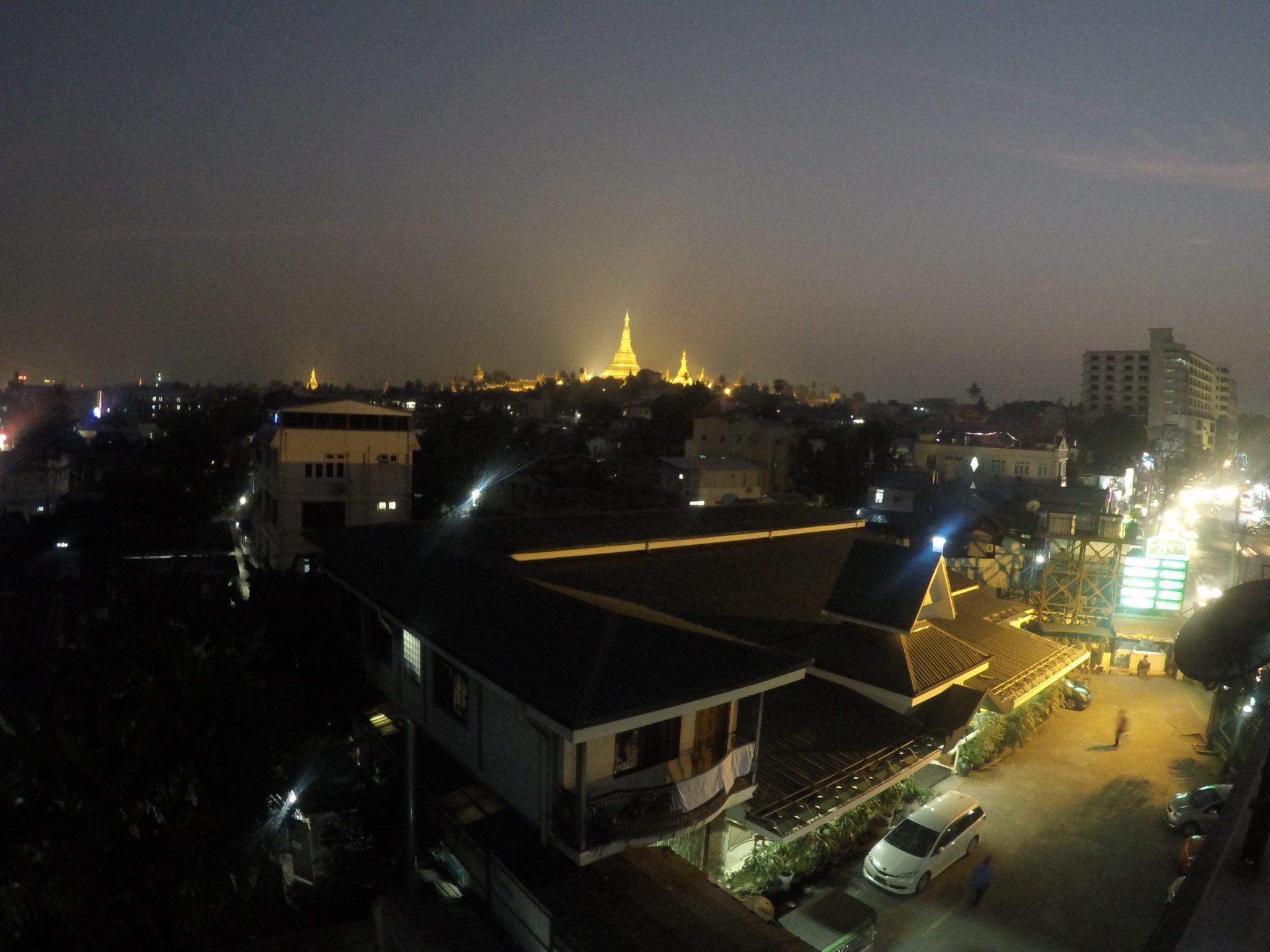
    schwedagon pagode in yangon, myanmar
    The Schwedagon Pagoda seen from afar. To see it inside, go have a look yourself, I won’t give it away

    Mandalay really has nothing interesting going for it. It’s good if you want a quiet hotel (not hostel) and/or can find a cheap flight ticket here. Other than that it just functions as a bus/train/plane hub to nearby places of more interest. The only thing worth seeing in the city is a very picturesque teak bridge called U Bein Bridge. I personally recommend skipping Mandalay and focus on something more unique and special, namely ALL the rest of Myanmar.

    Bagan – Temples galore

    Note: I’ve heard from multiple sources (other travellers) that you can no longer climb the temples at night, ie. for sunrise and sunsets. This is a very large part of what makes Bagan unique. This is, however, still Myanmar and I’m sure you can just do it anyway – even if you do get “caught” then a small bribe or simply saying you’re sorry should be enough. Has anyone been there since this change that can confirm/update on this ? Please comment!

    In short, this is a massive archaeological site boasting an astonishing 2700 (approximately) temples. During it’s prime it was closer to 13000. This doesn’t mean that the area is huge, in fact you can drive from one end to the other on an e-bike in about 30-60 minutes. Without having the exact numbers I’d estimate it to be an area of around 20 * 10 km.

    The area is surrounded by 3 cities: New Bagan, Old Bagan and Nyang-U. The night-busses arrive in Nyang-U but most of the backpackers go to New Bagan – a taxi ride of about 7000 kyats although they will ask for 15000 from you. in Nyang-U there are cheaper (and worse quality accomodation) and in Old Bagan is where the more upscale accomodation is. I staid in New Bagan which is quite touristy and expensive but has a good vibe. Lots of backpackers in that area.

    When you get there, rent an e-bike (motorbikes are not rented to foreigners in Bagan) and scoot around the temples. This is basically the whole thing. Go with a group of friends and see the temples or drive around alone and get lost in the land of temples. Find yourself an empty roof and just sit there and contemplate about things in life.

    bagan-relax
    Finding a nice temple to be alone can be a very relaxing experience

    There are very few bars in New Bagan and the temple area is the whole thing. But it’s worth it. This area is obscenely picturesque and when you see the sunrise/sunset you will fall in love. At sun-rise about 25 hot air balloons fly every morning, making for some of the most beautiful sunrises you will ever see.

    bagan-beauty
    The beauty of Bagan. Atleast some of it – so many amazing pictures have been taken in this area

    Inle Lake

    Most of the flashpackers you see out there will do one or two days at Inle Lake. It’s a small city called Nyaungshwe near the lake where everyone stays and it’s from here the tours/trekking starts.

    The lake is beautiful and there is a reason why everyone goes here but it has become murky and brown even though just a generation ago you could drink from the lake. Motorized boats sailing around tourists add to this but mostly it is due to fishermen and other locals using the same motorized boats and fertilizers used in the floating gardens.

    You can get a day-tour boat trip from any hostel you stay in taking you to the sights of the lake – the floating gardens, the four tribes living on the lake and the fishermen amongst other things. It makes for a great day and is worth doing. Remember sun-screen!

    fishermen-inlelake-myanmar
    Fishermen on Inle Lake

    Another day can be spent on a bicycle ride around the monastery’s and caves in the area. For an evening activity visit one of the two vineyards in the area – one is close and has an amazing sunset view but unfortunately lacks good wine – the other has good wine but is further away and requires a tuk-tuk ride or an avid bicycler.

    If you spend more days in the area, you can go on two or three day hiking tours in the mountains or alternatively hike from Kalaw to Inle Lake instead of taking the bus directly to Inle. Trekking is always a fun activity and the mountains are beautiful – if you are going in the dry season some of the waterfalls along the Kalaw – Inle Lake route will be dried out so maybe a tour along the lake starting and ending in Nyaungshwe is better.

  • |

    Long-term living in Ubud, Bali – The local life

    This is post 2 of 3 in the series “Long Term stay in Ubud, Bali”

    1. Long-term living in Ubud, Bali – The foreigners
    2. Long-term living in Ubud, Bali – The local life
    3. Long-term living on Bali – Hindu full moon ceremony

    Continued from part 1…

    This is a series about various observations and reflections I’ve had while staying in Ubud, Bali for a month.

    Gamelan– a unique style of music on Bali

    Right next to our place in Ubud, Bali is an arts museum. Every day they have a gamelan performance at 7pm. It’s very loud. When they don’t have a performance – they practice; so effectively you can hear gamelan music from our home about 8 hours a day.

    You’re probably wondering what gamelan music is, and you’d be right to do so because it’s only found on Bali. It’s a combination of bells and gongs and drums – basically anything you can think of that’s good at making noise. Something a child would love to have a go at. Have a listen at this very atmospheric video. For those curious about the clothes they wear and what’s going on here, I’ll be getting into the full moon ceremony I went to, in my next post.

    It’s obviously played at the before mentioned arts museum mostly for the benefit of tourists but it’s also played at a variety of festivities, most notoriously at spiritual events.

    glaungan music on bali
    A small subset of the Gamelan set-up. For this event there was over 50 musicians playing. The woman smiling at us is Wayan, the hostess of our villa who invited us here – so nice of her!

    Hinduism and protective symbols in Ubud

    Every day flowers with incense sticks, or jepun, are left in front of our house and every other house. The purpose is to keep the habitants safe and protect them. We have also had jepun left on our motorbike to keep with us when we drive. Jepun are placed everywhere for ceremonies and in everyday life. A friend of mine, who lives far out in a small village, has a lady come into her garden every day to leave jepun for her and she doesn’t know who it is. Apparently this lady has this as her job in this entire village – that’s what she does.

    Jetun flowers in front of villa
    Flowers, or Jepun as they are called, in front of our villa. They are refreshed every day

    The same thing goes with faces. Everywhere on decorations and pictures you see faces and heads. They have carved out coconut faces outside our villa and wooden carved faces are hanging everywhere. Bali is highly spiritual and Hinduism runs deep in every local as far as I can tell.

    I will get into one of the big ceremonies they only have twice a year – the full moon ceremony – in my next post.

    The Balinese and their 4-name system

    Now this is a peculiar system the Balinese are using here and (to some surprise) it certainly is still very intact and functioning.

    On internshipbali.com it is understandably described:

    “All Balinese people are named one of just 4 names: Wayan, Made, Nyoman or Ketut. Both men and women. In Bali, Indonesia, such a 4-names-only system is entirely real and intact. Here’s how it works:

    Every Balinese child is simply named by his or her order of birth. The first born, boy or girl, is Wayan. The second born is Made (pronounced ma day). The third born is Nyoman. And the 4th born is Ketut.  If a family has more than four children, the cycle repeats itself, and the next ‘Wayan’ may be called Wayan Balik, which loosely translates to ‘another Wayan’.”

    balinese children
    Balinese Children. Source: inbali.org

    As a funny anecdote, I remember asking our hostess what her name was and she said Wayan. No problem. Then I asked her son what his name was and he also said Wayan. So they’re both called the same. That’s confusing. I can’t even imagine how roll call in school would work out: “Is Wayan here?” – ten people, boys and girls, raise their hands: “Present!”. Consistently, when I’ve asked what a local’s name was, I was given as answer of one of those 4 names.

    Now, before you completely give up on learning people’s names on Bali there are certain things that make it easier to distinguish one person from another.

    • Caste name. Two different Wayans might come from a different caste. Just like we, in the western world, have family names or surnames.
    • Girls and boys have different honorifics before their names and as such a girl would be “Ni” – Ni Wayan while a boy would be “I” – I Wayan.
    • Usually a third, hindu name, with a positive meaning, is given to each child. This, combined with their first name lets them create a nickname that distinguishes them from all the other Wayan’s or Made’s.

    One such example is when I asked a staff member at Hubud what his name was. He said “Budi” which is a nickname based on his hindu name “Budiasa”.

    Stay tuned for the next and final of the series about Bali where I’ll be getting into the full moon ceremony!

    This concludes part 2 of the series about Ubud, Bali – part 3 will be coming shortly!

  • |

    Sleeping in a monastery on a mountain top in Hpa-An, Myanmar

    This is post 4 of 12 in the series “South East Asia”

    1. Applying for a Myanmar (Burma) visa in Bangkok
    2. One night in Bangkok
    3. Visiting Rural Thailand – enjoy the silence
    4. Sleeping in a monastery on a mountain top in Hpa-An, Myanmar
    5. Overview of tourist hotspots in Myanmar (Burma)
    6. Naypyitaw – The official capital of Myanmar
    7. Being sick on the road
    8. The End of an Era – I’ve Sold My Motorbike and Left Vietnam
    9. Cambodia – First Impressions
    10. Koh Ta Kiev – Where the boat leaves from
    11. The Future of Sihanoukville, Cambodia and the Surrounding Areas
    12. What Were We Thinking (and other ramblings)

    Update 18-10-2017: As per comment on this post, it looks like it’s no longer possible!

    Update 20-10-2017: I asked my niece who was there 7 months ago and she went up there and slept just two days before it happened. She also says that she’s heard alot of people say they couldn’t go up there anymore.

    Please confirm / de-confirm if you have updated knowledge

    Note: for detailed practical information, scroll down

    The mission (and its complications)

    The first time I saw the monastery in Hpa-An was while visiting a field filled with statues of Buddha, more than 1100 actually. There, in the distance on a mountain top, I saw the monastery and I immediately wanted to go up there. I knew it was possible to go up there and climb down the same day but I’d also heard people talk about sleeping in the monastery. However, there were some implications.

    buddha field with a view to mt zwegabin monastery
    Standing between a sea of buddhas with a view to the monastery. Do you see it? It’s right there!

    First of all, I wasn’t sure if it was even legal/possible with the Myanmar government having some strict laws against foreigners (hostels have to have a license to be allowed to host foreigners) and I was getting mixed signals from asking around – some said it was possible, some said it wasn’t. Secondly I had to actually climb 2000 steps and finally I was probably going to have to sleep on a rather hard surface with nightly temperatures actually making the experience a rather chilly one. Even though it was warm in the day, it got chilly at night.

    After getting direct confirmation from people who had done it I was convinced and my mission was clear:

    1. Climb the 2000 steps
    2. Watch the sunset
    3. Sleep there
    4. Watch the sunrise
    5. Climb down

    The ascend to the monastery

    I started the ascend from the bottom of the mountain around 15:30 (3:30pm) carrying with me 1 litre of water, a hoodie, a camera, a phone, my wallet and a power bank. Around 17:00 I finished. I believe it can be done in 1hour with someone experienced but takes more like 2 hours if you are not rushing, I did it in 1:25. The first step of the way I was following a guy that was going pretty fast but halfway up (after only 35 minutes) he got ahead of me and I slowed down my pace considerably after that.

    beautiful-hike
    Halfway up the mountain, the view is already beautiful. It was an astonishing hike

    The steps seemed to be endless and just when I thought I’d made it another leg of stairs revealed itself. In the end I found that a very slow speed (like a step every second) was the way to go, as I almost didn’t have to take any breaks like that. Slow and steady wins the race and finally I got there.

    The top

    At the top there was a sleeping hall for the monks, a sleeping hall for tourists and a restaurant like building where they cooked food. It was also possible to buy food there as a tourist between 6pm and 7pm. There was of course also a few Pagodas and other religious symbols. And then there were monkeys – aggressive monkeys. They would snatch anything you had left unnoticed including things out of purses and coke cans out of your hands. Luckily there were also dogs and all through the evening the dogs and monkeys would fight each other – the monkeys would come close and the dogs would bark them away. It was fun to watch how, as soon as someone made a little scream due to a monkey coming too close, the dogs would come running instantly to scare them away.

    Quickly after reaching the top, I sat down at the eating area and was offered free food and tea by the monks – not enough for dinner, but enough to keep me going until real dinner later that evening.

    The rest of the evening was spent watching the monkeys and the sunset and also the 8 of us up there who were tourists played a bit of cards before hitting the bed early.

    sunset at top of mt zwegabin in myanmar
    View from the top of the monastery as the sun sets over Myanmar
    evil monkeys
    Evil mischievous monkeys

    The descend

    The descent in the morning around 6:30 was much quicker. I got down and scooted back to town to return the scooter. I had made an agreement with the scooter renters to not charge me an extra day even though they technically want you to return it the evening before. One thing to note though is that you should stretch! I could feel my calves for days after that descend.

    Practical information

    • It takes about 2hours to climb the steps, 1hour if you are fast, 3 hours if you are slow
    • Sunset is around 5:45pm but depends on time of year. I started at 3:30pm  and made it easily.
    • The first four to check in will be sleeping in twin rooms (2 in each – seperate beds)
    • The rest will sleep in a sleeping hall
    • Beds are not soft but not rock hard either
    • You are expected to give around 5000 kyats in “donation” to sleep there
    • There is food up there and you will be provided with a blanket. You can also buy soft drinks – no beer!
    • I slept in shorts and a hoodie and that was warm enough – I was in a twin room. This was in winter time
    • There was power in the twin room
    • The climb is fairly rough and steep but I’m not trained at all and I would say anyone could make it, given enough time.
    • You’ll be in shade about half the time
    • I rented a scooter to get there and left it overnight. Another guy hitchhiked there and back – it’s not hard.
    • There are two entrances and the main is at the field of Buddhas about 30 mins out of Hpa-an- ask around but it’s not hard to find.
    pagoda-mt-zwegabin-monastery
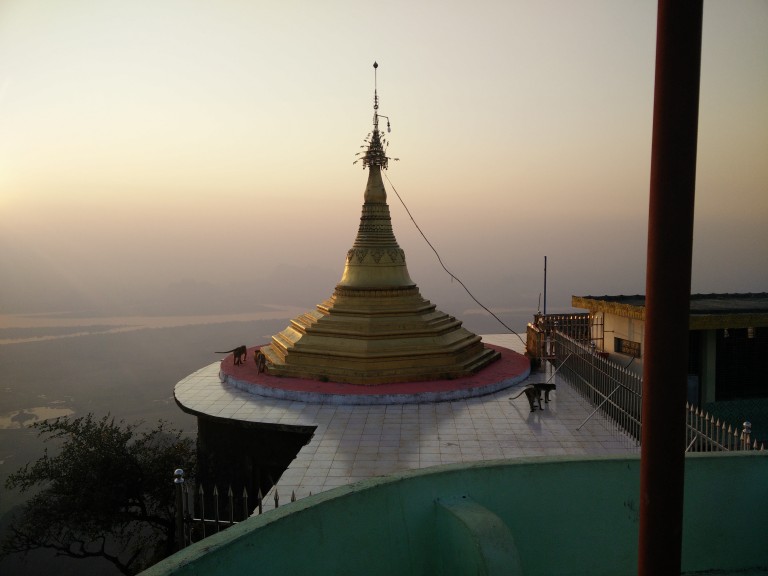
    One of the Pagoda’s at the monastery on top of Mt Zwegabin
  • |

    Welcome to Da Nang. Now what?

    What kind of city is Da Nang?

    Da Nang is a pearl of a city on the coast of Vietnam. Placed just south of Hai Van Pass, halfway up Vietnam, it’s a cultural melting pot of Western and Vietnamese.

    Just north of the gorgeous Hai Van pass you have the old emperor city of Hue and the large Bach Ma National Park. South, you have the white sandy beaches of Hoi An. West, you have the mountainous highlands. And East? Well, you have Cham islands and the Pacific ocean.

    Friends on a rock at the top of Ban Co Peak with Da Nang city behind
    Overview of Da Nang from the top of Ban Co Peak
    Read More “Welcome to Da Nang. Now what?”

3 Comments

  1. Ren Luxus, ser det ud til. God idé med at slå sig ned. Måske er en måned for lidt til at “komme ind under huden” på et sted.

Leave a Reply

Your email address will not be published. Required fields are marked *