|

Best things to see in Hoi An, Vietnam

1. Hoi An and the Old town

Hoi An, once a major Southeast Asian trading post in the 16th and 17th centuries, is basically a living museum that houses old-town architecture.

Hoi An, once a major Southeast Asian trading post in the 16th and 17th centuries, is basically a living museum that houses old-town architecture. Some notable heritage buildings include Chinese temples, a Japanese-designed bridge, pagodas, wooden shop-houses, French-colonial houses, and old canals. Although large-scale trading had long moved elsewhere, Hoi An has been successful in preserving and restoring its charming roots and was declared a UNESCO World Heritage site in December 1999.

Woman in a conical hat with a shoulder pole of fruit baskets on a street in Hoi An Old Town

Hoi An Old Town further appeals to tourists as it is a no motorbike zone in the afternoons. Although there are no motorbikes or cars in the evenings and since some tourists still dislike walking, the locals have come up with another solution. Trains of pedicabs/tribikes/cyclos with 10 or more bikes carrying a passenger each are roaming the crowded streets. Nonetheless the area is charming and filled to the brim with cute cocktail places, serving everything from giant fresh coconuts filled with juice to specialty coffees.

Hoi An Old Town further appeals to tourists as it is a no motorbike zone in the afternoons.

The Japanese Covered Bridge in Hoi An lit up at dusk
Source: Internet

Hoi an is good for people who like to travel on their own terms but don’t feel quite ready for the adventure of motorbike riding as there are plenty of bicycle rentals and it’s very common that everyone rides around on bikes.

Woman walking down a street of shops and food stalls in Hoi An Old Town

2. Cham islands

Cham Islands consists of eight small islands off the coast of Hoi An, one of which is a recognized UNESCO World Biosphere Reserve. Cu Lao Cham Marine Park attracts travellers looking to enjoy a day of scuba diving and snorkelling, while on Hon Lao Island you can find fishing villages and pristine beaches that are great for sunbathing and water sports. 

The islands are about 30 minutes from Chua Dai Beach via express boat, which costs about U$10 per person. There are also numerous tour companies in Hoi An and Da Nang that organise day trips to Cu Lao Lam Marine Park. These typically include hotel transfers, snorkelling equipment, lunch, and an English-speaking guide. If you’re planning on staying on Hon Lao Island, there’s a local boat that departs from Cua Dai Harbour every day at 08:30.

It is highly recommend to get there by 07:00 though, as locals also rely on this boat to get to the island. Tickets cost VND 100,000 for foreigners and you’re required to fill out your name and nationality on a form upon boarding.

Pier and clear turquoise water on the Cham Islands near Hoi An
Source: Internet

3. My Son Sanctuary

This is graphically illustrated by the remains of a series of impressive tower temples in a dramatic site that was the religious and political capital of the Champa Kingdom for most of its existence

During the 4th to 13th centuries there was a unique culture on the coast of contemporary Vietnam, owing its spiritual origins to the Hinduism of India. This is graphically illustrated by the remains of a series of impressive tower temples in a dramatic site that was the religious and political capital of the Champa Kingdom for most of its existence

• Entrance ticket: 150 000 VND ($ 6.7 USD)
• Opening hours: 6am – 5pm

To get to My Son, the easiest and most comfortable way is to rent or hire a car that picks you up from Hoi An. Many tour agencies offer this. If you’ve already rented a motorbike in Hue, Hanoi or Da Nang, it’s possible to get there by yourself.

Visit the site in the afternoon, when all tours are gone, which is around 2pm. Your other option is to visit My Son early in the morning, right after they open the gate, but keep in mind that there are more and more tourists coming from Hoi An for sunrise guided tours

Brick temple ruins of My Son Sanctuary with a mountain behind
Source: Internet

4.Tra Que Waterwheel Organic Farm Cooking Class

Tra Que Vegetable Garden is an organic herb and vegetable village located two kilometers northeast of Hoi An that has existed for around 300 years. It is where all the delicious herbs and veggies used in everyday meals of Hoi An are grown. Tra Que Water Wheel restaurant is located right in the heart of the village — a traditional Vietnamese house from where you can watch farmers with their Vietnamese conical hats tend to their produce in absolute tranquility.

Water Wheel sign at the herb and vegetable garden in Tra Que village
Source: Internet

There are many ways to get here and you can see the options on their homepage:

https://traquewaterwheel.com/index.php/cooking-class

Alternatively, many other places near Hoi An offer cooking classes.

5.Get a tailor-made suit

It is no surprise that the city’s streets are filled with skilled tailors and leather goods workshops

Hoi An has been important to Southeast Asia’s textile trade for centuries, so it is no surprise that the city’s streets are filled with skilled tailors and leather goods workshops where you can have any item of clothing or accessory you like made to order.

Many shops have been open for generations, producing top quality garments, but recent years have seen an explosion in poorer quality workshops – make sure to take precautions against unscrupulous business practices.

Always go to the tailor’s with the specific details (material, fit, stitching, etc.) of what you want, shop around for the best rates, and never depend on hotels’ or taxi drivers’ recommendations, if you want the best of Hoi An’s craftsmanship. Below is a suggestion of some good tailors.

Yaly Couture Tailors

This is where Top Gear hosts had their suits made in the Top Gear Vietnam Special

358 Nguyễn Duy Hiệu, Hội An
Phone: +84 235 3914 995

Bebe Tailor

05-07 Hoàng Diệu, Cẩm Châu, Hội An
Phone: +84 235 2212 670

A Dong Silk Tailors

62 Tran Hung Dao | 91 Tran Hung Dao and 40 Le Loi, Hoi An
Phone: +84 235 3910 579

B’lan Silk

23 Trần Phú, Hội An
Phone: +84 235 3861 866

Similar Posts

  • Wrapping up life in Penang

    This is post 4 of 7 in the series “Working in Malaysia”

    1. First day in Penang, Malaysia
    2. Settling in – To work in Penang
    3. Weekend trip to Singapore
    4. Wrapping up life in Penang
    5. Beach hopping in Phuket, Thailand…
    6. Thailand – Ko phi phi & Krabi
    7. 12m cliffjump in Phi Phi Laguna, Thailand

    It’s been a while but Penang has been keeping me busy. Usually I go out every night – either for a bit of food, to smoke a shisha or just for a pint. This means I’m kinda tired in the evenings and just end up watching netflix and falling asleep. The last two weeks of my stay I’ve been working a little later than usual and I’ve been answering emails (working) to get the last work done before finishing the project I was assigned.

    In the weekends I usually travel myself somewhere (Langkawi, Singapore) or as in the case of the last weekend I had two friends, Grace and Marilyn, visiting from Singapore. I was also home in Europe one week (including two weekends) so I’ve been kept busy!

    Life itself is starting to settle in. There was a period after about a month where you kinda have seen the most obvious places and where everything stops being super exciting but you don’t really have any good friends that you can always call up and have a chat with as they are all going about their own lives as well. But after two months you’ve seen the same faces a couple of times and you start to get an actual friendship going which is nice. Unfortunately now it’s time to leave. I’d imagine that given 6 months in Penang I’d start to feel almost at home.

    Settling in to a new place
    Settling in to a new place

    Sorry about my less than amazing MS Paint skills. Strangely enough I haven’t really had this problem although I’ve been on long term abroad stays before. I guess the vast difference in culture just gets to you – you don’t even know how to order food or what you’re supposed to do at night. My colleagues from work made everything a lot easier though and took me out to do stuff which was very appreciated!

    But on a more positive note I’m gonna miss Penang until I’m back around 22. september as I’ve really started to grow fond of the place. I’ve also taken a liking to Moto-bike riding which is like a scooter in Denmark but they go over 100km/t and there are virtually no laws when you are on one – so it’s nothing like at home 🙂 If I were to stay longer I would definitely buy one.

    I also had my 30th birthday and was celebrated by all my friends here and even the Hotel staff 🙂

    Also, Shaun you British wanker, I’ll be seeing you around

    IMG_20150831_233321

    So I finally finished project Friday the 28. and september 2. I was on the way to Phuket! This flight marks the beginning of a 3 week vacation around south east asia and I have no idea where I’ll end up going but Borneo, Redang, Perhentian, Singapore, Bangkok, Kuala Lumpur, Bali and even Sydney are good choices.

    Till next time Penang!
    /Andreas

  • |

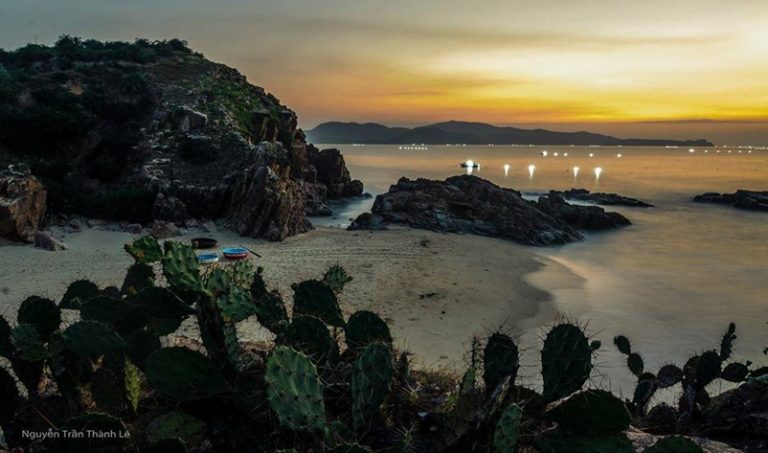
    Red Reef (or Ganh Do), Part of Xuan Dai Bay

    This is post 1 of 2 in the series “Phu Yen Province”

    1. Red Reef (or Ganh Do), Part of Xuan Dai Bay
    2. Nhan Mountain (Núi Nhạn), Tuy Hoa, Phu Yen

    Few people have heard of Song Cau in the Phu Yen province in eastern Vietnam but that’s far from the same as saying the area has nothing to offer. Xuan Dai Bay with its gorgeous sceneries is a must visit.

    So what’s so special about it?

    “The landscape and scenery is outstanding and unlike anything you’ve seen before – unless you’ve been to paradise that is.”

    In the bay, there is a small fishing village called Ganh Đo or “Red Reef”, known for fishing and famous for its fish sauce. In fact, so well-known that the locals are able to lead a comfortable life in an otherwise poor province. However, Ganh Do is so much more than fishing and fish sauce. The landscape and scenery is outstanding and unlike anything you’ve seen before – unless you’ve been to paradise that is.

    aerial photo of red reef in xuan dai bay in phu yen province
    Aerial photo of Red reef, comfortably located in the peaceful Xuan Dai Bay. Photo: Lee Nguyen Tran

    How did Red Reef get its name?

    If you’re wondering how Red Reef got its name it’s due to the many reddish – brown reefs scattered around the area.

    reddish brown reefs that give red reef its name
    The reddish-brown reefs responsible for giving Red Reef its name. Photo: Le Nguyen Tran

    Red Reef Beach

    Aside from it’s unique beauty and quaint atmosphere, another appealing feature is the Red Reef beach. It has very smooth sand and mild waves, it’s flat, clean, and with shallow waters; even at 50 meters from the beach, the water is only waist deep.

    picture of corner of red reef beach in phu yen vietnam
    A picturesque corner of the quiet beach. Photo: Lee Nguyen Tran

    In the morning, the life in Red Reef is tranquil and gentle. The fishermen, out catching squids, paddle slowly along the shore. Early risers are out and about in the relaxing environment, breathing the fresh air and swimming in the cool water.

    sunrise a red reef beach in phu yen province, vietnam
    Red Reef beach at sunrise. Photo: Lee Nguyen Tran

    Meet the friendly fishermen

    “It’s so rare that foreign tourists come to visit their place that being invited in for food and accommodation without even asking for it, is highly likely.”

    Red reef is an accommodating destination for those who’d like to explore Vietnamese life far away from the tourist circuits. The local fishermen are very kind and friendly here – far beyond what you’d expect. It’s so rare that foreign tourists come to visit their place that being invited in for food and accommodation without even asking for it, is highly likely. They have no other reason than wanting to talk to you and because of their extraordinary hospitality.

    fishermen getting ready in the morning at red reef beach, phu yen, vietnam
    Fishermen getting ready for the day. Photo: Lee Nguyen Tran

    Don’t forget the surrounding area

    If you’re not already packing your bags to go see this gem, this should convince you. Red Reef has a special terrain. Not only does it have the before mentioned dream of a beach but mountains and rice fields can be found in the area as well so there are landscapes to please anyone. It’s not often you have so much beauty and variety packed into one place.

    surrounding area of red reef
    The outstanding terrain in the are surrounding Red Reef. Photo: Lee Nguyen Tran

    When you have the chance, set foot on these lands. You will instantly feel the rustic charm of both the landscape and the people here.

  • |

    Cambodia – First Impressions

    This is post 9 of 12 in the series “South East Asia”

    1. Applying for a Myanmar (Burma) visa in Bangkok
    2. One night in Bangkok
    3. Visiting Rural Thailand – enjoy the silence
    4. Sleeping in a monastery on a mountain top in Hpa-An, Myanmar
    5. Overview of tourist hotspots in Myanmar (Burma)
    6. Naypyitaw – The official capital of Myanmar
    7. Being sick on the road
    8. The End of an Era – I’ve Sold My Motorbike and Left Vietnam
    9. Cambodia – First Impressions
    10. Koh Ta Kiev – Where the boat leaves from
    11. The Future of Sihanoukville, Cambodia and the Surrounding Areas
    12. What Were We Thinking (and other ramblings)

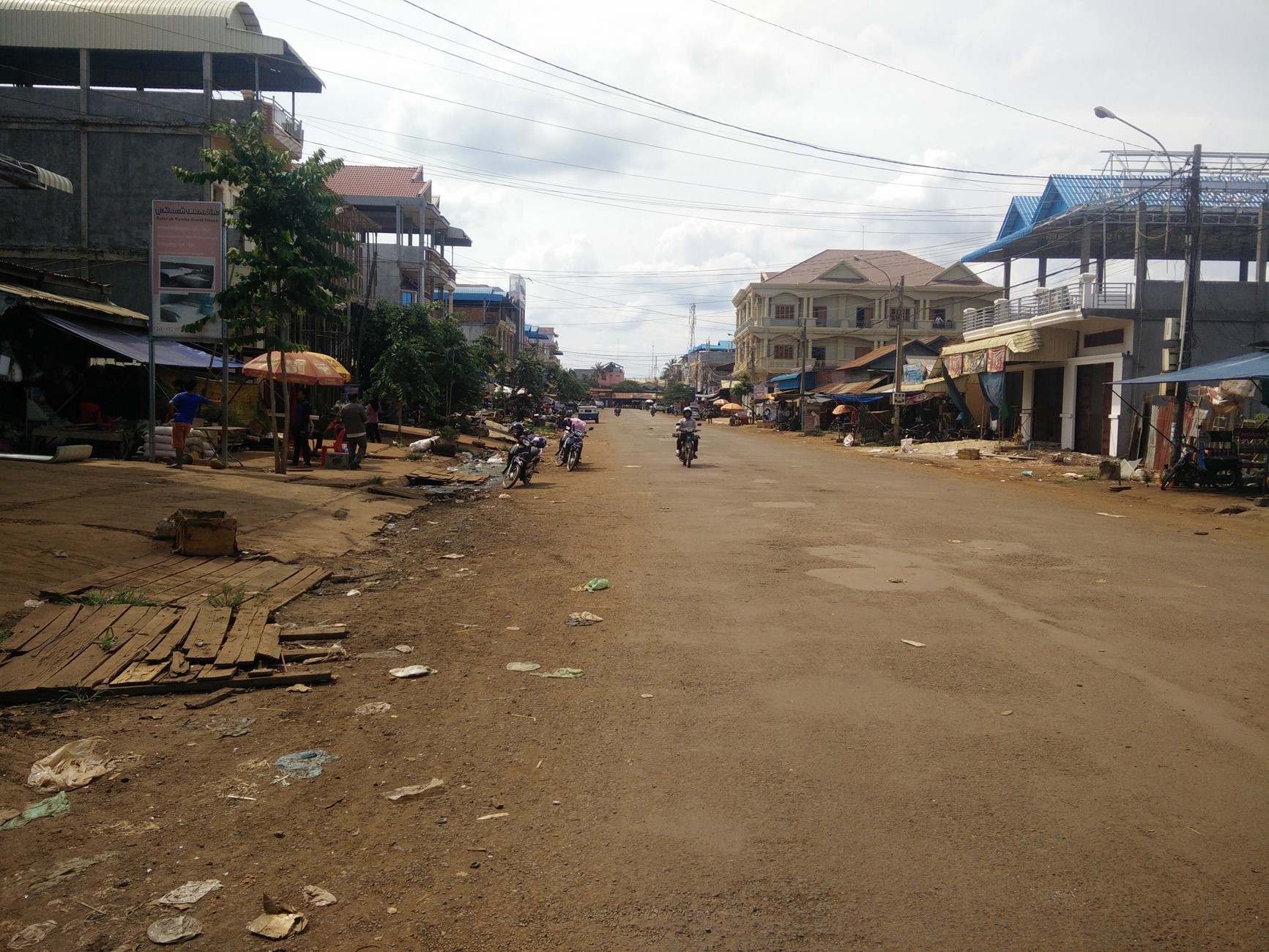
    After crossing the border to Cambodia by bus the first town we encountered was Ban Lung. Although similar in many ways, once you look closer there are many differences between this town and the similar town of Pleiku in Vietnam on the other side.

    Ban Lung is a fairly remote “genuine” Cambodian town about 1 hour from a small remote border. Of course, cities like Siem Reap and Phnom Penh are significantly different but I think it’s fair to compare Ban Lung (Cambodia) with Pleiku (Vietnam).

    First of all, in Ban Lung, there are more cars and less motorbikes and the motorbikes are older. My pointed out that the motorbikes they drive here are like the motorbikes in Vietnam 10 years ago. And unlike Vietnam, almost no one wears helmets.

    The second thing you notice are the streets. They seem dustier, more “sad” – in lack of a better word. The houses are of poorer quality and more spread out.

    Dusty main road with low buildings in a Cambodian town

    Why are there so many pharmacies!?

    Now, when you take a closer look at the streets you’ll see that for this town particularly there is an abundance of pharmacies and moneychangers. My initial guess was that drugs are cheaper or more accessible here so many Vietnamese cross the border for this very reason – this would explain the moneychangers – this is a border town after all. Another theory is that since this used to be a French colony they adopted the French style pharmacies where they double as convenience stores selling shampoo and snacks and things like that. Contrary to Denmark, for example, where they only sell drugs and medicine. To me, it still doesn’t justify that literally every third shop was a pharmacy – and by far it hasn’t been as striking in other Cambodian cities as it was here. Please comment if you have a theory or better yet, know!

    That air-conditioner you’d gotten used to in Vietnam – not in Cambodia.

    All over Vietnam, even in the cheapest places you’d get air-condition. It usually wasn’t really an option to go for a fan-only room. In Cambodia, however, the default is fan-only. You can get air-condition in Cambodia but it’ll usually cost you $4-5 which is a lot when a room is $6. Alright, after a while you get used to the heat and air-condition isn’t really that important but the point here is that it’s a symptom of the general state of the room. Many cheaper places don’t have hot water, the rooms are smaller and simpler, and bugs crawling around is a thing you’ll have to accept. So in this sense, Cambodia is cheaper because there are cheaper options but if you compare two similar quality rooms – Vietnam comes out cheaper I’d say. There are of course exceptions to this as I just made a very broad generalization.

    Oh yeah, this goes for food as well. Cheaper but grimier solutions in Cambodia. Walking around town we had trouble finding a place that looked clean enough that we wanted to eat there.

    Otherwise, it’s pretty much the same isn’t it?

    There is one last thing worth mentioning which is significantly different. The money. Although Cambodia has a local currency, Riel (4000Riel = 1$USD), Cambodia runs on US dollars. Everything is given in dollars except for marketplaces and very local spots. It’s also used for small prices as 4000Riel to 1$ makes it a lot more granular. They even have a 100Riel note (0.025$).

    All over South East Asia you will see many prices given in dollars and especially if you go to places with tourists but this is different. Here, even the ATMs give dollars. You can find ATMs giving local currency but they are rare and only accept local cards. I have yet to find a place where they don’t accept cool dollars. So you wouldn’t really need the local currency at all if it wasn’t for the fact that dollars are likely to be rejected if they are not in close to mint condition while riel you can chew up and spit out again and they still work. For those often changed cash, riel is better.

    A funny anecdote is from the first time I tried to get cash from an ATM. I put my card in the machine and it asked me how much I wanted (without options as there usually are or the currency expected) so I clicked 800000 ($200) and pressed accept. It didn’t work. It now told me it had to be a number you could get with 35 notes. Great! Could you now please tell me what notes you offer, dear machine. I tried a little lower, 350000, guessing the machine had 10000 riel notes. At that point I gave up and thought it was just the ATM that didn’t work. Later, I found out that they run on dollars and by pressing 200 on the machine I got 2 100$ bills. Apparently it means that it runs on $100 bills – just like the machines in Las Vegas. Also worth noting is that although I didn’t test this out, in theory, with 35 notes you can get $3500 – quite a significant amount!

    So that’s about it. The rest you will have to experience for yourself! … or maybe stick around for my next post

  • Settling in – To work in Penang

    This is post 2 of 7 in the series “Working in Malaysia”

    1. First day in Penang, Malaysia
    2. Settling in – To work in Penang
    3. Weekend trip to Singapore
    4. Wrapping up life in Penang
    5. Beach hopping in Phuket, Thailand…
    6. Thailand – Ko phi phi & Krabi
    7. 12m cliffjump in Phi Phi Laguna, Thailand

    I have now been in Penang, Malaysia for a few days and I’ve already had my fair share of new experiences both during and outside work.

    Every morning I get picked up at my hotel and every afternoon I am driven home. It is chaos with cars weawing in and out and motos (Mopeds – small motorbikes) are everywhere left and right and infront of you. I understand why you don’t just drive a car here but prefer a driver. They also drive in the left side of the road, courtesy of the commonwealth influence.

    We are about 2000 employees at the factory but only about 10 of us are socalled ASIC design engineers. We have our own room and as such the only contact i get with the remaining 1990 people is when I walk through the production offices to get to the toilet, wait for the lift, or eat in the cantina. I have a great interest in local life and what other work is being done at the factory and hopefully I’ll be able to get a tour of the remaining facility.

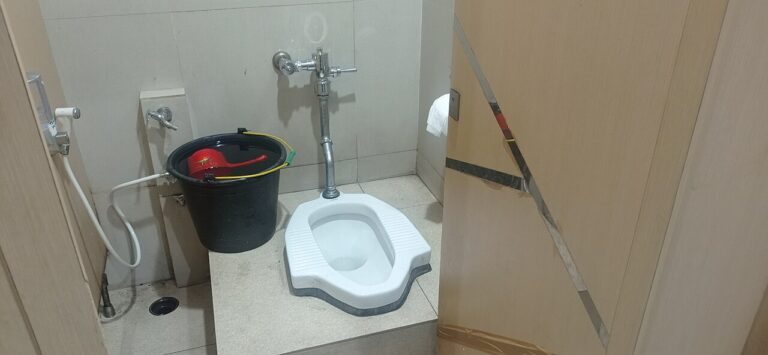
    Naturally, everything is very different from Denmark. First of all it’s a factory with people everywhere doing completely other stuff than what I do; In Denmark we are only 30 people and we are all (almost) doing the same. Then there are the toilets – they are squatting toilets

    A squat toilet with a hose and a water bucket
    Squat toilet. Photo: ustad abu gosok, CC0, via Wikimedia Commons

    To many danes, this is a nightmare and most have never seen one before in their lives. Being a guy, pee’ing is easy – doing number 2 takes some getting used to though. I’ve learned that the best way is simply taking off your pants and hanging them on the designated hanger space (which is in every single toilet so far), so as to not get them… dirty. On a sidenote – there is a hose in every toilet aswell good for easy cleaning whether you are part of the cleaning crew or just feel the need to clean before (or after) you need to go the toilet.

    For lunch we usually go out to eat which gives me a chance to both experience the heat, the world outside and the delicious Penang food. There are many chinese and Indian people here so the food varies alot and you have the option to try much different food. There is also a bunch of western food shops but they are extremely expensive compared to street food (5-10x more expensive). A local dish is about 5 Ringgit (9DKK/$1,5USD) while at TGI Fridays its more like 50 ringgits for a burger.

    The work itself that I do is very interesting. Both because it’s new people and a whole new environment, so in many ways it’s like starting a new job, but also because I am the only *digital* designer meaning that I get all the responsibility for that side of the chip we are making, which is both exciting but all in some ways scary. If I don’t do good, the project will be delayed (or will have errors) and noone is there to pick up the slack.

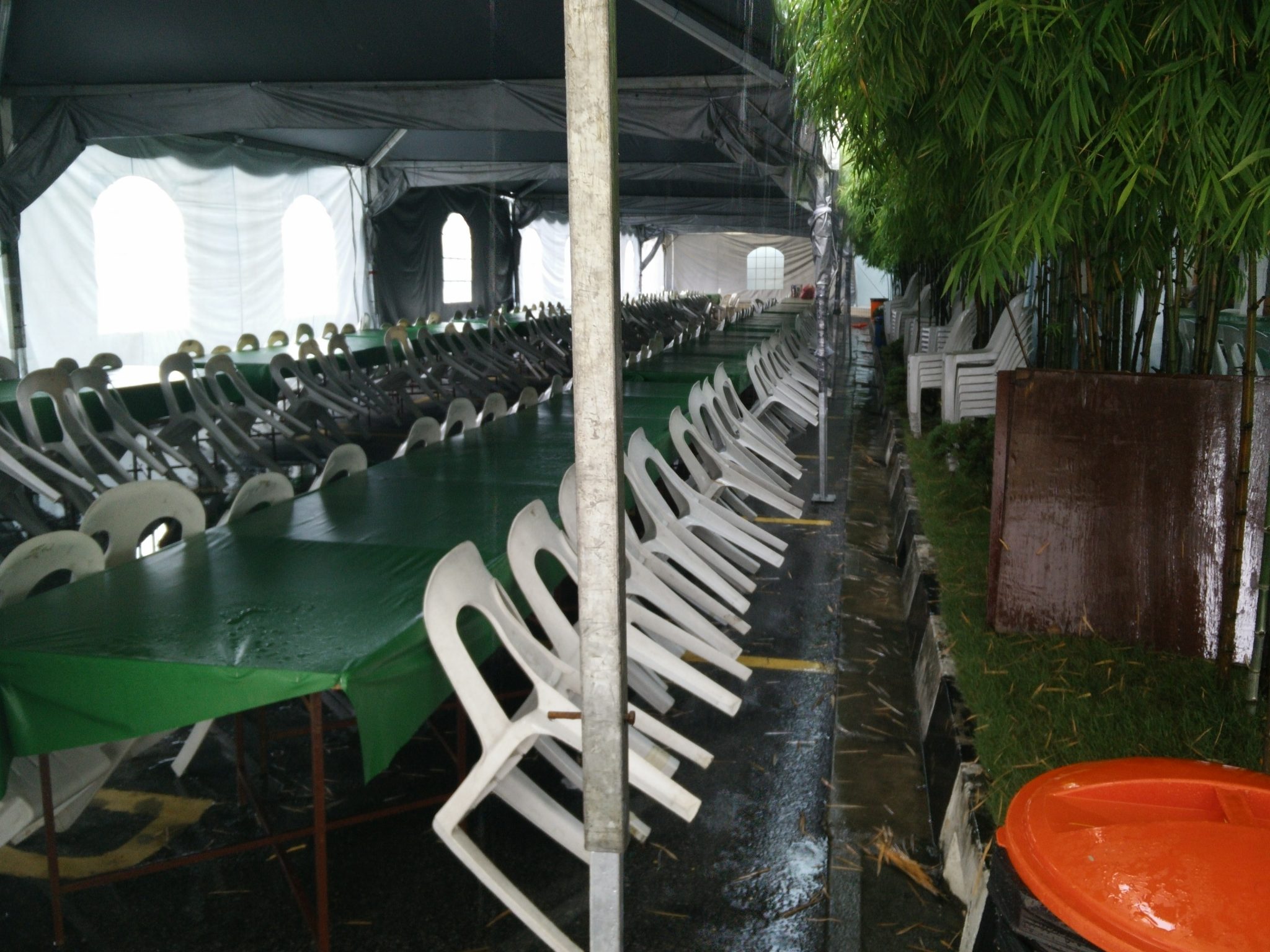
    Yesterday (friday) we went to the cantina instead as it was raining (and parking is hard to get so people park far away). Also, when it rains it pours – it’s usually not raining but then in short bursts it’s raining alot. Alot; So it’s best to stay inside. One anecdote of one of the other guys at the factory was that he left his car at a new parking lot and when he came back to it the car was flooded (everything was wet inside). That parking lot is now closed until they figure out how to deal with the rain 🙂

    Flooded "inside" because it rains
    Flooded “inside” because it rains

    Stay tuned for the next episode where I’ll try to get into life after work 🙂

  • |

    “Are we there already?”, aka riding a bullet train (shinkansen) in Japan

    Tokyo is a busy city

    We’ve been in Japan for a few days now and we’ve posted a few pictures on Instagram about the hustle and the bustle of this insanely busy city.

    There are literally more people walking than cars – this is a complete u-turn compared to the scooter heavy streets of South East Asia.

    https://www.instagram.com/p/BnxBb0LlFCD/?utm_source=ig_web_button_share_sheet

    Tokyo has an extremely functional public transportation system. It makes the city calm even with this many people. There are literally more people walking than cars – this is a complete u-turn compared to the scooter heavy streets of South East Asia.

    Bullet trains

    Speaking of Public transportation, we’ve been on one of the famous shinkansens (or bullettrains). They are rather pricy but tourists can buy 1/2/3 week passes – a bit like interrail.

    Bullettrain in Japan
    The bullettrain in Japan is arriving at Shin-Shirakawa station, heading for Tokyo

    The trains are hella cool. We took the first train from Tokyo and even though they have 22 platforms, with trains arriving every 10 minutes (on each(!) platform) they are not late.

    On time

    The trains arrive 3 minutes before departure. Everyone is lined up outside in marked areas for people going on the 1st departure and 2nd departure respectively. When the train comes – everyone enters and the train is moving within minutes. At the smaller stations it’s not even a minute.

    After departure the people in the line for 2nd departure move into the line for 1st departure and the loop repeats itself.

    As an example we’re going from Shin-Shirakawa to Kyoto and with the bullet train it’s about 3 hours (+ half an hour getting to/from the station) for a total of about 4 hours door-to-door. With car, on the premium expressways, it’s 8 hours!!!

    I mean, even a plane couldn’t do the roughly 600km’s in a straight line faster than that!

    Once inside

    Once inside, you’ll see that the trains are spacious, the seats lean way back, there’ll be a nice lady with a trolley selling snacks and even though I clocked it at almost 300 km/h, it’s dead quiet. Even the people are quiet – in fact, the Japanese are not loud people under any circumstances!

    I’ve been on a train in Myanmar going 45km/h’s and the sound was deafening. It felt like the whole train would fall apart any minute. Trains are not just trains!

    Futhermore, they’re even talking about magnet trains coming soon, with speeds up towards 800 km/h. It’s absolutely bonkers and it blows my mind how they do it when the trains in the rest of the world are struggling at maybe 130km/h

    I’m writing this as I’m sitting comfortably, leaned back, using high-speed free WiFi on the train.

    Conclusion

    There’s a reason bullet trains are so famous. They are amazing and I’m thoroughly impressed with them

  • |

    HCM trail: Khe Sanh to Phong Nha on a motorbike

    Introduction

    I recently took the incredibly scenic route from Khe Sahn To Phong Nha along the west leg of the Ho Chi Minh Trail in Vietnam. It was done on an old $280 Yamaha Nuovo Automatic 113 CC motorbike. The 240km’s took about 7 hours in a relatively fast pace but I recommend that you do it in 9-10 (get up early to avoid driving in the dark) as you are going to want to stop and suck in the scenery or maybe just take a long lunchbreak – although doing it in 6 is doable should you want to rush it. We left at 10:15 and made it an hour before nightfall

    Vietnam Coracle describes the route as:
    “240km of winding road through incredible mountains, forests, and river valleys. There are no hotels, hardly any shops, and just one gas station on this entire stretch. There are very few settlements, vehicles or people. One local in Khe Sanh, bewildered at why anyone would want to go on such a road, described it as vắng người, meaning there’s ‘nobody there’.”

    Update!!!: Thanks to Mark (youtube: kennedy9950) with updated information. There is expensive gas (from manual pumps) in Rinh Rinh and one hotel along the route in Duc Tuan, 132km from Khe Sahn

    My crew

    I rolled into Khe sanh around 4pm on a wednesday after leaving Hue the same morning. I’d been riding solo all morning and short of a dutch guy riding the other way I had not seen any foreigners. As usual it was a stunning route with kids waving and narrow bends.

    I wanted to spend the night in Khe Sanh before heading into the 240km remote leg to phong nha. But where? I was looking for a group of people to join so as to not take the leg alone – what if I ran out of gas or had a flat in the middle of nowhere? so I checked the garage in all 4 hotels I could find in town to see if there were some long distance looking bikes anywhere but found none.

    Even though I was slowly coming to terms with the idea that I would have to do it alone and that maybe this was allright – atleast I’d be able to stop when I wanted – I gave it one last shot and decided to grab a beer at the main road, helmet on, ready to go, just hoping someone would roll by. As luck would have have it, someone did roll by and chasing after them I ended up at my hotel for the night.

    Heather was standing outside the hotel about to head out and I asked her about where she was going and what she was doing – to which she replied “beer by the river – want to come?”. I quickly checked in at the hotel and joined her. A group of 4 other Americans and a Vietnamese were sitting there with a hot pot and a crate of beer enjoying the Vietnamese riverside. Michael and Laura were on a 10-year anniversary trip, Bryan and Heather were both on long term solo travels and finally Jeff and Hao were just enjoying life together travelling around Vietnam for the time being. I had my crew.

    phong nha motorbike
    The crew enjoying a pizza in Phong Nha after a long day

    The ride: Khe Sanh to Phong Nha

    Due to some motorbike problems with Mike’s bike we didn’t head out until 10:15 that thursday morning. We stocked up on about 2 liters of gas each and food for the day, some banh mi and fruit. Since we didn’t count on passing any gas stations and our bikes were all thirsty automatics we needed alot of gas. If you are doing this on a semi or the infamous Honda Wins, then you can probably make the whole 240km without extra fuel – especially since you can get a little bit of expensive gas along the way in a small city called Rinh Rinh.

    The ride was, well, spectacular. As soon as you get to the trail there is pretty much just one way to go and all you have to do is just follow the road and let the scenery wash over you. Through valleys, mountains and settlements along rivers and waterfalls. You’ll be riding down low looking up at majestic mountain sides and you’ll be riding up high above the clouds which mostly can be described as driving in heaven.

    We rode all day through areas where you didn’t see a person for 30 minutes

    motorbike-khesanh
    Remember to take the time to stop and smell the roses or in this case – the jungle

    Through tiny settlements

    settlement-khe-sanh
    A settlement along the way

    We even briefly drove on some of the main roads of the area.

    Phong Nha drive
    Just imagine how it looks in real life,when it looks this good on a cellphone picture

    Reaching our destination

    With no extra fuel and two bikes running on fumes well below the red area on the fuel gauge we rolled into Pepperhouse Homestay and within 5 minutes we were all in the pool with a cold beer. If you have a chance, go to Pepperhouse and say hi to the hosts, Multi and Diên, from me.

    pepperhouse-homestay-phong-nha
    Pepperhouse Homestay

    This concluded a long day of motorbiking but, man, was it worth it.

Leave a Reply

Your email address will not be published. Required fields are marked *