|

HCM trail: Khe Sanh to Phong Nha on a motorbike

Introduction

I recently took the incredibly scenic route from Khe Sahn To Phong Nha along the west leg of the Ho Chi Minh Trail in Vietnam. It was done on an old $280 Yamaha Nuovo Automatic 113 CC motorbike. The 240km’s took about 7 hours in a relatively fast pace but I recommend that you do it in 9-10 (get up early to avoid driving in the dark) as you are going to want to stop and suck in the scenery or maybe just take a long lunchbreak – although doing it in 6 is doable should you want to rush it. We left at 10:15 and made it an hour before nightfall

Vietnam Coracle describes the route as:
“240km of winding road through incredible mountains, forests, and river valleys. There are no hotels, hardly any shops, and just one gas station on this entire stretch. There are very few settlements, vehicles or people. One local in Khe Sanh, bewildered at why anyone would want to go on such a road, described it as vắng người, meaning there’s ‘nobody there’.”

Update!!!: Thanks to Mark (youtube: kennedy9950) with updated information. There is expensive gas (from manual pumps) in Rinh Rinh and one hotel along the route in Duc Tuan, 132km from Khe Sahn

My crew

I rolled into Khe sanh around 4pm on a wednesday after leaving Hue the same morning. I’d been riding solo all morning and short of a dutch guy riding the other way I had not seen any foreigners. As usual it was a stunning route with kids waving and narrow bends.

I wanted to spend the night in Khe Sanh before heading into the 240km remote leg to phong nha. But where? I was looking for a group of people to join so as to not take the leg alone – what if I ran out of gas or had a flat in the middle of nowhere? so I checked the garage in all 4 hotels I could find in town to see if there were some long distance looking bikes anywhere but found none.

Even though I was slowly coming to terms with the idea that I would have to do it alone and that maybe this was allright – atleast I’d be able to stop when I wanted – I gave it one last shot and decided to grab a beer at the main road, helmet on, ready to go, just hoping someone would roll by. As luck would have have it, someone did roll by and chasing after them I ended up at my hotel for the night.

Heather was standing outside the hotel about to head out and I asked her about where she was going and what she was doing – to which she replied “beer by the river – want to come?”. I quickly checked in at the hotel and joined her. A group of 4 other Americans and a Vietnamese were sitting there with a hot pot and a crate of beer enjoying the Vietnamese riverside. Michael and Laura were on a 10-year anniversary trip, Bryan and Heather were both on long term solo travels and finally Jeff and Hao were just enjoying life together travelling around Vietnam for the time being. I had my crew.

phong nha motorbike
The crew enjoying a pizza in Phong Nha after a long day

The ride: Khe Sanh to Phong Nha

Due to some motorbike problems with Mike’s bike we didn’t head out until 10:15 that thursday morning. We stocked up on about 2 liters of gas each and food for the day, some banh mi and fruit. Since we didn’t count on passing any gas stations and our bikes were all thirsty automatics we needed alot of gas. If you are doing this on a semi or the infamous Honda Wins, then you can probably make the whole 240km without extra fuel – especially since you can get a little bit of expensive gas along the way in a small city called Rinh Rinh.

The ride was, well, spectacular. As soon as you get to the trail there is pretty much just one way to go and all you have to do is just follow the road and let the scenery wash over you. Through valleys, mountains and settlements along rivers and waterfalls. You’ll be riding down low looking up at majestic mountain sides and you’ll be riding up high above the clouds which mostly can be described as driving in heaven.

We rode all day through areas where you didn’t see a person for 30 minutes

motorbike-khesanh
Remember to take the time to stop and smell the roses or in this case – the jungle

Through tiny settlements

settlement-khe-sanh
A settlement along the way

We even briefly drove on some of the main roads of the area.

Phong Nha drive
Just imagine how it looks in real life,when it looks this good on a cellphone picture

Reaching our destination

With no extra fuel and two bikes running on fumes well below the red area on the fuel gauge we rolled into Pepperhouse Homestay and within 5 minutes we were all in the pool with a cold beer. If you have a chance, go to Pepperhouse and say hi to the hosts, Multi and Diên, from me.

pepperhouse-homestay-phong-nha
Pepperhouse Homestay

This concluded a long day of motorbiking but, man, was it worth it.

Similar Posts

  • |

    The Future of Sihanoukville, Cambodia and the Surrounding Areas

    This is post 11 of 12 in the series “South East Asia”

    1. Applying for a Myanmar (Burma) visa in Bangkok
    2. One night in Bangkok
    3. Visiting Rural Thailand – enjoy the silence
    4. Sleeping in a monastery on a mountain top in Hpa-An, Myanmar
    5. Overview of tourist hotspots in Myanmar (Burma)
    6. Naypyitaw – The official capital of Myanmar
    7. Being sick on the road
    8. The End of an Era – I’ve Sold My Motorbike and Left Vietnam
    9. Cambodia – First Impressions
    10. Koh Ta Kiev – Where the boat leaves from
    11. The Future of Sihanoukville, Cambodia and the Surrounding Areas
    12. What Were We Thinking (and other ramblings)

    Joe raised his glass and shouted “To another season!!” and emptied it. Joe is the owner of Seagarden at Otres Beach near Sihanoukville, Cambodia and today is his birthday.

    For the last year or so, Otres Beach has been under the threat of being completely removed. Currently 50-something laid back chilled beach establishments fills up the space – most of them run by expat westerners that found their happiness here. The staff is a mix of locals and westerners – the guests are all foreigners. This is a place where the beer is ice-cold, the weather is hot and the weed is cheap. Showing up here for a day or two but then staying for a month or more is a recurring story.

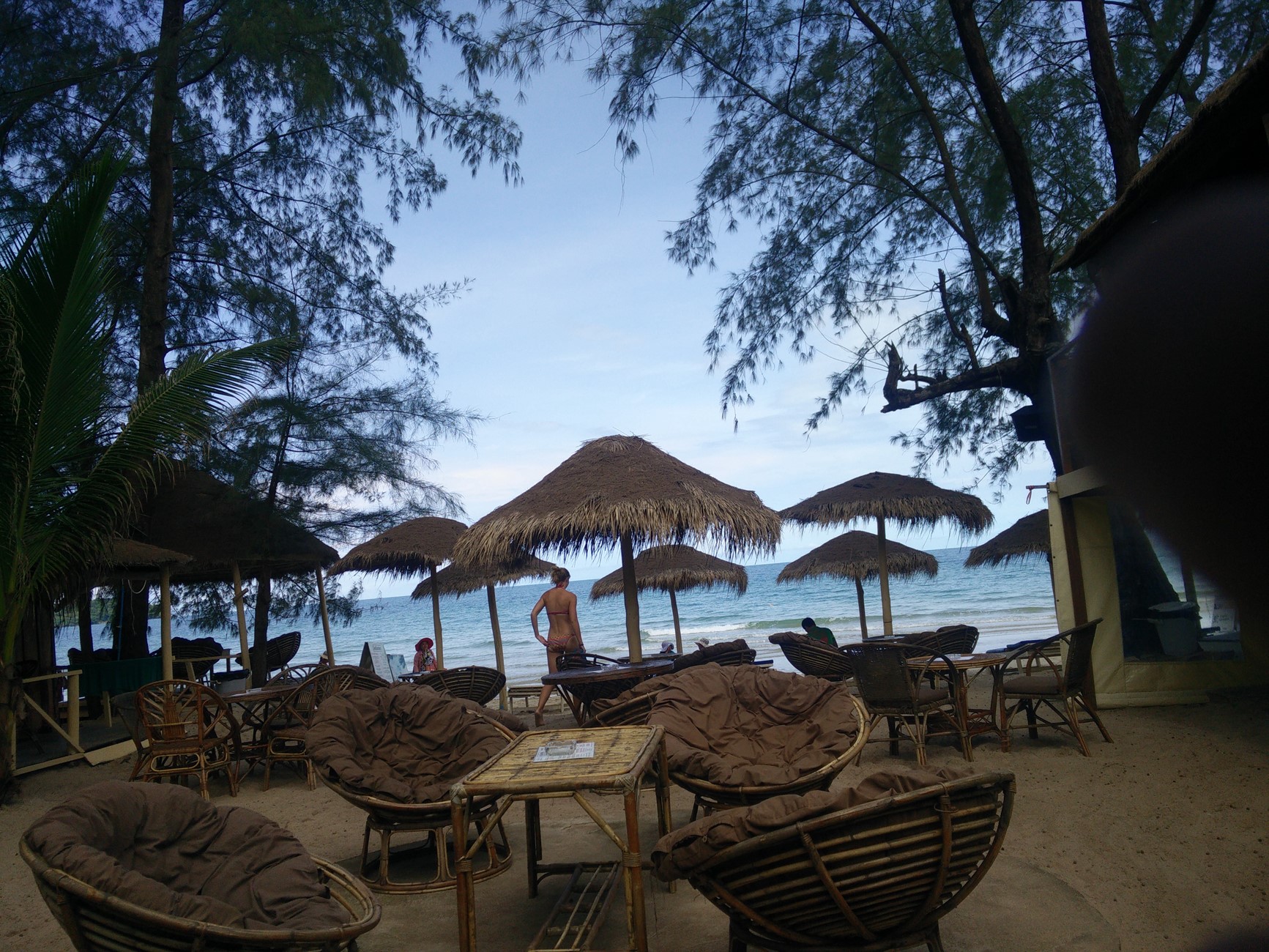
    Beach bar with straw umbrellas and rattan chairs near Sihanoukville

    The problem is that technical ownership of the land is somewhat chaotic to say the least and I personally have only scratched the surface about who owns what and wants who to do what.

    The short story is that the entire area is threatened by Chinese investors looking to build luxury casino hotels in the area. Based on the large number of empty or abandoned casinos all around Cambodia it doesn’t seem to be a very successful plan but nonetheless many casinos are in the making.

    On Koh Ta Kiev (an island off the coast of Sihanoukville and Otres beach) I asked around what the deal was with that and got various vague answers. From what I could gather, half the island is owned by Chinese and half owned by the French. The various accommodations out there are just built with a somewhat bribe-induced dubious permission which is why they never know when it’s revoked and the whole area is cleared. Furthermore, there is a large amount of free-roaming cows just grazing at will. These are apparently owned by the military and have been shifted around from island to island over the years – “sometimes the government comes over and moves some of the cows to another island – we don’t know why”. Lastly, some local fishers put some shacks on the island into an area called “the fishing village”.

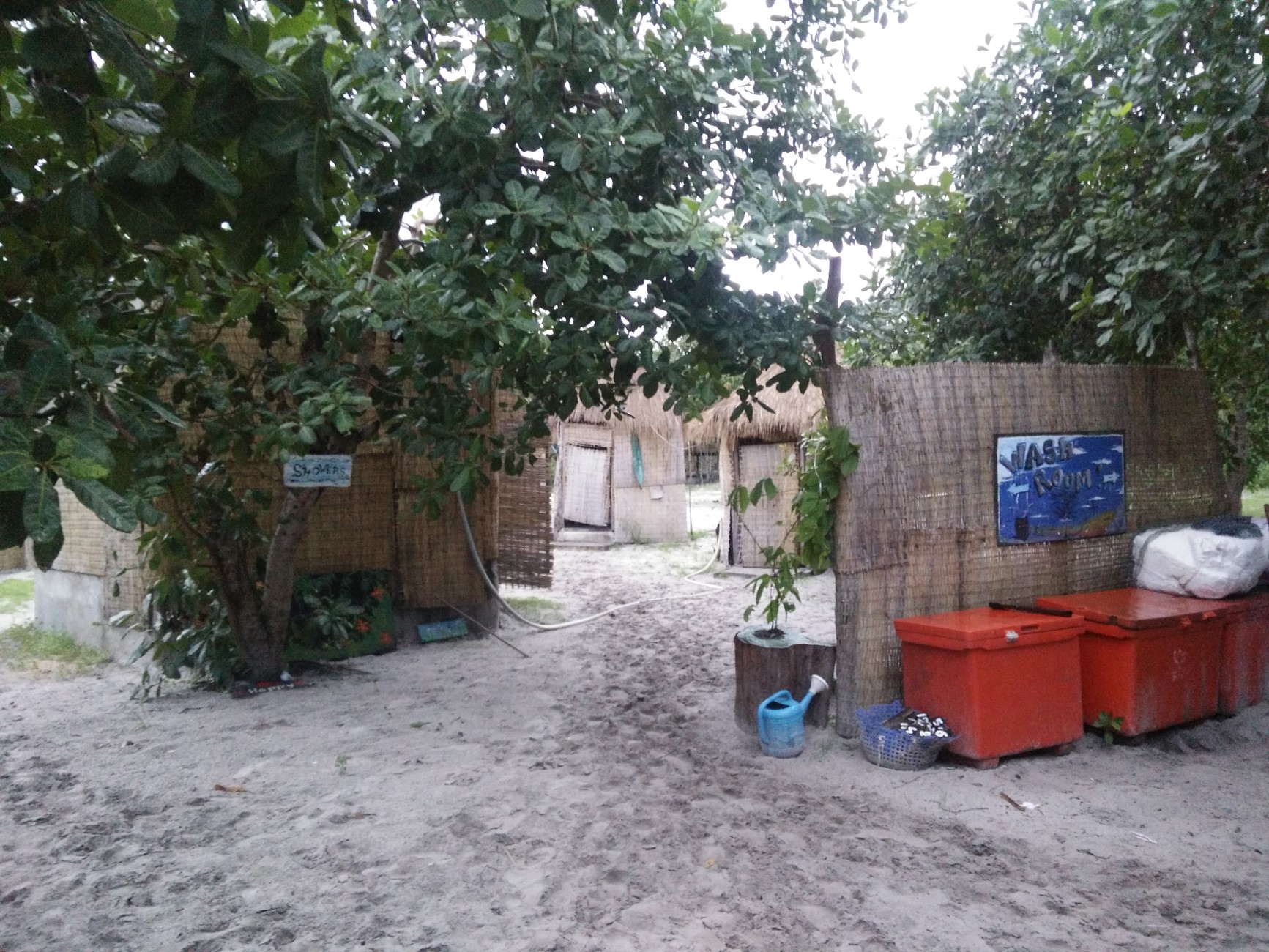
    Sandy path between wooden huts on an island off Sihanoukville

    To sum up: there are a lot of different forces operation out here and to me, the foreign tourist, it’s all very hairy.

    Last year, the Chinese came and cleared a huge path straight through the jungle to make way for a road but then, just as quickly as they arrived, they left again. The theory is that the Cambodian government is putting pressure on the Chinese to develop these areas and apparently some sort of timeline required that there would be a road by the end of 2015 or whatever. To comply with this requirement, they just cleared some random jungle and left again. The French side remains untouched as the Cambodian government apparently are more lenient with them.

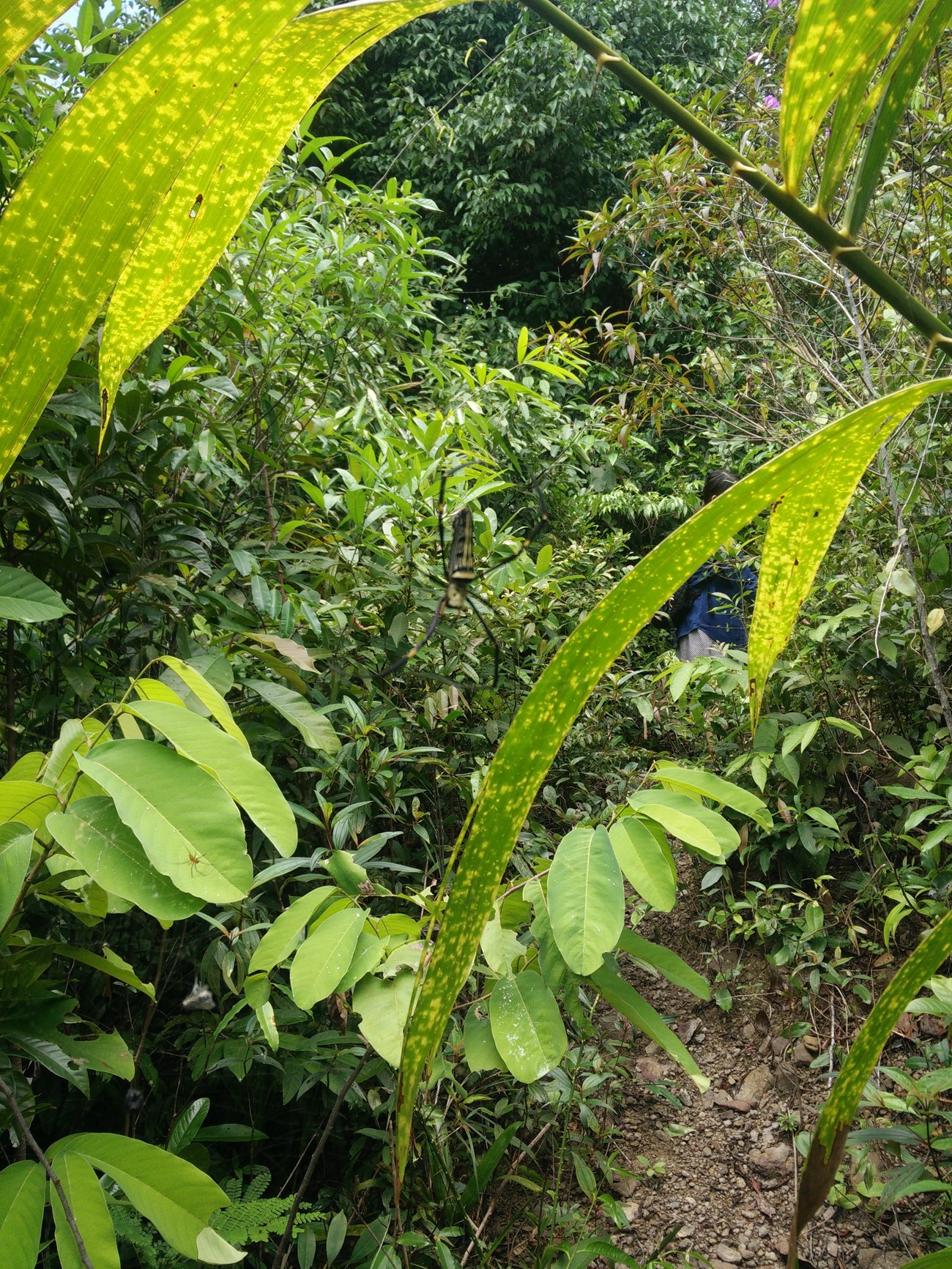
    Dense green jungle plants on an island off Sihanoukville

    In conclusion: I don’t think anyone really knows what’s going to happen even just within the next year.

    I really would love to know more about all this and not just here but also at other locations in Cambodia. Are the Chinese building Casinos against their will because of some strange arrangements with the Cambodian government? How long will we be able to drink pina coladas at these remote islands? Please comment if you know anything.

  • |

    What Were We Thinking (and other ramblings)

    This is post 12 of 12 in the series “South East Asia”

    1. Applying for a Myanmar (Burma) visa in Bangkok
    2. One night in Bangkok
    3. Visiting Rural Thailand – enjoy the silence
    4. Sleeping in a monastery on a mountain top in Hpa-An, Myanmar
    5. Overview of tourist hotspots in Myanmar (Burma)
    6. Naypyitaw – The official capital of Myanmar
    7. Being sick on the road
    8. The End of an Era – I’ve Sold My Motorbike and Left Vietnam
    9. Cambodia – First Impressions
    10. Koh Ta Kiev – Where the boat leaves from
    11. The Future of Sihanoukville, Cambodia and the Surrounding Areas
    12. What Were We Thinking (and other ramblings)
    Lavender, France
    From our trip to the lavender fields of France

    A few months ago (who can remember exactly when), we decided to go on another trip.
    I, Thor, wanted to see the rest of the world (south america and Antarctis). Both Amy and I wanted to visit friends and family.
    At some point Amy has to have some continuity and get a career in Denmark and at some point we will make a family and then it’s hard to travel long-term.

    Not now, though. Not now. Now it’s easy. Amy and I both quit our jobs and on a rainy day in August 2018 we took a plane to Vietnam. (And that answers the title question:))

    We just came back from 10 days on Iceland – and what a blast!

    Looking forward, at this point in time, we knew that we would be heading to Vietnam to plan our wedding July, 2019 and to visit Amy’s family. I’d be meeting her parents for the first time. Gasp!

    We also knew we’d be going to Indonesia for a work opportunity.

    Japan was on the itinerary to visit my, now, good friend JJ who was doing a sheep show there and my Niece, Tyra, who was doing half a year of study abroad on her asian studies degree

    Finally, since this was also our honeymoon, we had (one-way) tickets to Hawaii, USA.

    After this we’d be going to central America, Guatemala, South America, Antarctics. Possibly – plans change.

    All this and home for christmas… or in january…

    Keep looking back at this page. We’ll try to keep it updated. As well as on social media

    Instagram

    Facebook

    Thor and Amy!

  • |

    Visiting Rural Thailand – enjoy the silence

    This is post 3 of 12 in the series “South East Asia”

    1. Applying for a Myanmar (Burma) visa in Bangkok
    2. One night in Bangkok
    3. Visiting Rural Thailand – enjoy the silence
    4. Sleeping in a monastery on a mountain top in Hpa-An, Myanmar
    5. Overview of tourist hotspots in Myanmar (Burma)
    6. Naypyitaw – The official capital of Myanmar
    7. Being sick on the road
    8. The End of an Era – I’ve Sold My Motorbike and Left Vietnam
    9. Cambodia – First Impressions
    10. Koh Ta Kiev – Where the boat leaves from
    11. The Future of Sihanoukville, Cambodia and the Surrounding Areas
    12. What Were We Thinking (and other ramblings)

    Dave and his place of residence

    I had previously reached out to Dave from Dave’s travel corner who owns a house in rural Thailand in a small “village” (consisting of now only 3 houses) in Prachinburi province, about 2 hours drive east of Bangkok along route 304. Dave lives there with his wife Syy and when he is not in Thailand he is either at his base in California, or he is out travelling (to Antarctica just to name one he’s already got planned)

    dave-office
    Dave in his “office” beneath his house

    The area in Thailand boomed over the last 5 years due to paper making business’s moving in which means there is now actually a city nearby and more than one place of accommodation. As a side-effect this also puts a certain smell down over the nearby area that probably takes some getting used to. Luckily neither the hotel I stayed at or Dave’s house had any smell when I was there. It is still a sleepy town and when I asked Dave what kind of people would just randomly drop by here, he answered “no one”.

    So what do you do in a town like Dave’s

    I arrived from Bangkok in the afternoon on a Friday and was due to leave two days later.

    The town didn’t disappoint me and neither did Dave. There was no Eiffel tower or reclining Buddha to see but there was a fishing pond, a scooter drive to a nearby delicious noodle store, and some drone flying. Dave has made an excellent edit of the drone flying footage. We managed to crash it a few times but it survived and gave us some interesting footage of Thailand from the sky.

    Finally, of course, I spent a lot of time talking to Dave about everything travel – blogging, travelling, packing, anecdotes from foreign countries and everything in between. Compared to this guy I’m a fledgling traveller barely having touched the world while Dave has somewhere around 130-150 countries under his west– he’s been going at it since 1996. So needless to say he had a lot of knowledge to drop on me.

    Moving on

    I had two very good days with Dave and Sai, hanging in the hammock and enjoying the serene life of rural Thailand. Especially after 4 hectic days in Bangkok, this was a welcomed break! I could easily have stayed a week more, just doing nothing and absolutely loving it. However, all good things must come to an end and Dave and Sai had to move on. After having pursued alternative methods to get to Myanmar by land we realised there was only one way and that was to go back to Bangkok and take a bus from there. At least I could share the first leg with Dave and Sai as they were heading to Bangkok as well.

  • |

    “Are we there already?”, aka riding a bullet train (shinkansen) in Japan

    Tokyo is a busy city

    We’ve been in Japan for a few days now and we’ve posted a few pictures on Instagram about the hustle and the bustle of this insanely busy city.

    There are literally more people walking than cars – this is a complete u-turn compared to the scooter heavy streets of South East Asia.

    https://www.instagram.com/p/BnxBb0LlFCD/?utm_source=ig_web_button_share_sheet

    Tokyo has an extremely functional public transportation system. It makes the city calm even with this many people. There are literally more people walking than cars – this is a complete u-turn compared to the scooter heavy streets of South East Asia.

    Bullet trains

    Speaking of Public transportation, we’ve been on one of the famous shinkansens (or bullettrains). They are rather pricy but tourists can buy 1/2/3 week passes – a bit like interrail.

    Bullettrain in Japan
    The bullettrain in Japan is arriving at Shin-Shirakawa station, heading for Tokyo

    The trains are hella cool. We took the first train from Tokyo and even though they have 22 platforms, with trains arriving every 10 minutes (on each(!) platform) they are not late.

    On time

    The trains arrive 3 minutes before departure. Everyone is lined up outside in marked areas for people going on the 1st departure and 2nd departure respectively. When the train comes – everyone enters and the train is moving within minutes. At the smaller stations it’s not even a minute.

    After departure the people in the line for 2nd departure move into the line for 1st departure and the loop repeats itself.

    As an example we’re going from Shin-Shirakawa to Kyoto and with the bullet train it’s about 3 hours (+ half an hour getting to/from the station) for a total of about 4 hours door-to-door. With car, on the premium expressways, it’s 8 hours!!!

    I mean, even a plane couldn’t do the roughly 600km’s in a straight line faster than that!

    Once inside

    Once inside, you’ll see that the trains are spacious, the seats lean way back, there’ll be a nice lady with a trolley selling snacks and even though I clocked it at almost 300 km/h, it’s dead quiet. Even the people are quiet – in fact, the Japanese are not loud people under any circumstances!

    I’ve been on a train in Myanmar going 45km/h’s and the sound was deafening. It felt like the whole train would fall apart any minute. Trains are not just trains!

    Futhermore, they’re even talking about magnet trains coming soon, with speeds up towards 800 km/h. It’s absolutely bonkers and it blows my mind how they do it when the trains in the rest of the world are struggling at maybe 130km/h

    I’m writing this as I’m sitting comfortably, leaned back, using high-speed free WiFi on the train.

    Conclusion

    There’s a reason bullet trains are so famous. They are amazing and I’m thoroughly impressed with them

  • |

    Sleeping in a monastery on a mountain top in Hpa-An, Myanmar

    This is post 4 of 12 in the series “South East Asia”

    1. Applying for a Myanmar (Burma) visa in Bangkok
    2. One night in Bangkok
    3. Visiting Rural Thailand – enjoy the silence
    4. Sleeping in a monastery on a mountain top in Hpa-An, Myanmar
    5. Overview of tourist hotspots in Myanmar (Burma)
    6. Naypyitaw – The official capital of Myanmar
    7. Being sick on the road
    8. The End of an Era – I’ve Sold My Motorbike and Left Vietnam
    9. Cambodia – First Impressions
    10. Koh Ta Kiev – Where the boat leaves from
    11. The Future of Sihanoukville, Cambodia and the Surrounding Areas
    12. What Were We Thinking (and other ramblings)

    Update 18-10-2017: As per comment on this post, it looks like it’s no longer possible!

    Update 20-10-2017: I asked my niece who was there 7 months ago and she went up there and slept just two days before it happened. She also says that she’s heard alot of people say they couldn’t go up there anymore.

    Please confirm / de-confirm if you have updated knowledge

    Note: for detailed practical information, scroll down

    The mission (and its complications)

    The first time I saw the monastery in Hpa-An was while visiting a field filled with statues of Buddha, more than 1100 actually. There, in the distance on a mountain top, I saw the monastery and I immediately wanted to go up there. I knew it was possible to go up there and climb down the same day but I’d also heard people talk about sleeping in the monastery. However, there were some implications.

    buddha field with a view to mt zwegabin monastery
    Standing between a sea of buddhas with a view to the monastery. Do you see it? It’s right there!

    First of all, I wasn’t sure if it was even legal/possible with the Myanmar government having some strict laws against foreigners (hostels have to have a license to be allowed to host foreigners) and I was getting mixed signals from asking around – some said it was possible, some said it wasn’t. Secondly I had to actually climb 2000 steps and finally I was probably going to have to sleep on a rather hard surface with nightly temperatures actually making the experience a rather chilly one. Even though it was warm in the day, it got chilly at night.

    After getting direct confirmation from people who had done it I was convinced and my mission was clear:

    1. Climb the 2000 steps
    2. Watch the sunset
    3. Sleep there
    4. Watch the sunrise
    5. Climb down

    The ascend to the monastery

    I started the ascend from the bottom of the mountain around 15:30 (3:30pm) carrying with me 1 litre of water, a hoodie, a camera, a phone, my wallet and a power bank. Around 17:00 I finished. I believe it can be done in 1hour with someone experienced but takes more like 2 hours if you are not rushing, I did it in 1:25. The first step of the way I was following a guy that was going pretty fast but halfway up (after only 35 minutes) he got ahead of me and I slowed down my pace considerably after that.

    beautiful-hike
    Halfway up the mountain, the view is already beautiful. It was an astonishing hike

    The steps seemed to be endless and just when I thought I’d made it another leg of stairs revealed itself. In the end I found that a very slow speed (like a step every second) was the way to go, as I almost didn’t have to take any breaks like that. Slow and steady wins the race and finally I got there.

    The top

    At the top there was a sleeping hall for the monks, a sleeping hall for tourists and a restaurant like building where they cooked food. It was also possible to buy food there as a tourist between 6pm and 7pm. There was of course also a few Pagodas and other religious symbols. And then there were monkeys – aggressive monkeys. They would snatch anything you had left unnoticed including things out of purses and coke cans out of your hands. Luckily there were also dogs and all through the evening the dogs and monkeys would fight each other – the monkeys would come close and the dogs would bark them away. It was fun to watch how, as soon as someone made a little scream due to a monkey coming too close, the dogs would come running instantly to scare them away.

    Quickly after reaching the top, I sat down at the eating area and was offered free food and tea by the monks – not enough for dinner, but enough to keep me going until real dinner later that evening.

    The rest of the evening was spent watching the monkeys and the sunset and also the 8 of us up there who were tourists played a bit of cards before hitting the bed early.

    sunset at top of mt zwegabin in myanmar
    View from the top of the monastery as the sun sets over Myanmar
    evil monkeys
    Evil mischievous monkeys

    The descend

    The descent in the morning around 6:30 was much quicker. I got down and scooted back to town to return the scooter. I had made an agreement with the scooter renters to not charge me an extra day even though they technically want you to return it the evening before. One thing to note though is that you should stretch! I could feel my calves for days after that descend.

    Practical information

    • It takes about 2hours to climb the steps, 1hour if you are fast, 3 hours if you are slow
    • Sunset is around 5:45pm but depends on time of year. I started at 3:30pm  and made it easily.
    • The first four to check in will be sleeping in twin rooms (2 in each – seperate beds)
    • The rest will sleep in a sleeping hall
    • Beds are not soft but not rock hard either
    • You are expected to give around 5000 kyats in “donation” to sleep there
    • There is food up there and you will be provided with a blanket. You can also buy soft drinks – no beer!
    • I slept in shorts and a hoodie and that was warm enough – I was in a twin room. This was in winter time
    • There was power in the twin room
    • The climb is fairly rough and steep but I’m not trained at all and I would say anyone could make it, given enough time.
    • You’ll be in shade about half the time
    • I rented a scooter to get there and left it overnight. Another guy hitchhiked there and back – it’s not hard.
    • There are two entrances and the main is at the field of Buddhas about 30 mins out of Hpa-an- ask around but it’s not hard to find.
    pagoda-mt-zwegabin-monastery
    One of the Pagoda’s at the monastery on top of Mt Zwegabin
  • | |

    Using the smugglers route to cross from Vietnam into China

    In May 2016 I visited Lung Cu all the way up the most northern part of Vietnam but this is not what this story is about

    After Lung Cu I thought it would be cool to see the border here. I’m drawn towards the border because I’m intrigued with the idea that a border to a country as closed as China would be completely unsupervised. I’ve always had this idea of a completely remote border, you know, without even a border control post where only shepherds roam somewhere deep in the mountains.

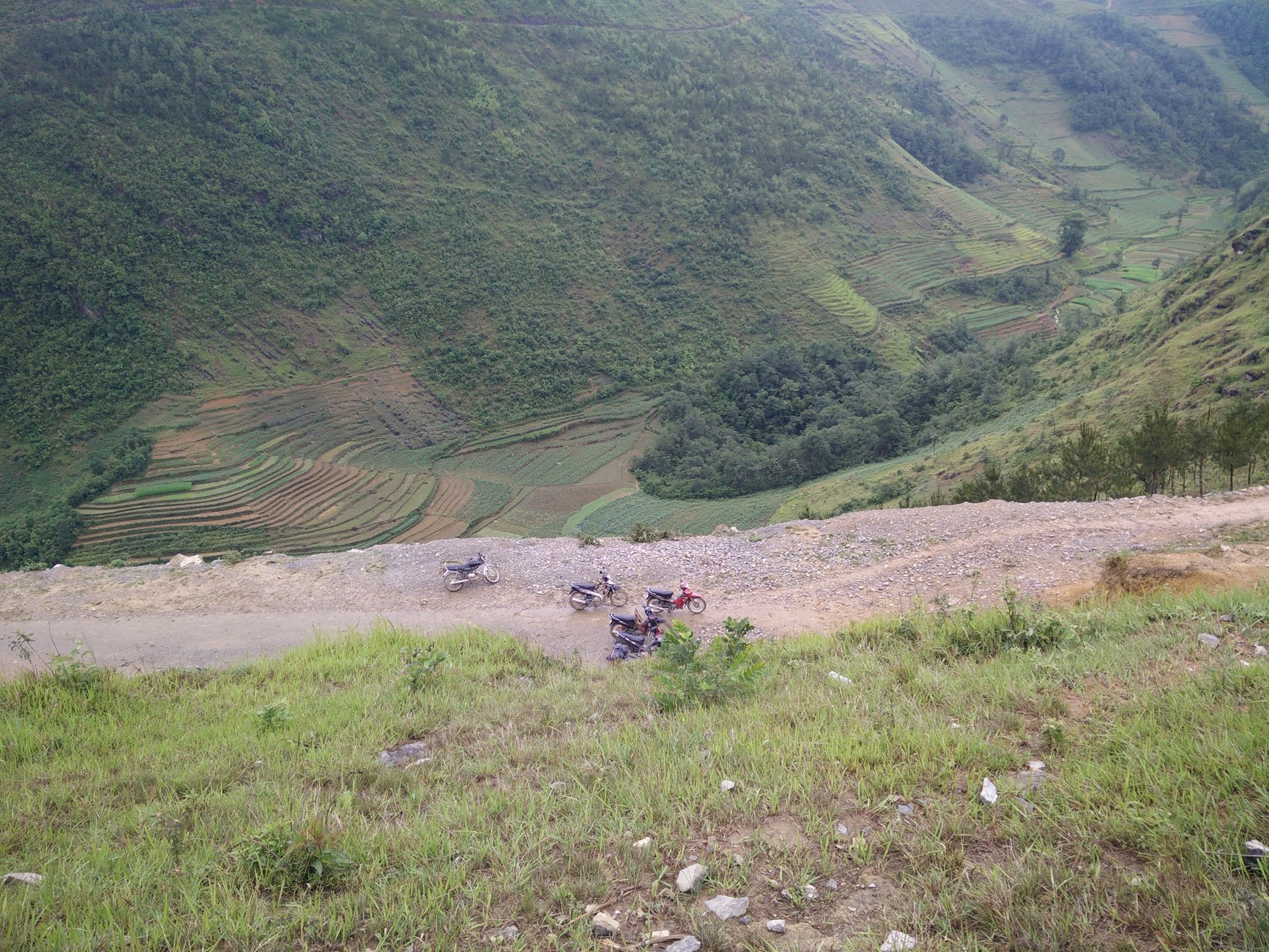
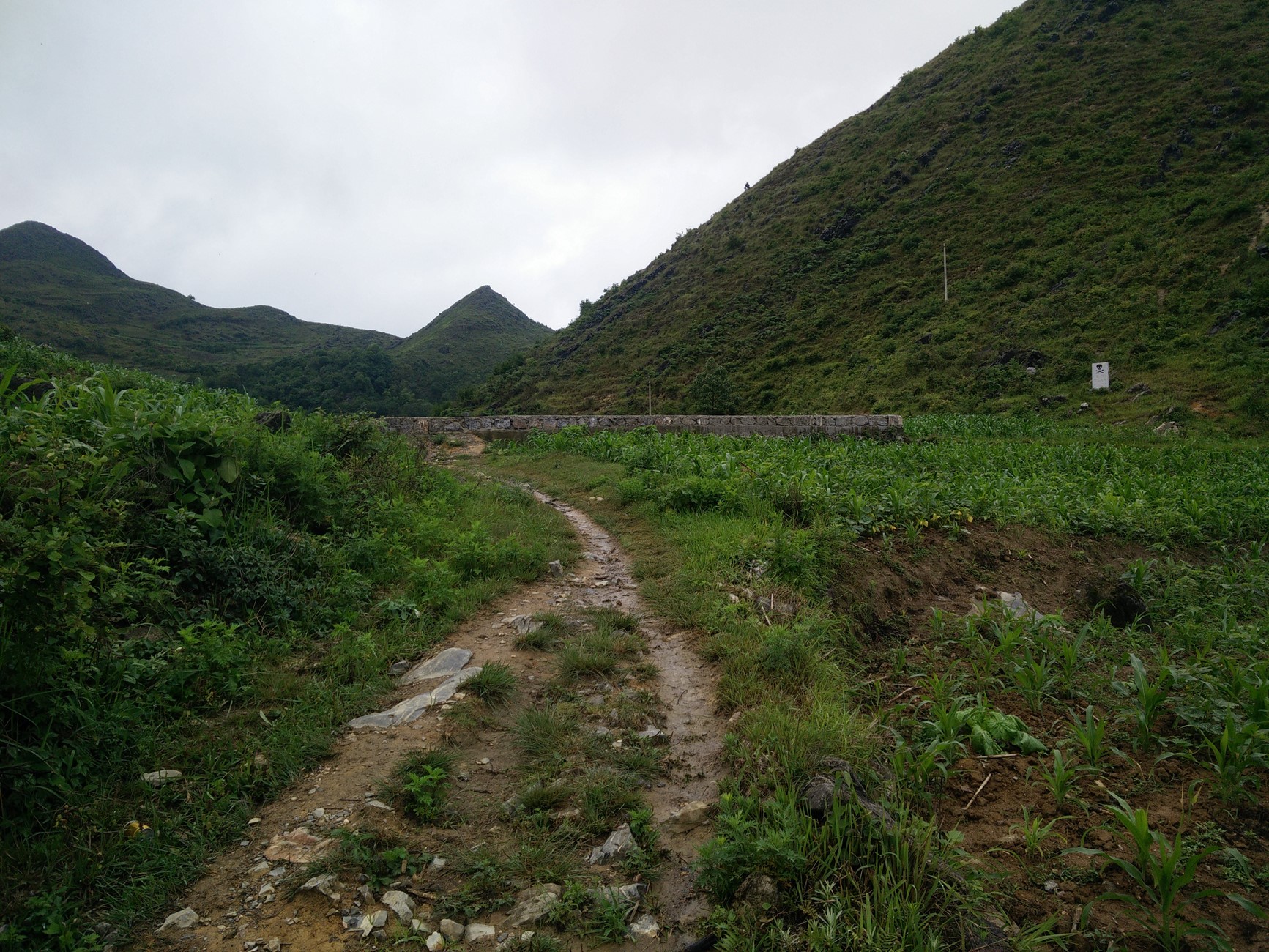
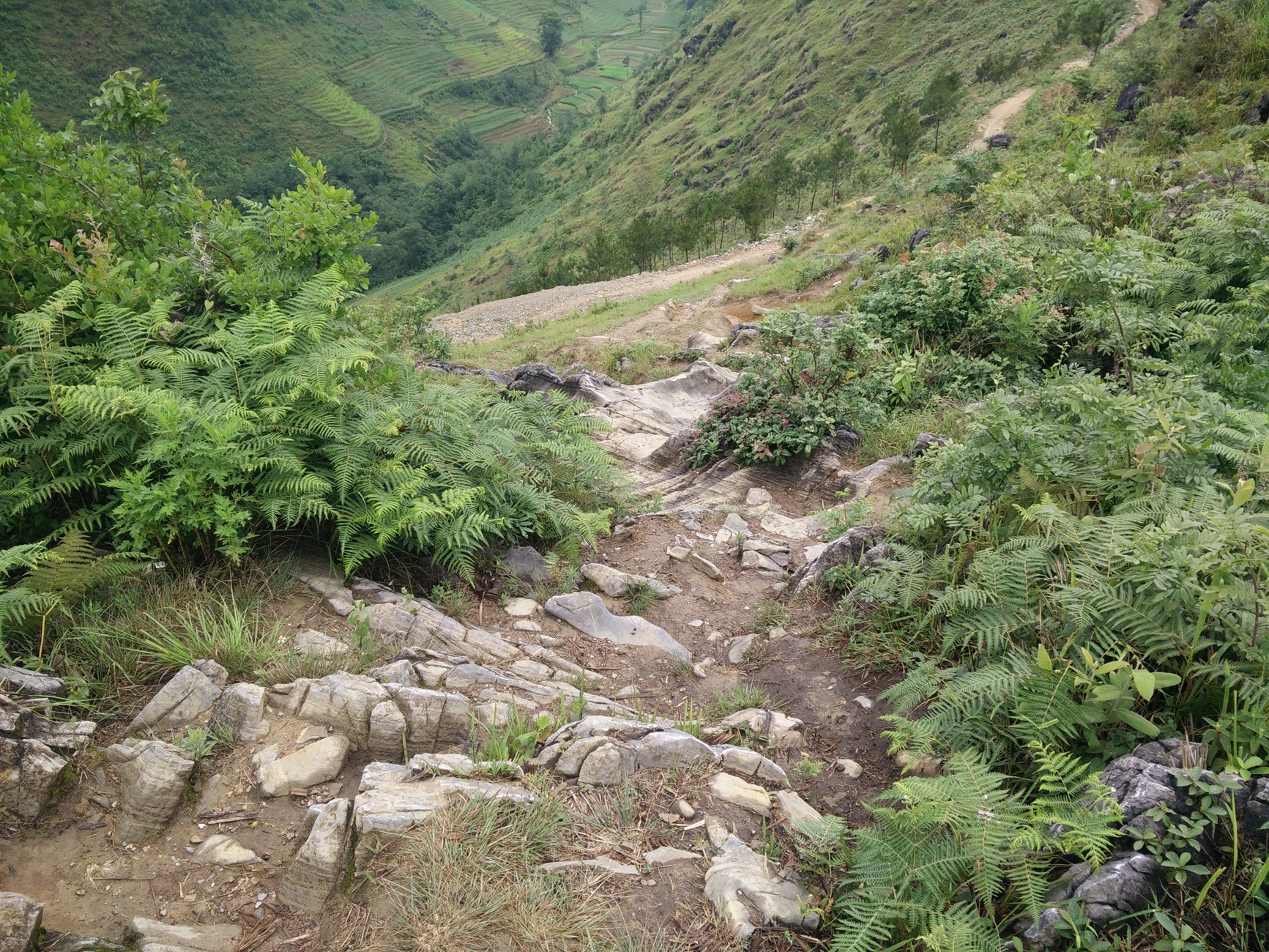
    As I drove out the road the pavement suddenly stopped and before me was about 6 motorbikes and a tiny dirt path along the ridge of the mountain. It looked like something you would only want to walk and the direction took you straight towards China. This is it I guess – the border.

    I could see pretty far ahead and it looked like at least a 15-minute walk down along a very muddy path before anything would change so I decided to opt against it. However, as I turned around a little bit I noticed a definite path going up the mountain, not towards China, so I figured it would be safe to go up there, at least for the view over the valley.

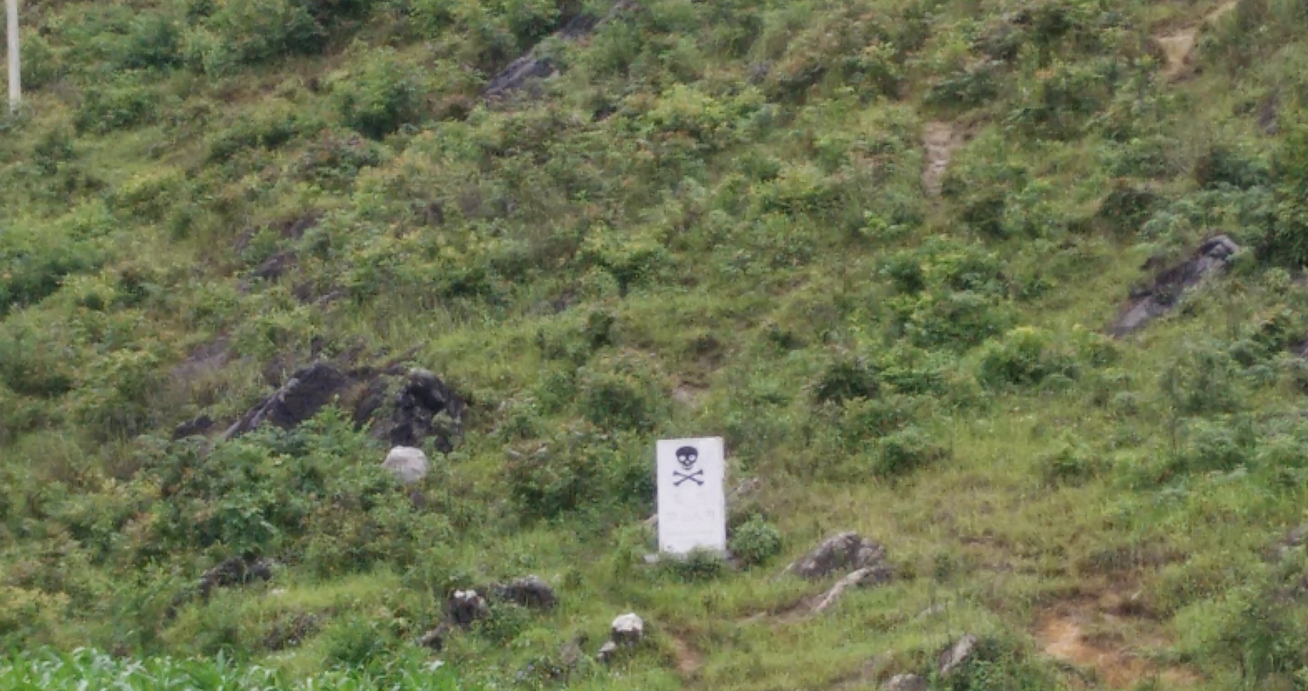
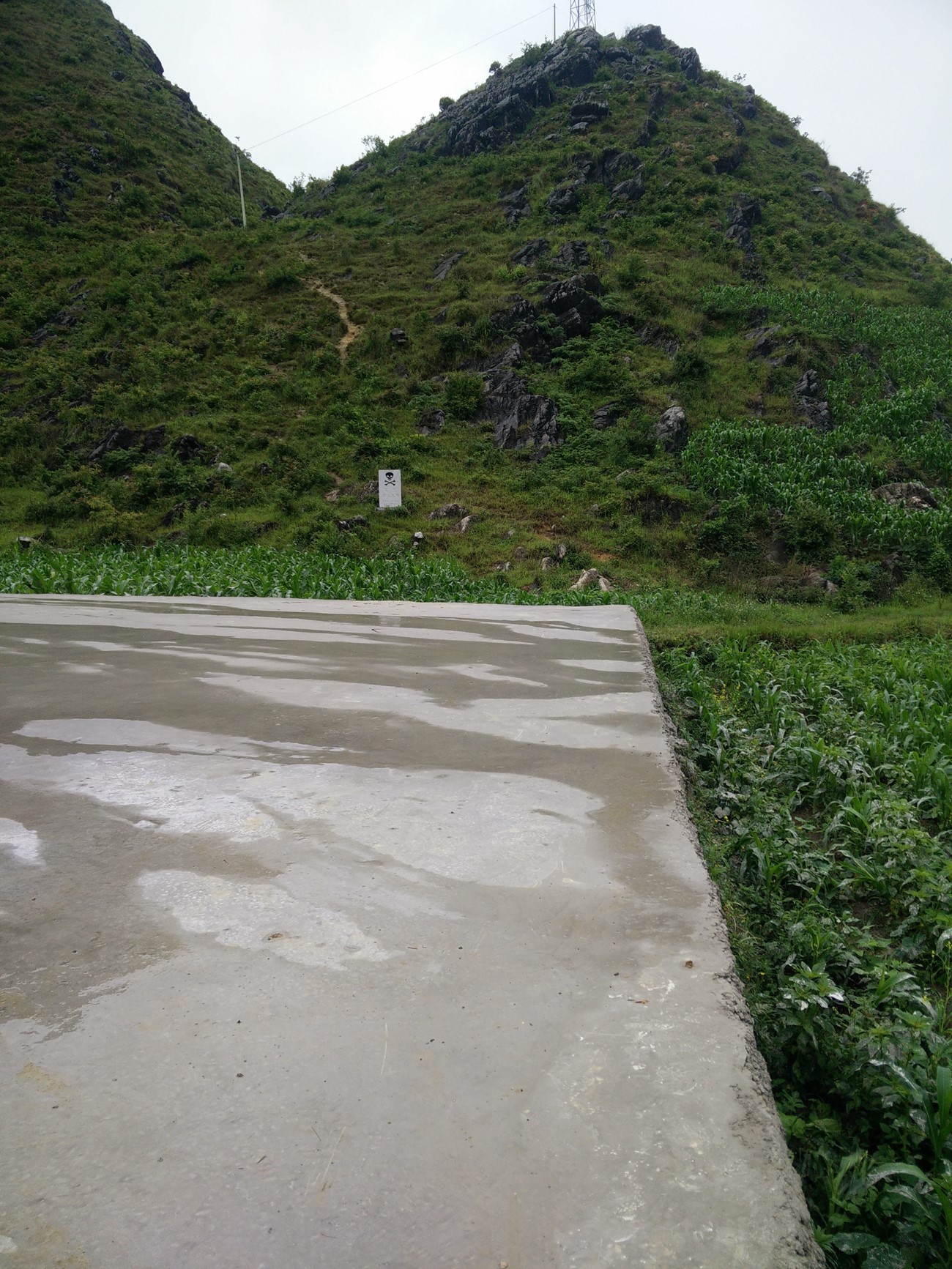
    When I got up I saw several road marker stones with skulls on them all over the area. Skulls, just skulls. Frightening.

    Border marker stone with a skull and crossbones on a green hillside near the Vietnam-China border

    Thoughts of land mines and stuff like that popped up in my head and I was about to turn around. Enough is enough.

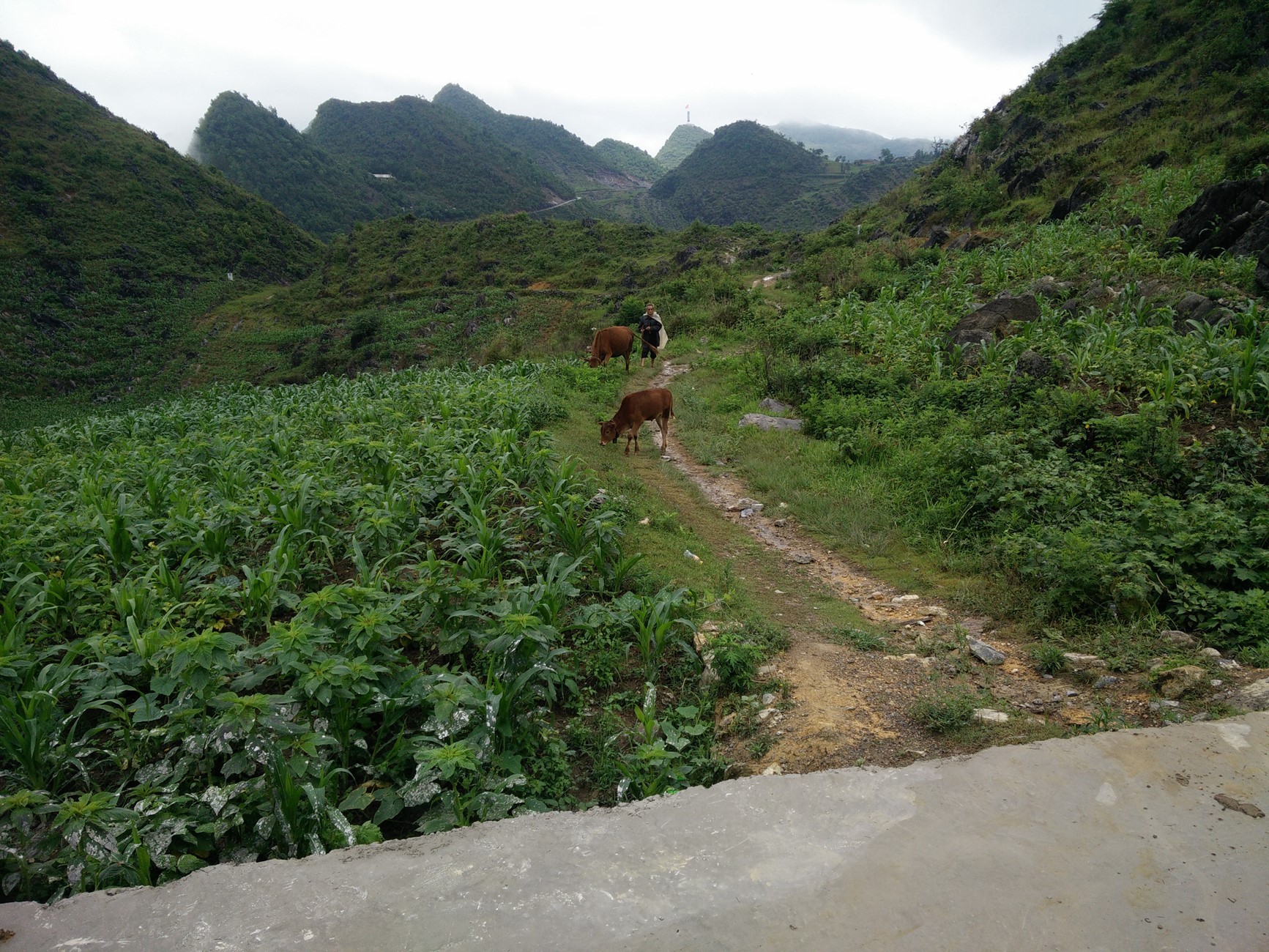
    But when I was about to turn around I saw a shepherd with two cows on a definite path, albeit small, meaning that at least it would be safe, landmine wise – and so I continued towards him.

    Around the corner I saw a paved road pop out in the middle of nowhere, Chinese signs and more skulls. I’m pretty sure this was the border. I walked up on the pavement, talked some with the farmer – who was Chinese! – and walked back to my bike.

    Motorbikes on a dirt road above a green valley with terraced fields near the Chinese borderDirt track leading into green hills near the Vietnam-China borderCows grazing by a narrow track between green karst hills at the borderConcrete path ending at green hills on the smugglers routeRocky footpath down a fern-covered slope on the smugglers route

    On the way out, with mud all over my shoes, I got some concerned looks from locals who could only wonder what I’d been doing out there. I’ve heard from other people that the area is used for smugglers as well – which would make sense since it’s so easy and remote.

2 Comments

Leave a Reply

Your email address will not be published. Required fields are marked *